Exercises
Exercise 1
Complete the descriptions.
1.
We can add the suffixes ________ (‘more’) and ________ (‘more … than’) after an adjective to form a comparative adjective. We use ________ if we want to mention two items within the same sentence for comparison.
2.
We can put the adverb ________ (‘most’) before an adjective to form a superlative adjective.
3.
We can use the adverbs ________ (‘more’) and ________ (‘more … than’) with a stative verb. We use ________ if we want to mention two items within the same sentence for comparison.
4.
If we want to describe how an action is done, we can use the particle ________ to introduce the description.
5.
We can use the adjective ________ (‘first’) to refer to the first item or the first several items. We can use the adjectives ________ and ________ (‘last’) to refer to the last item or the last several items.
6.
To refer to other items in a context, we can use ________, ________ and ________.
7.
The pronoun ________ means ‘all’. When we put it before the verb in a sentence, we usually add the adverb ________ to add emphasis.
8.
Both the verbs ________ and ________ mean ‘to wear’. We use ________ with clothing items that we usually wear every day, while we use ________ with accessories that serve decorative or functional purposes.
Exercise 2
For each question, listen to the item and follow the example to complete the conversation. Then, check your answers and repeat after the recordings.
Example
衫 saam1 ← Listen to this first.
| A | 你覺得呢件衫點呀? nei5 gok3 dak1 ni1 gin6 saam1 dim2 aa3? What do you think about this top? |
| B | 你着得好好睇呀。 nei5 zoek3 dak1 hou2 hou2 tai2 aa3. You wear it very beautifully. |
1.
________
| A | ________ |
| B | ________ |
2.
________
| A | ________ |
| B | ________ |
3.
________
| A | ________ |
| B | ________ |
4.
________
| A | ________ |
| B | ________ |
5.
________
| A | ________ |
| B | ________ |
6.
________
| A | ________ |
| B | ________ |
Exercise 3
Listen to the conversations and circle the tops B likes. Then, check your answers and repeat after the recordings.
Example
⭐ A tries from the leftmost top to the rightmost top. A is currently wearing the rightmost top.
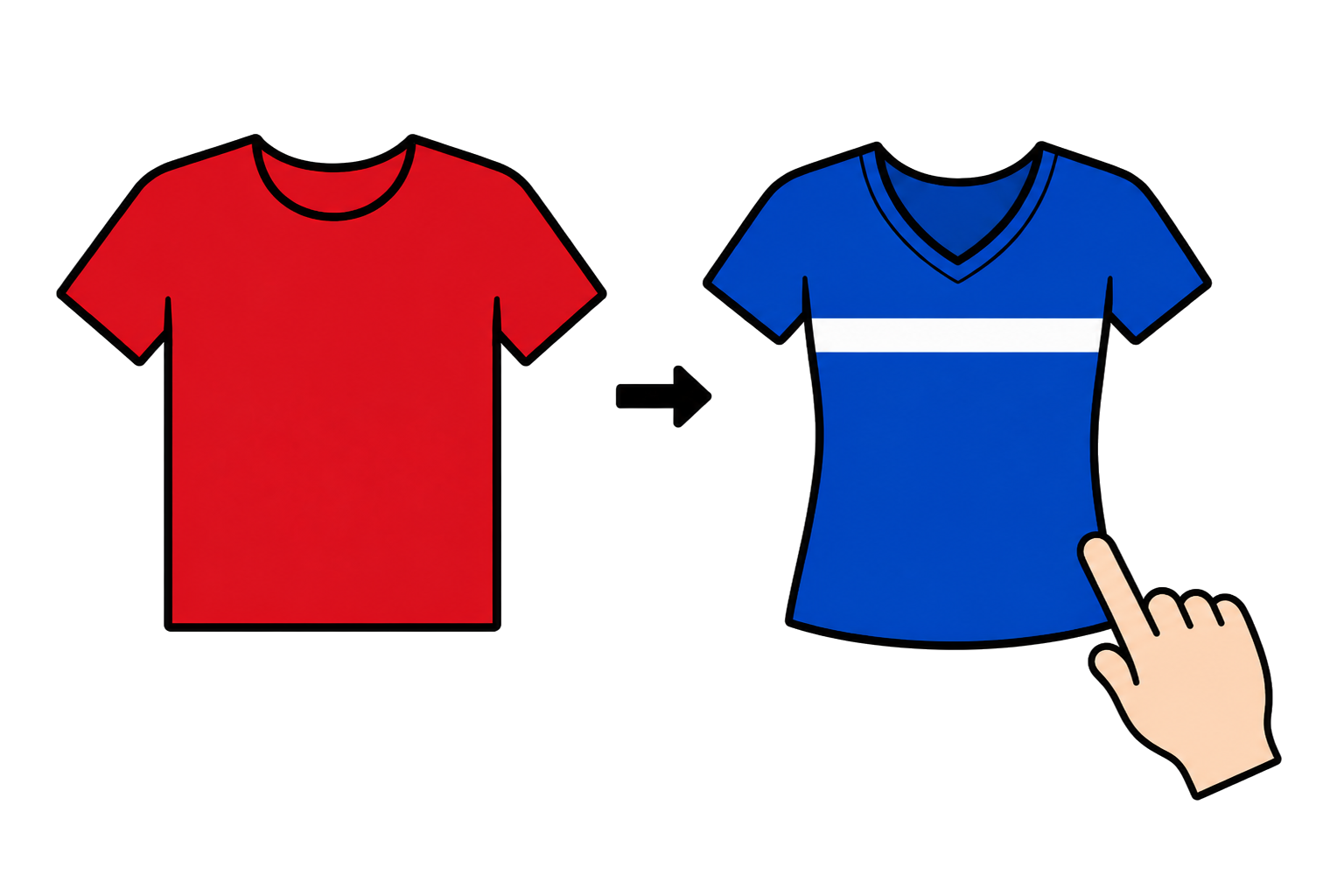
| A | 你覺得呢件定另外嗰件好啲呀? nei5 gok3 dak1 ni1 gin6 ding6 ling6 ngoi6 go2 gin6 hou2 di1 aa3? Do you think this one or the other one is better? |
| B | 我鍾意呢件多啲呀。 ngo5 zung1 ji3 ni1 gin6 do1 di1 aa3. I like this one more. |
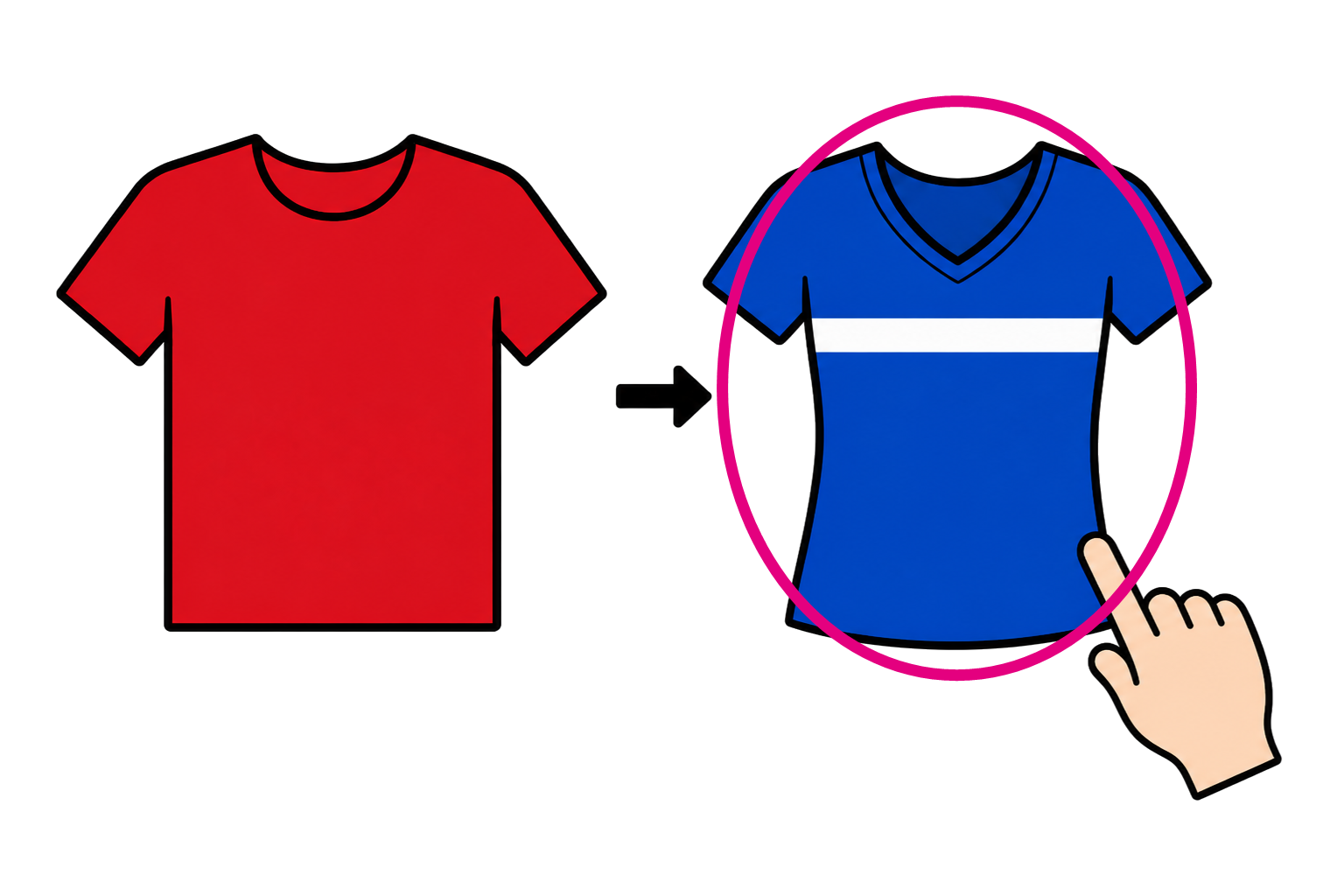
1.
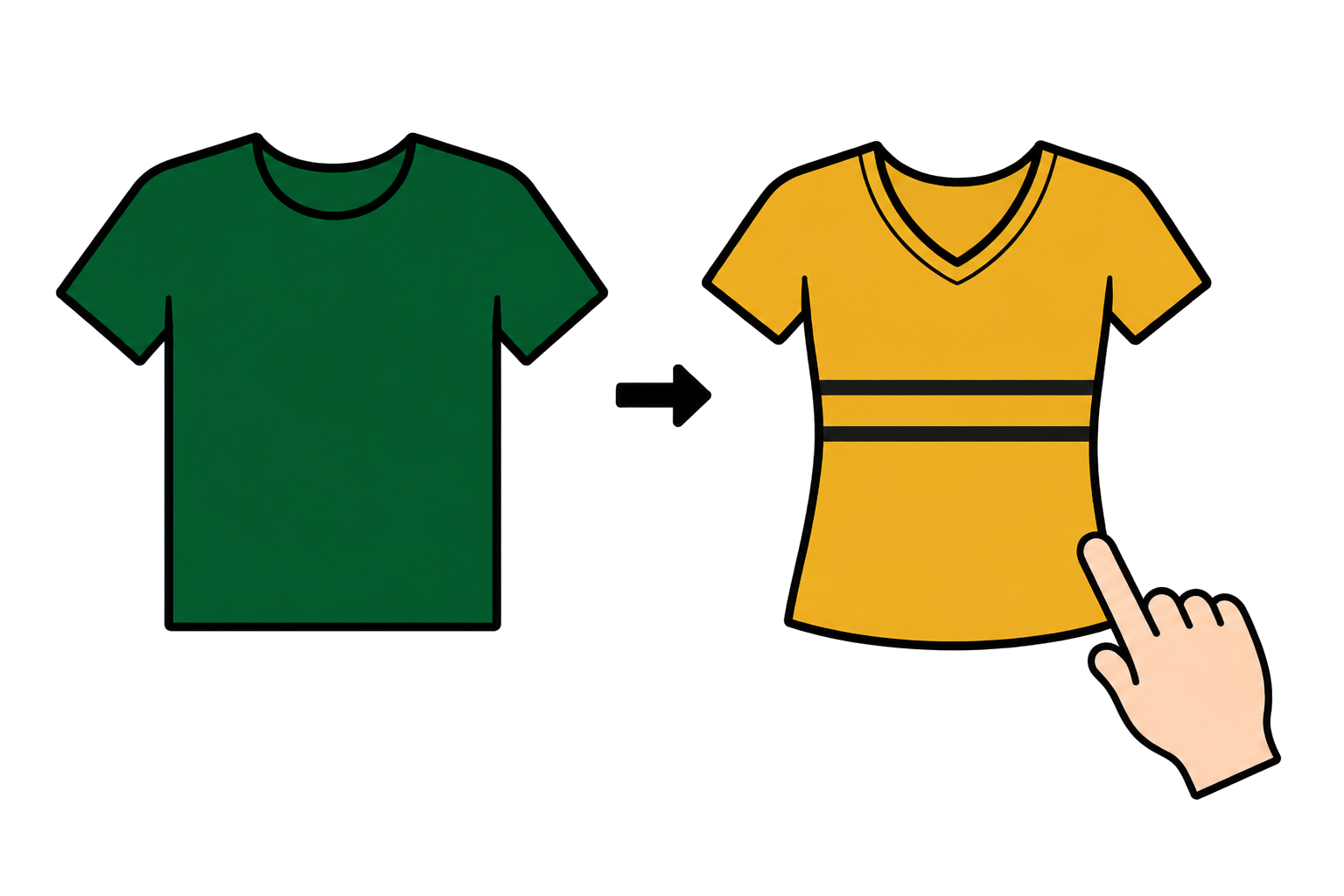
| A | ________ |
| B | ________ |
2.
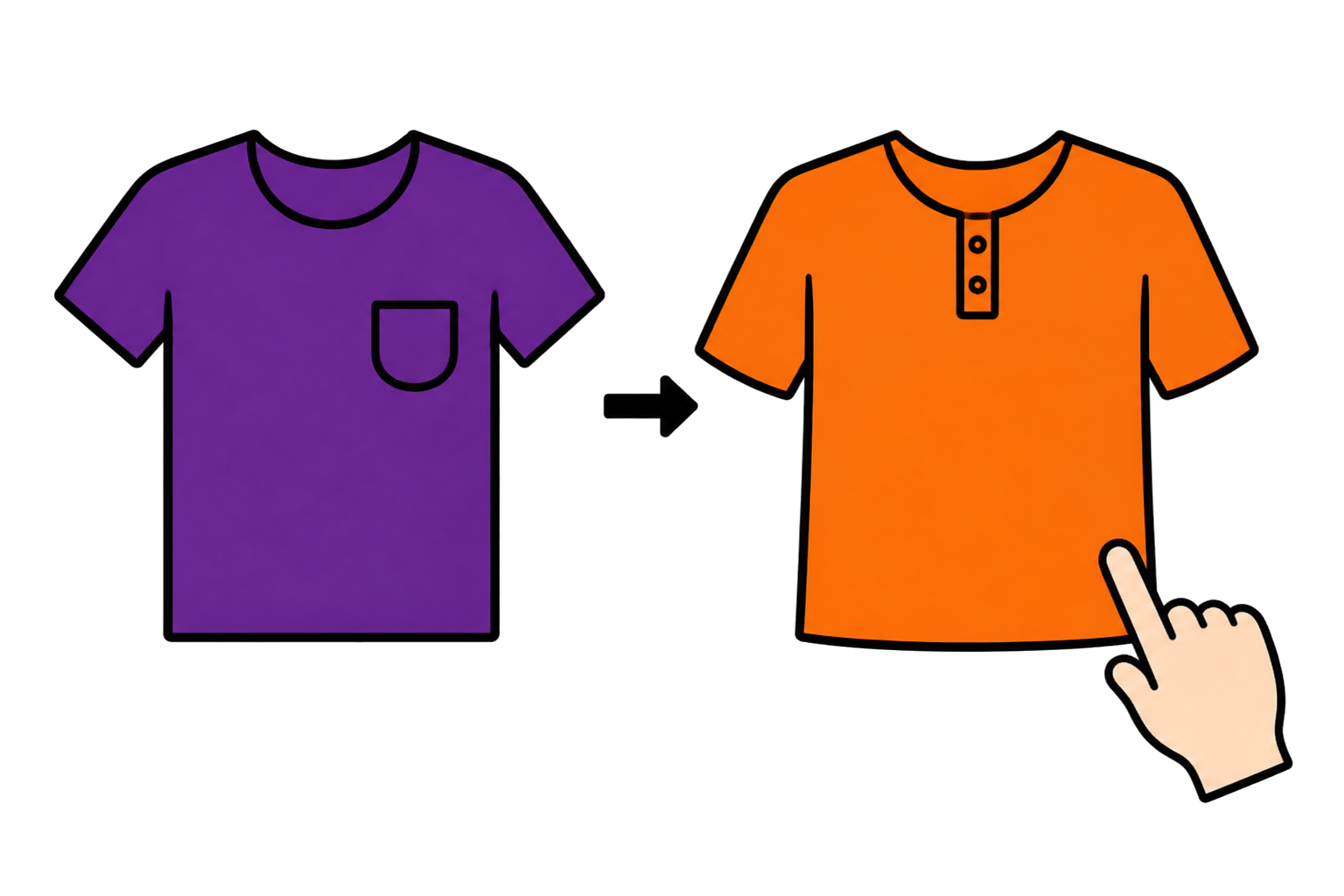
| A | ________ |
| B | ________ |
3.
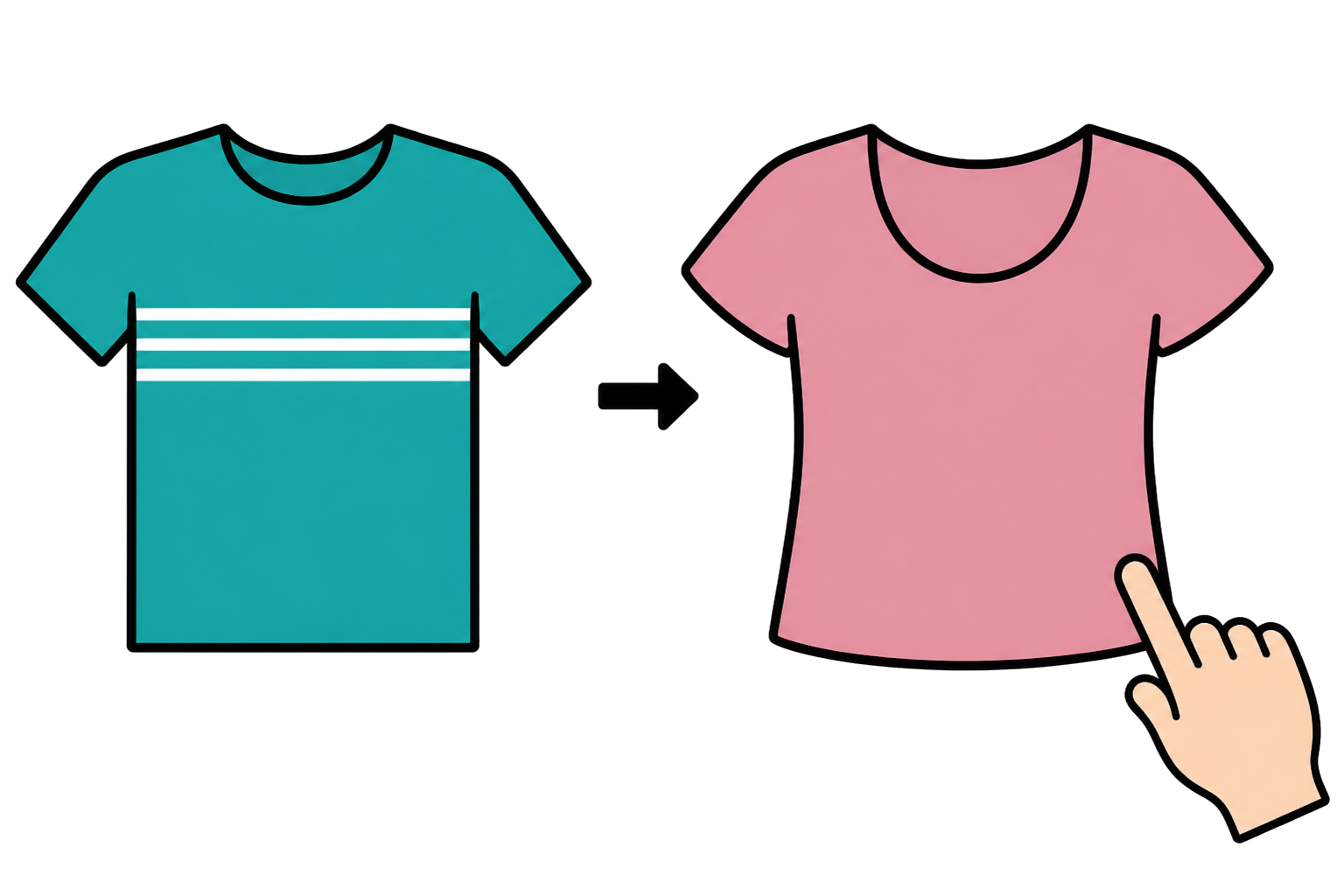
| A | ________ |
| B | ________ |
4.
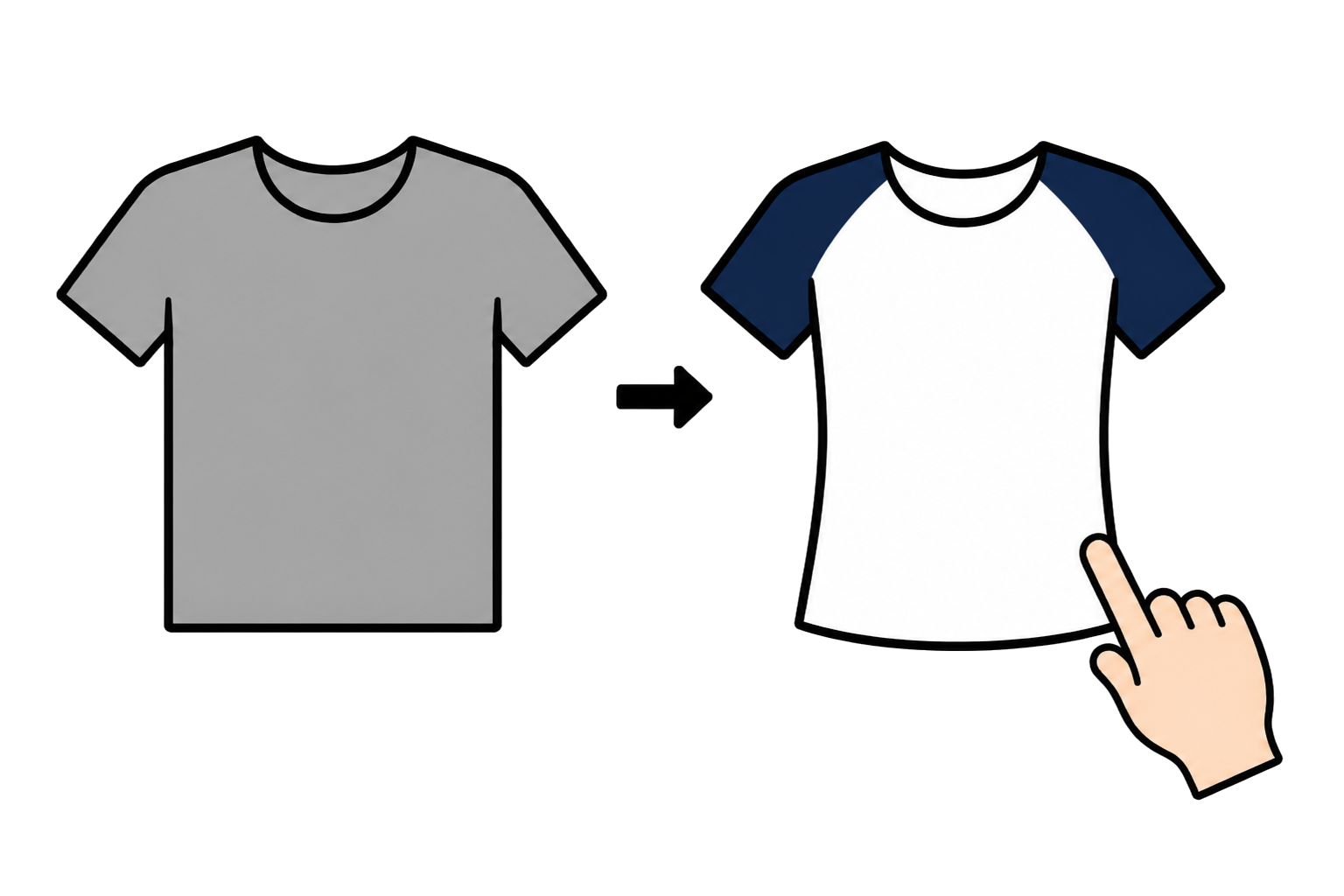
| A | ________ |
| B | ________ |
5.
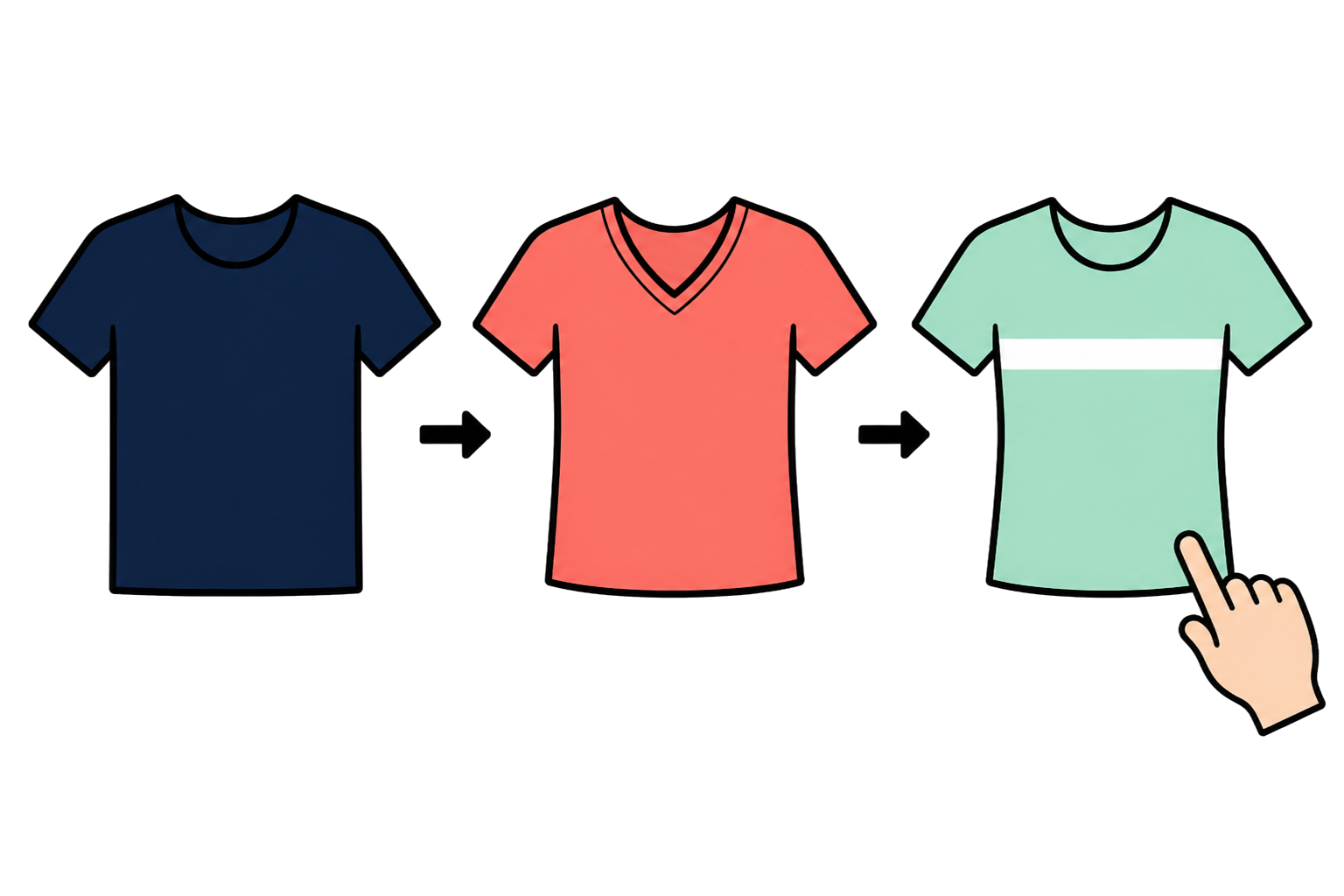
| A | ________ |
| B | ________ |
6.
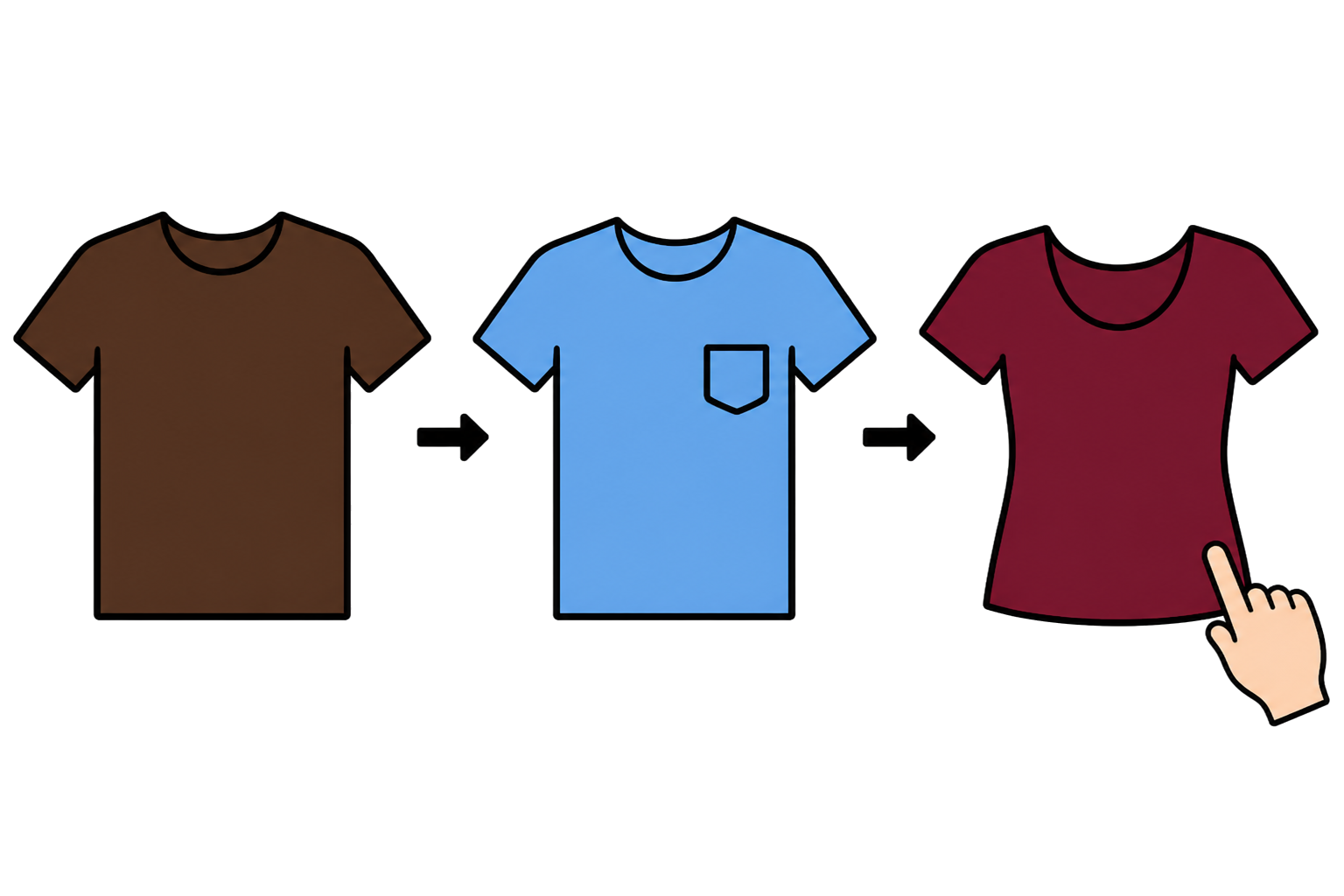
| A | ________ |
| B | ________ |
7.
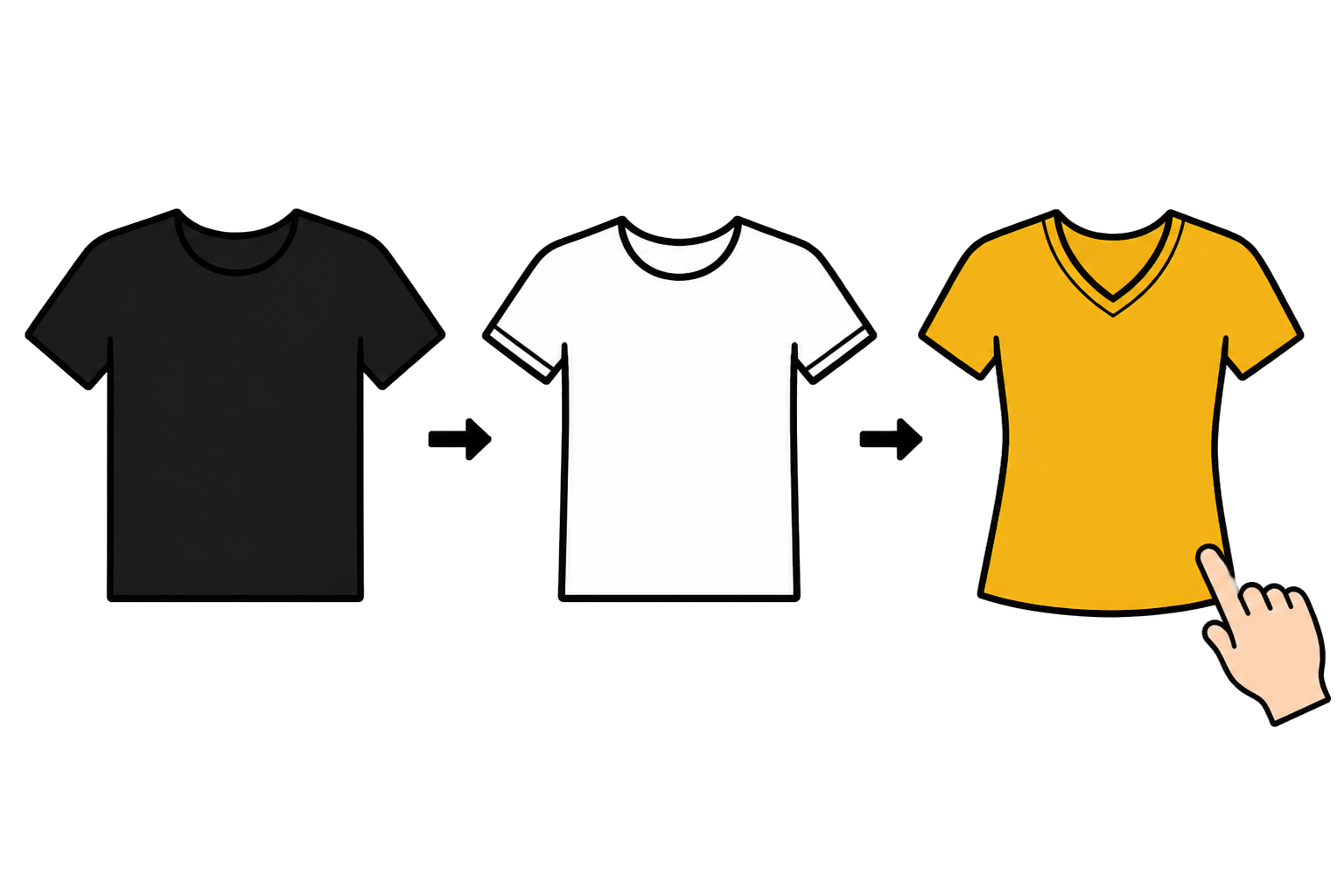
| A | ________ |
| B | ________ |
8.
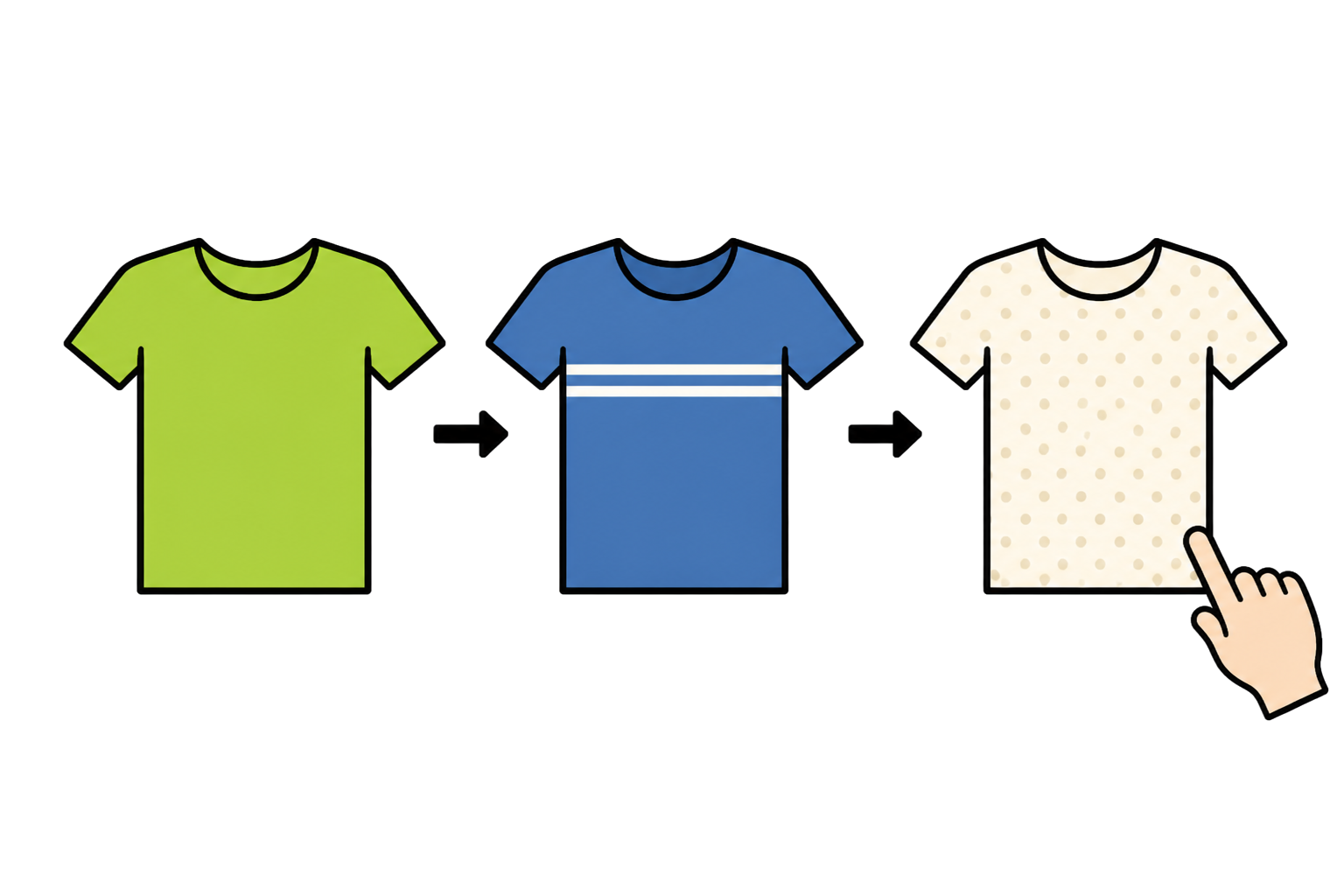
| A | ________ |
| B | ________ |
9.
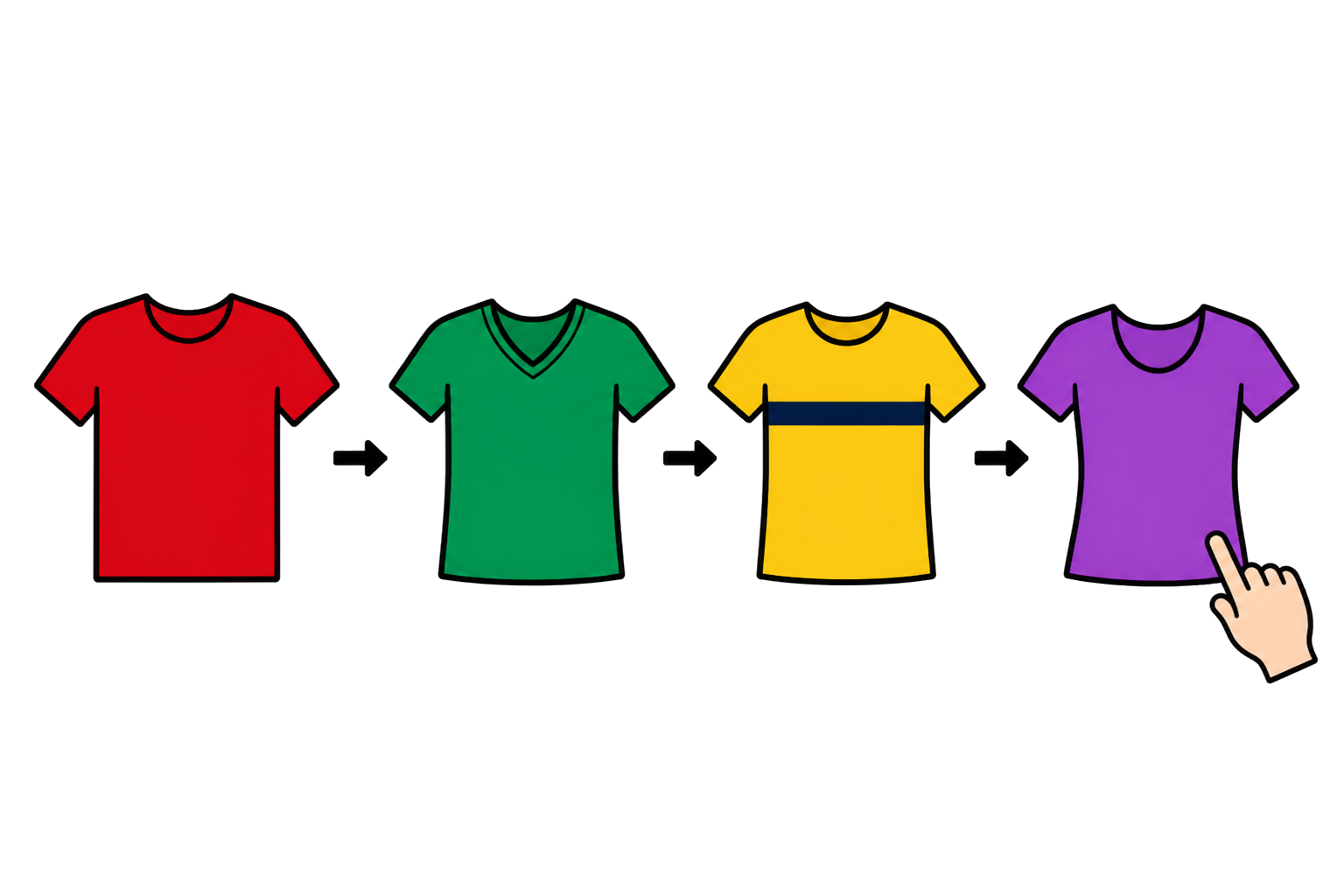
| A | ________ |
| B | ________ |
10.
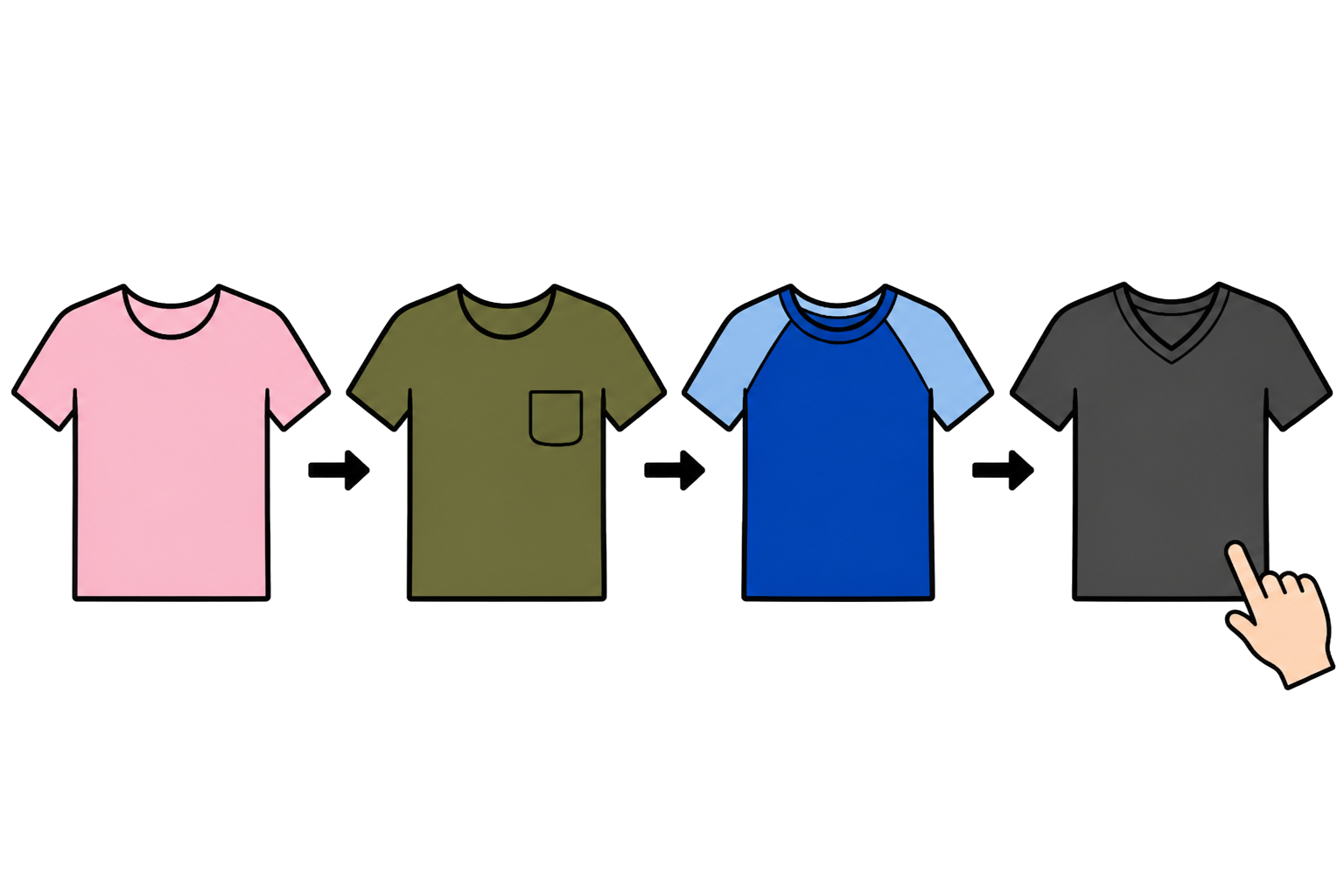
| A | ________ |
| B | ________ |
11.
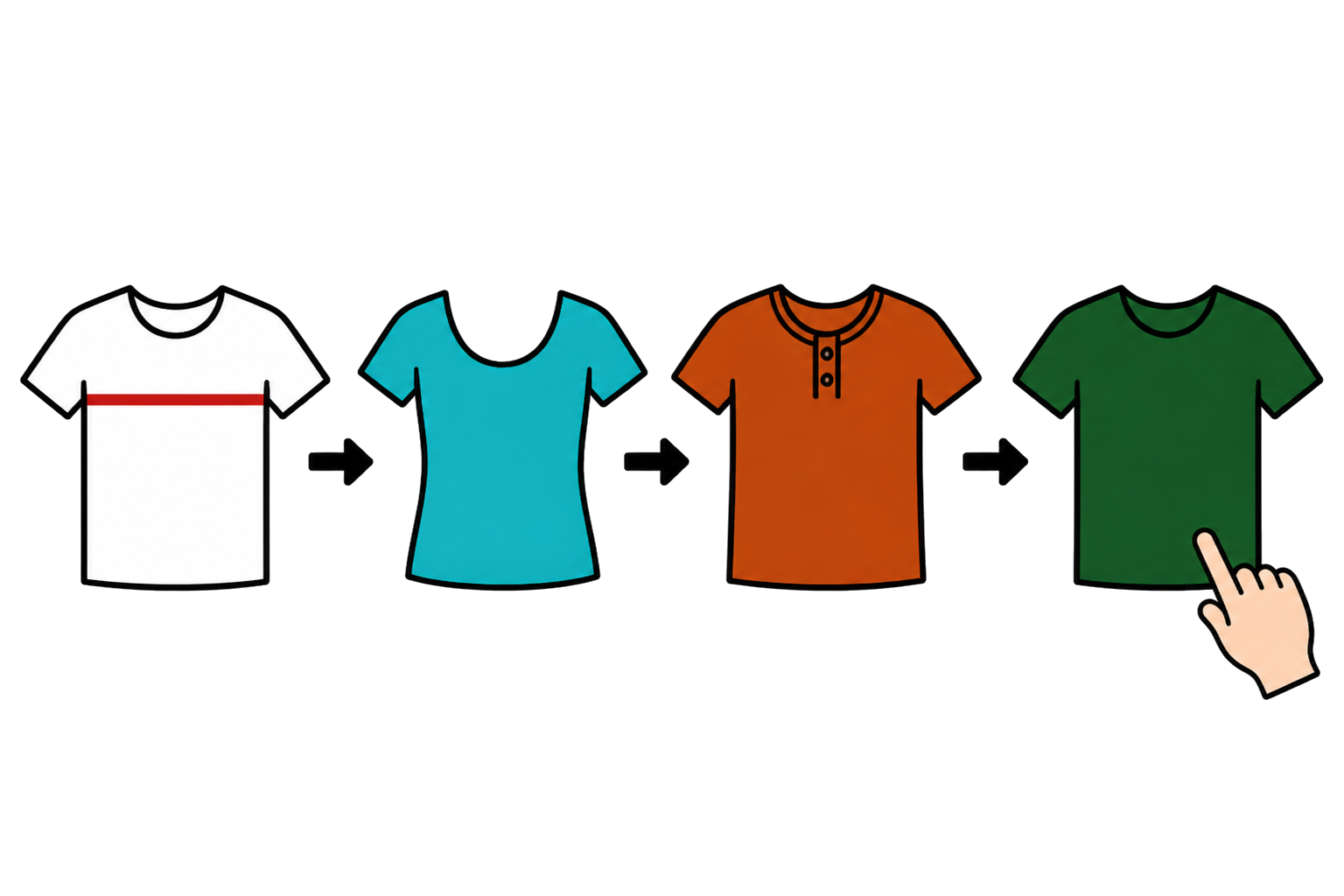
| A | ________ |
| B | ________ |
12.
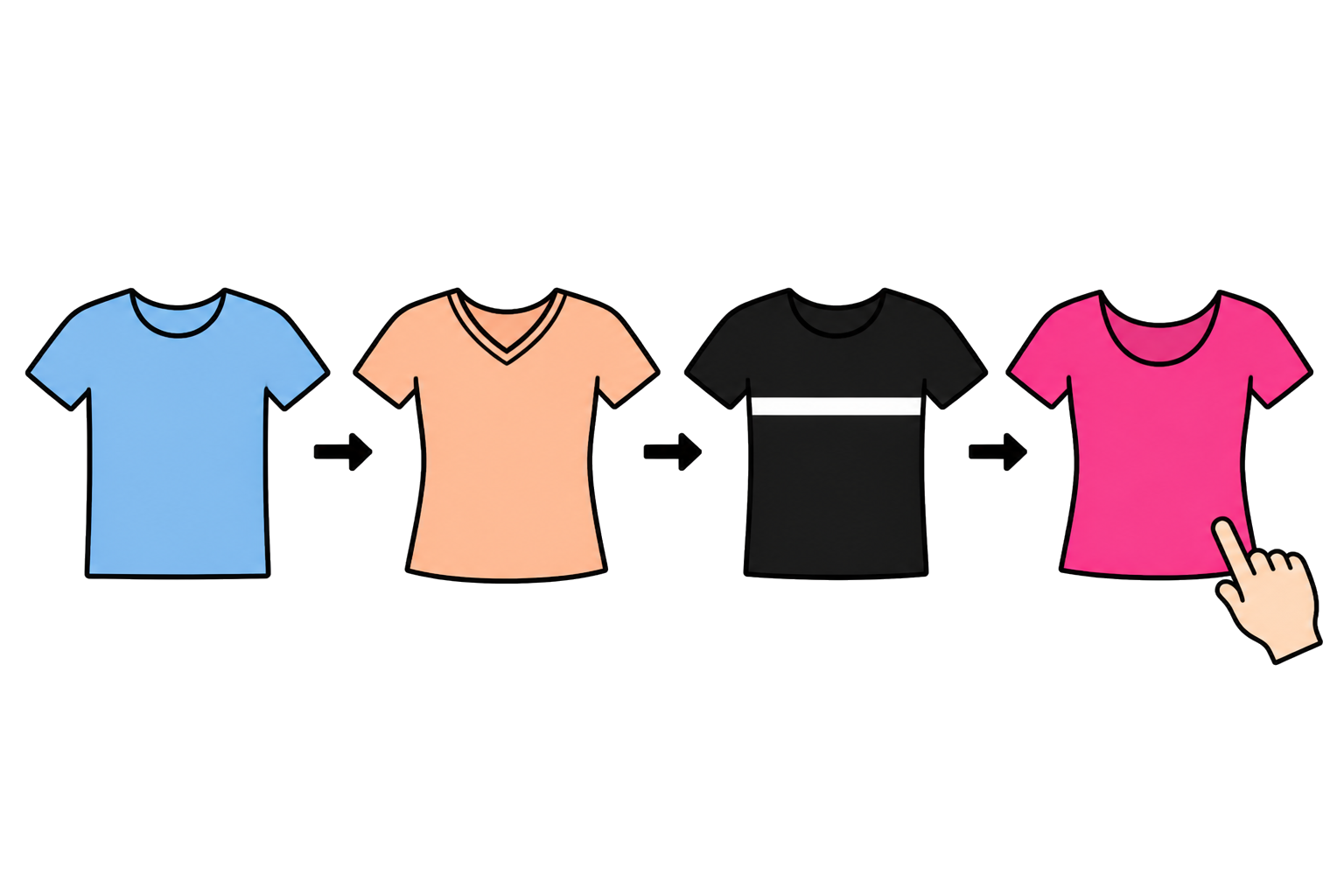
| A | ________ |
| B | ________ |
Exercise 4
For each question, insert the word in brackets to the sentence. Then, check your answers and repeat after the recordings.
Example
呢件襯你呀。 (好)
ni1 gin6 can3 nei5 aa3. (hou2)
ni1 gin6 hou2 can3 nei5 aa3.
This one matches you very much.
1.
我鍾意呢個款呀。 (多啲)
ngo5 zung1 ji3 ni1 go3 fun2 aa3. (do1 di1)
2.
你着好好睇呀。 (得)
nei5 zoek3 hou2 hou2 tai2 aa3. (dak1)
3.
我覺得最尾呢兩件好呀。 (啲)
ngo5 gok3 dak1 zeoi3 mei5 ni1 loeng5 gin6 hou2 aa3. (di1)
4.
我鍾意第一件呀。 (最)
ngo5 zung1 ji3 dai6 jat1 gin6 aa3. (zeoi3)
5.
我覺得兩隻色好好睇呀。 (都)
ngo5 gok3 dak1 loeng5 zek3 sik1 hou2 hou2 tai2 aa3. (dou1)
6.
我覺得呢件靚另外嗰啲呀。 (過)
ngo5 gok3 dak1 ni1 gin6 leng3 ling6 ngoi6 go2 di1 aa3. (gwo3)
7.
你着好似唔係幾靚噉呀。 (得)
nei5 zoek3 hou2 ci5 m4 hai6 gei2 leng3 gam2 aa3. (dak1)
8.
我覺得最後呢件啱你頭嗰一件呀。 (多過)
ngo5 gok3 dak1 zeoi3 hau6 ni1 gin6 ngaam1 nei5 tau4 go2 jat1 gin6 aa3. (do1 gwo3)
9.
我覺得上一件啱你呀。 (最)
ngo5 gok3 dak1 soeng6 jat1 gin6 ngaam1 nei5 aa3. (zeoi3)
10.
我覺得全部唔係好襯你呀。 (都)
ngo5 gok3 dak1 cyun4 bou6 m4 hai6 hou2 can3 nei5 aa3. (dou1)
11.
我鍾意呢件另一件呀。 (多過)
ngo5 zung1 ji3 ni1 gin6 ling6 jat1 gin6 aa3. (do1 gwo3)
12.
我覺得另外嗰隻色襯你呀。 (多啲)
ngo5 gok3 dak1 ling6 ngoi6 go2 zek3 sik1 can3 nei5 aa3. (do1 di1)