Print or Export
Pronunciation Lesson 7
1. Tone 1 to Tone 6
Let’s revise the six tones.
| Tone Number | Tone 1 | Tone 2 | Tone 3 | Tone 4 | Tone 5 | Tone 6 |
| Tone Name | High level | Mid rising | Mid level | Low falling | Low rising | Low level |
| Diagram |  |  | 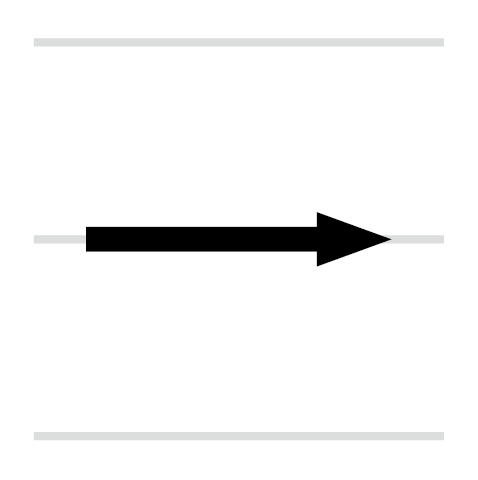 |  |  |  |
Step 1 Listen to the syllable si in Tone 1 to Tone 6 together. Pay attention to the pitch.
si1
si1 si2
si1 si2 si3
si1 si2 si3 si4
si1 si2 si3 si4 si5
si1 si2 si3 si4 si5 si6
Step 2 Practice saying the syllable si in Tone 1 to Tone 6. Listen and repeat.
si1
si1 si2
si1 si2 si3
si1 si2 si3 si4
si1 si2 si3 si4 si5
si1 si2 si3 si4 si5 si6
💡 Tips
Come back and revise the set of the syllable si from Tone 1 to Tone 6 until you can recall them effortlessly. It will be a useful tool that you can use to recall each tone easily.
Practice Say the following syllables from Tone 1 to Tone 6. Try it yourself before listening to the recording.
- wan1 wan2 wan3 wan4 wan5 wan6
- jim1 jim2 jim3 jim4 jim5 jim6
- seoi1 seoi2 seoi3 seoi4 seoi5 seoi6
- jau1 jau2 jau3 jau4 jau5 jau6
- wui1 wui2 wui3 wui4 wui5 wui6
2. Rising Tones
There are two rising tones in Cantonese:
| Tone Number | Tone 2 | Tone 5 |
| Tone Name | Mid rising | Low rising |
| Diagram | | |
Both Tone 2 and Tone 5 start from the low pitch. The difference between them is that Tone 2 ends at the high pitch, but Tone 5 ends at the mid pitch.
Step 1 Listen to the syllable si in Tone 2 and Tone 5 together. Pay attention to the pitch. The pitch of Tone 2 goes up much more noticeably and rapidly than that of Tone 5.
si2 si5
Step 2 Practice saying the syllable si in Tone 2 and Tone 5. Listen and repeat.
si2 si5
Practice
Question 1
Practice saying Tone 2 and Tone 5 with other syllables. Listen and repeat.
- fu2 fu5
- se2 se5
- co2 co5
- hau2 hau5
- mou2 mou5
Question 2
You will hear two syllables each time. Are their tones the same (S) or different (D)?
- S / D
- S / D
- S / D
- S / D
- S / D
- S / D
- S / D
- S / D
Question 3
You will hear three syllables each time. The first two syllables are Tone 2 and Tone 5 respectively. Which tone is the last syllable?
- si____
- si____
- si____
- si____
- fu____
- se____
- co____
- hau____
Question 4
You will hear one syllable each time. Which tone is the syllable?
- si____
- si____
- si____
- si____
- fu____
- se____
- co____
- mou____
3. Tones at the High Pitch
The following two tones are at or partly at the high pitch:
| Tone Number | Tone 1 | Tone 2 |
| Tone Name | High level | Mid rising |
| Diagram | | |
The pitch of Tone 1 remains steady throughout the whole syllable, whereas the pitch of Tone 2 goes up noticeably and rapidly in the syllable.
Step 1 Listen to the syllable si in Tone 1 and Tone 2 together. Pay attention to the pitch. Tone 2 has a noticeable change in pitch, but Tone 1 doesn’t.
si1 si2
Step 2 Practice saying the syllable si in Tone 1 and Tone 2. Listen and repeat.
si1 si2
Practice
Question 1
Practice saying Tone 1 and Tone 2 with other syllables. Listen and repeat.
- gaa1 gaa2
- fo1 fo2
- baau1 baau2
- fu1 fu2
- dai1 dai2
Question 2
You will hear two syllables each time. Are their tones the same (S) or different (D)?
- S / D
- S / D
- S / D
- S / D
- S / D
- S / D
- S / D
- S / D
Question 3
You will hear three syllables each time. The first two syllables are Tone 1 and Tone 2 respectively. Which tone is the last syllable?
- si____
- si____
- si____
- si____
- gaa____
- fo____
- baau____
- fu____
Question 4
You will hear one syllable each time. Which tone is the syllable?
- si____
- si____
- si____
- si____
- gaa____
- fo____
- baau____
- dai____
4. Tones at the Low Pitch
The following three tones are at or partly at the low pitch:
| Tone Number | Tone 4 | Tone 5 | Tone 6 |
| Tone Name | Low falling | Low rising | Low level |
| Diagram | | | |
All of these three tones start at the low pitch. The difference between them is whether the pitch then goes down, goes up, or remains steady.
Step 1 Listen to the syllable si in Tone 4, Tone 5 and Tone 6 together. Pay attention to the pitch. Observe whether and how the pitch changes in the second half of the syllable.
si4 si5 si6
Step 2 Practice saying the syllable si in Tone 4, Tone 5 and Tone 6. Listen and repeat.
si4 si5 si6
Practice
Question 1
Practice saying Tone 4, Tone 5 and Tone 6 with other syllables. Listen and repeat.
- haa4 haa5 haa6
- wai4 wai5 wai6
- je4 je5 je6
- lou4 lou5 lou6
- fu4 fu5 fu6
Question 2
You will hear two syllables each time. Are their tones the same (S) or different (D)?
- S / D
- S / D
- S / D
- S / D
- S / D
- S / D
- S / D
- S / D
- S / D
- S / D
- S / D
- S / D
Question 3
You will hear four syllables each time. The first three syllables are Tone 4, Tone 5 and Tone 6 respectively. Which tone is the last syllable?
- si____
- si____
- si____
- si____
- si____
- si____
- haa____
- wai____
- je____
- lou____
- fu____
- haa____
Question 4
You will hear one syllable each time. Which tone is the syllable?
- si____
- si____
- si____
- si____
- si____
- si____
- haa____
- wai____
- je____
- lou____
- fu____
- haa____
5. Tone Combinations
💭 Think!
In the previous lessons, you have tried to say words with multiple syllables. Do you find it easy or difficult to say different tones consecutively?
You will practice saying words with different tone combinations (e.g., Tone 1 followed by Tone 1, Tone 1 followed by Tone 2). This practice can train you to say different tones consecutively more smoothly.
Listen and repeat. The actual pitch of a tone is affected by its neighboring tones. Therefore, you may find that some of the tones sound slightly different from when they are said individually.
| 1. | 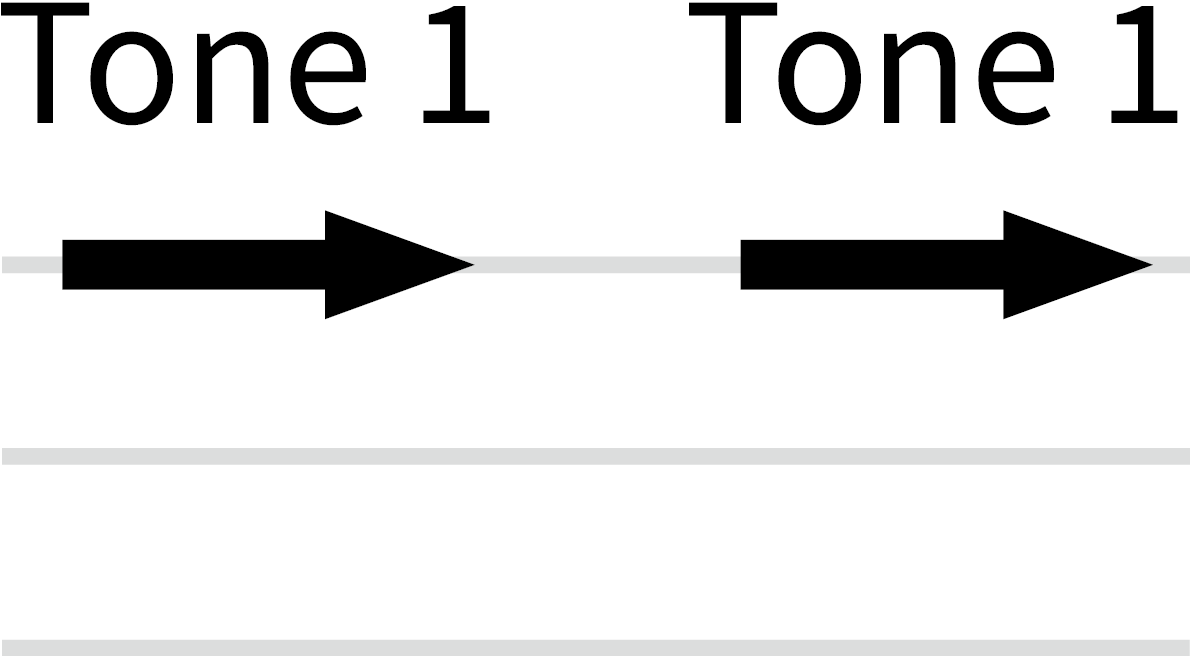 | si1 si1 | 香蕉 hoeng1 ziu1 banana | 飛機 fei1 gei1 plane | 餐廳 caan1 teng1 restaurant |
| 2. | 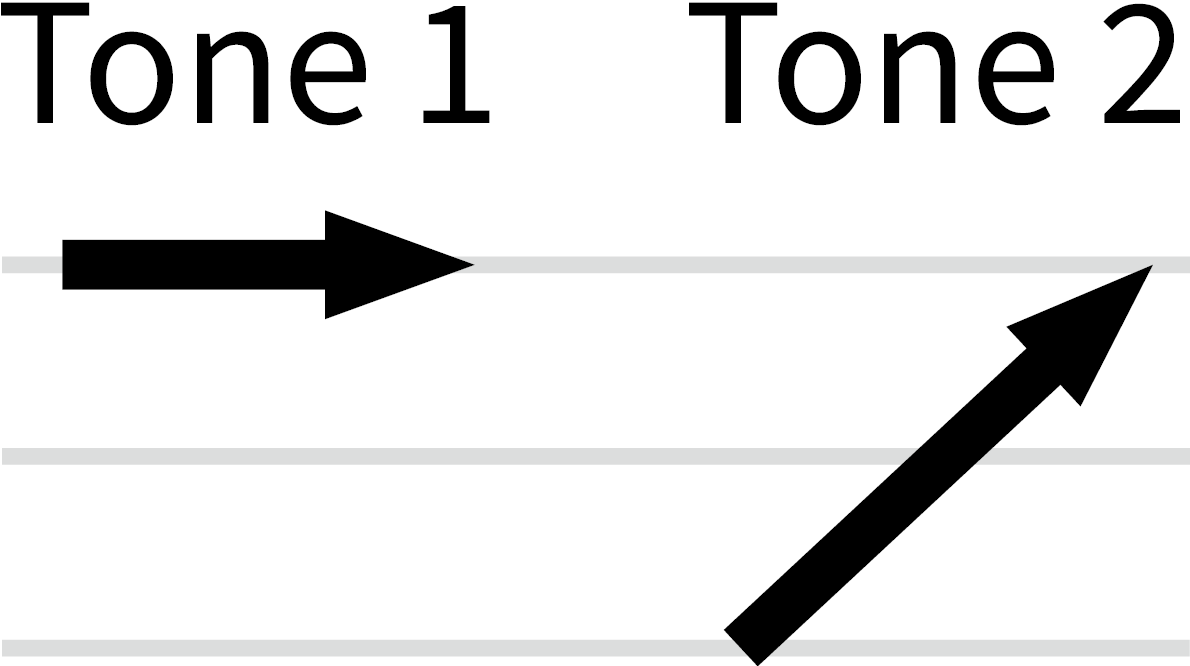 | si1 si2 | 的士 dik1 si2 cab | 巴士 baa1 si2 bus | 公園 gung1 jyun2 park |
| 3. | 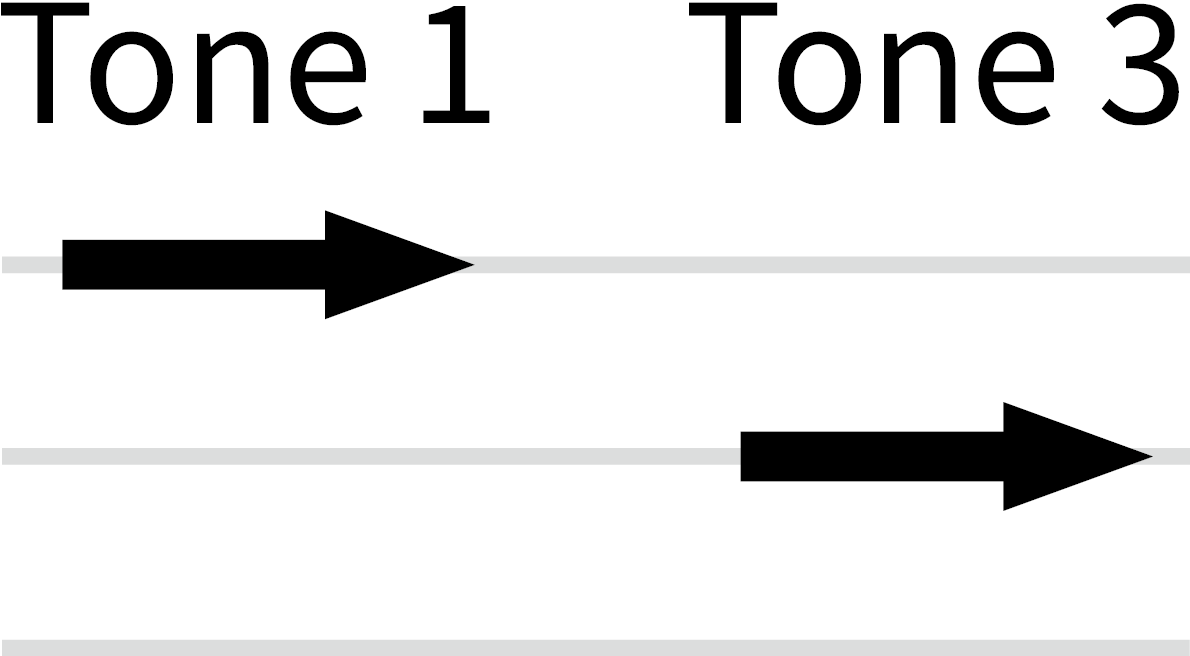 | si1 si3 | 菠菜 bo1 coi3 spinach | 功課 gung1 fo3 homework | 鍾意 zung1 ji3 to like |
| 4. | 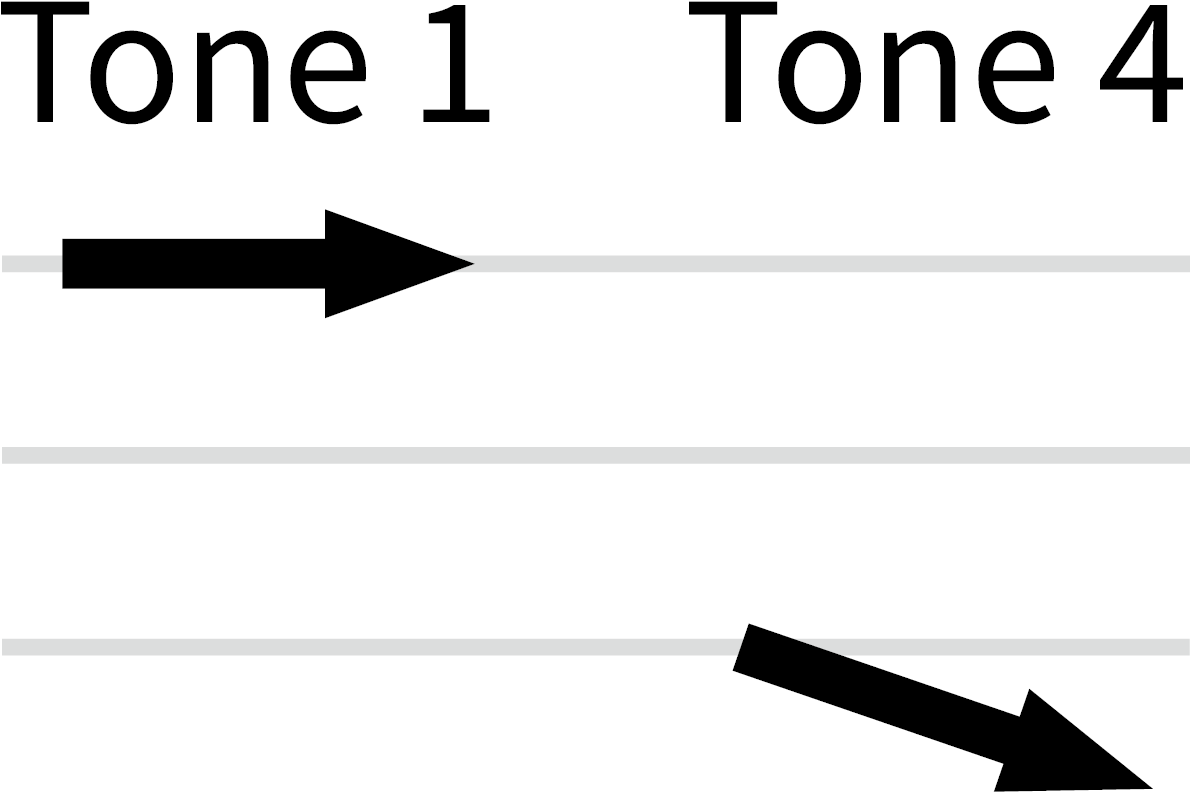 | si1 si4 | 菠蘿 bo1 lo4 pineapple | 足球 zuk1 kau4 football | 商場 soeng1 coeng4 mall |
| 5. | 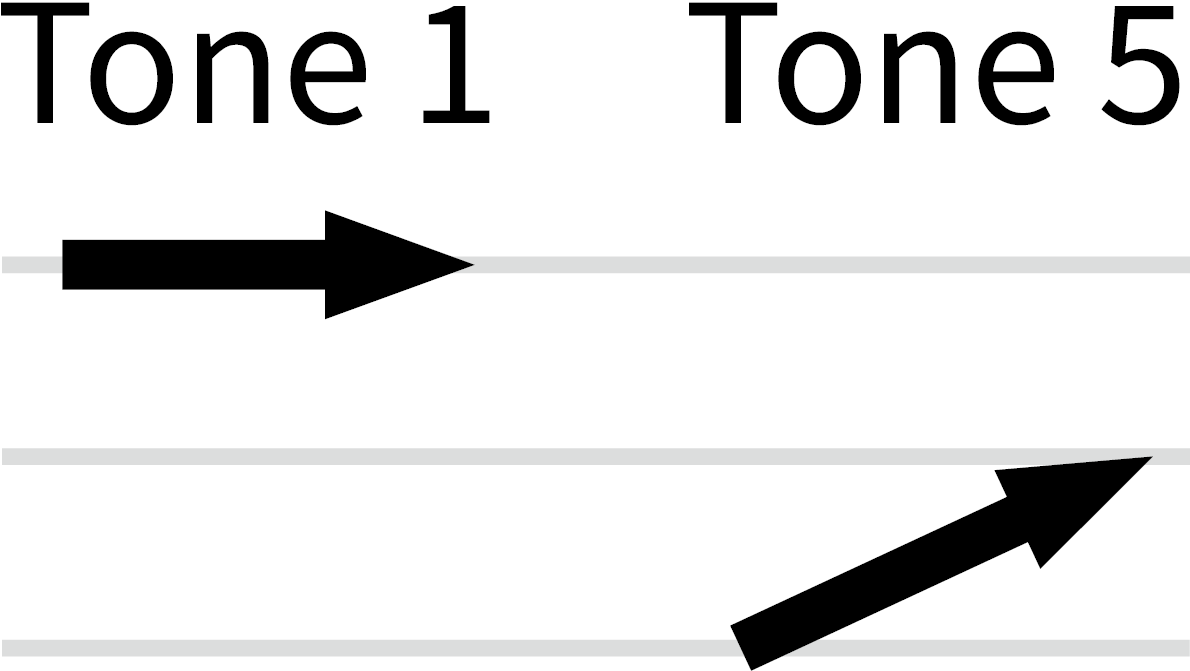 | si1 si5 | 燒賣 siu1 maai5 siu mai | 粟米 suk1 mai5 corn | 經理 ging1 lei5 manager |
Siu mai is a type of street food in Hong Kong. (It is also the authorʼs favorite street food!)  | |||||
| 6. | 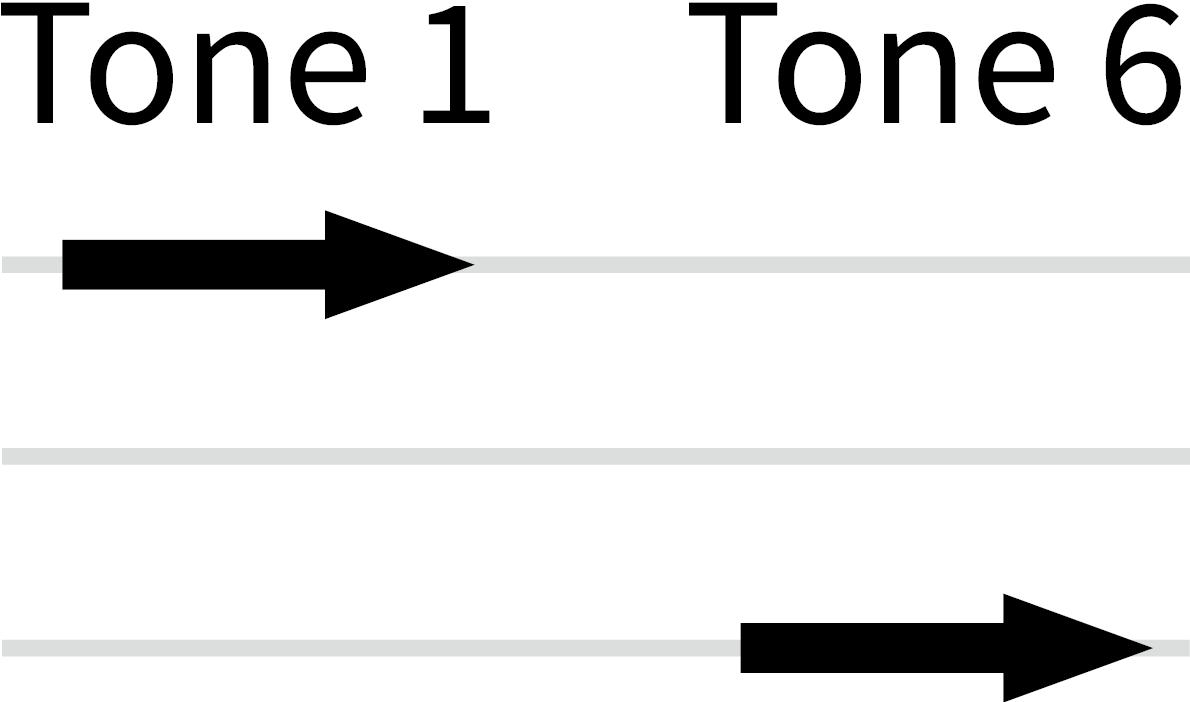 | si1 si6 | 煙肉 jin1 juk6 bacon | 測驗 caak1 jim6 test | 音樂 jam1 ngok6 music |
| 7. | 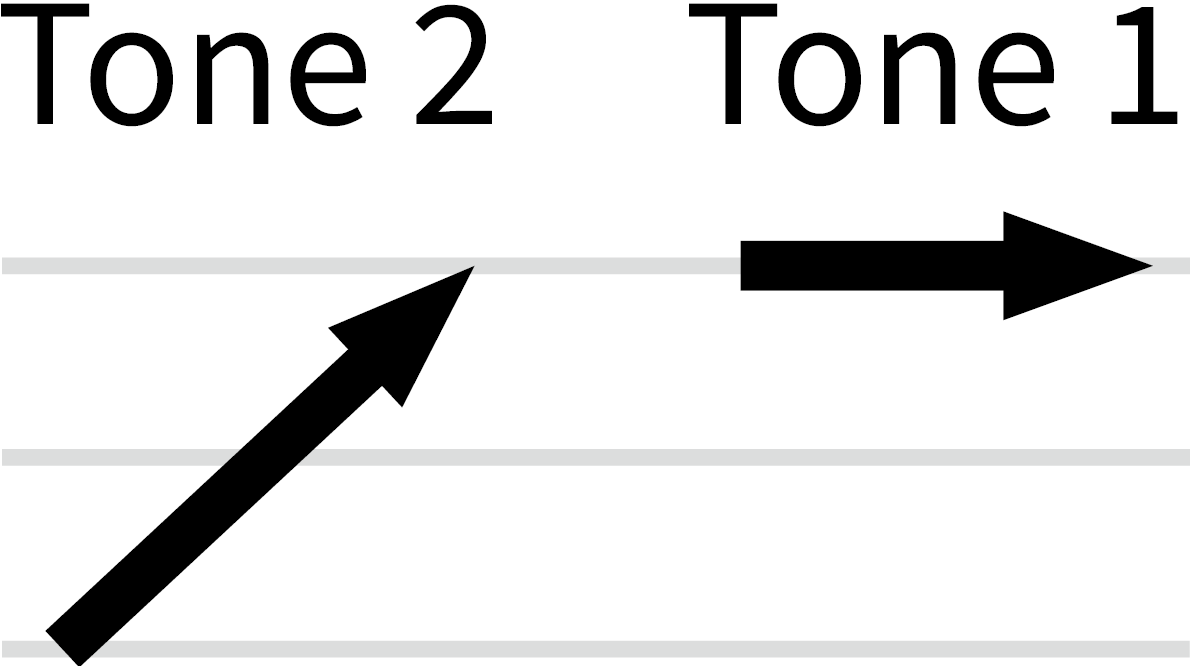 | si2 si1 | 矮瓜 ai2 gwaa1 eggplant | 茄汁 ke2 zap1 ketchup | 火車 fo2 ce1 train |
| 8. | 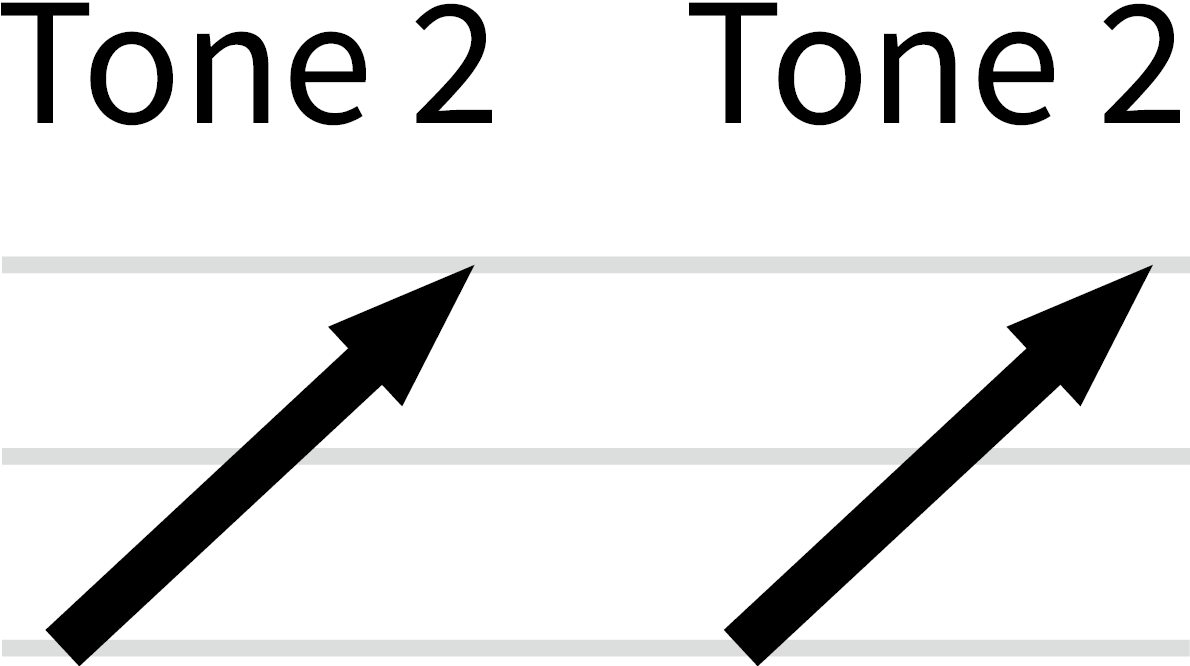 | si2 si2 | 腸仔 coeng2 zai2 sausage | 餃子 gaau2 zi2 dumpling | 診所 can2 so2 clinic |
| 9. | 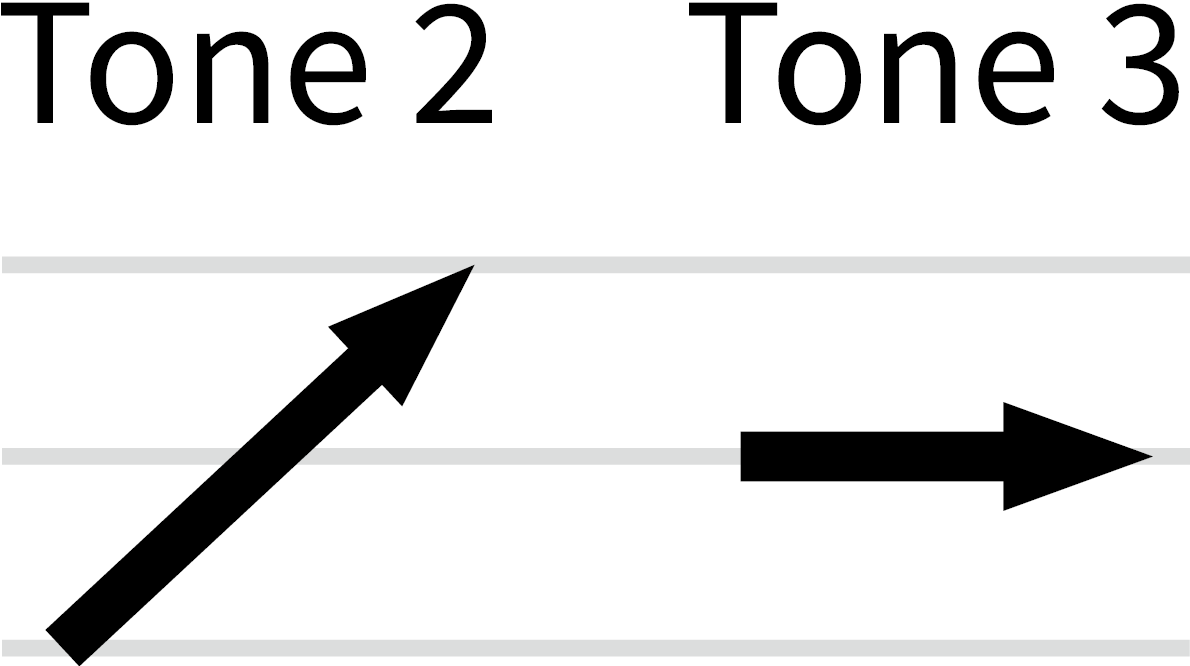 | si2 si3 | 警察 ging2 caat3 police officer | 底褲 dai2 fu3 underpants | 酒店 zau2 dim3 hotel |
| 10. | 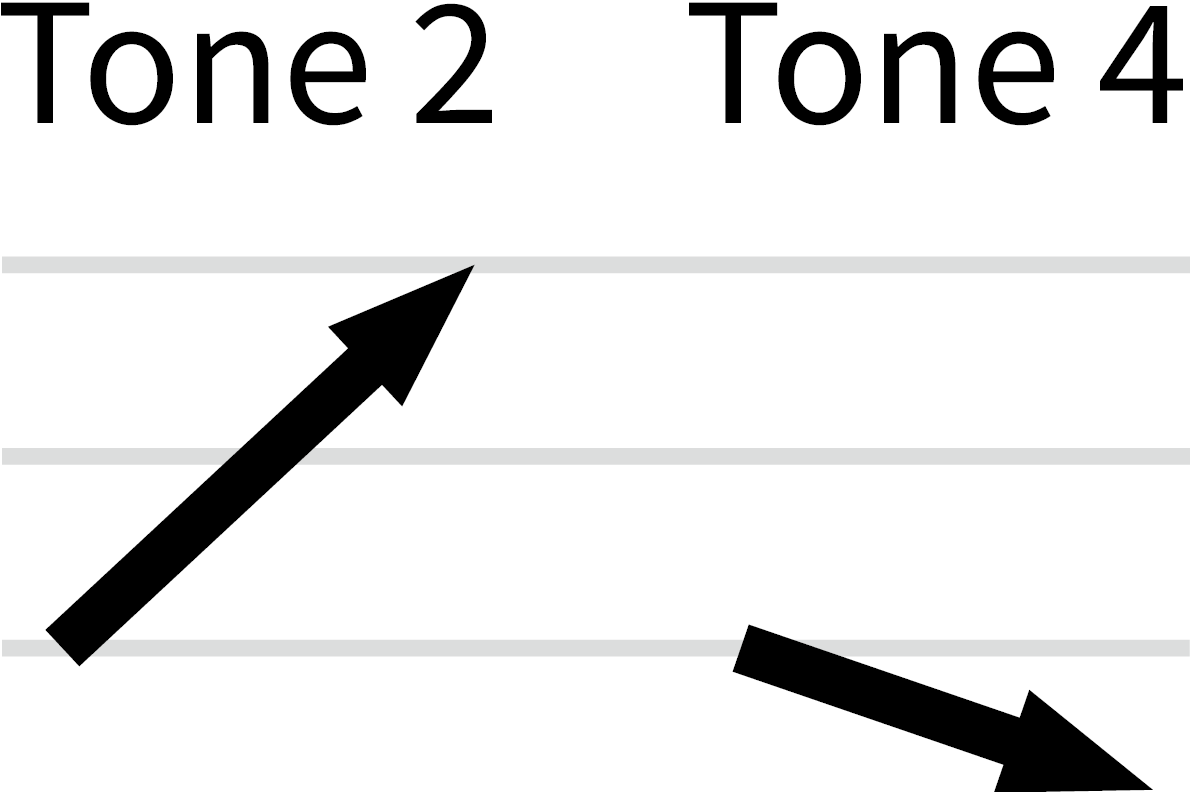 | si2 si4 | 演員 jin2 jyun4 actor / actress | 欖球 laam2 kau4 rugby | 鎖匙 so2 si4 key |
| 11. | 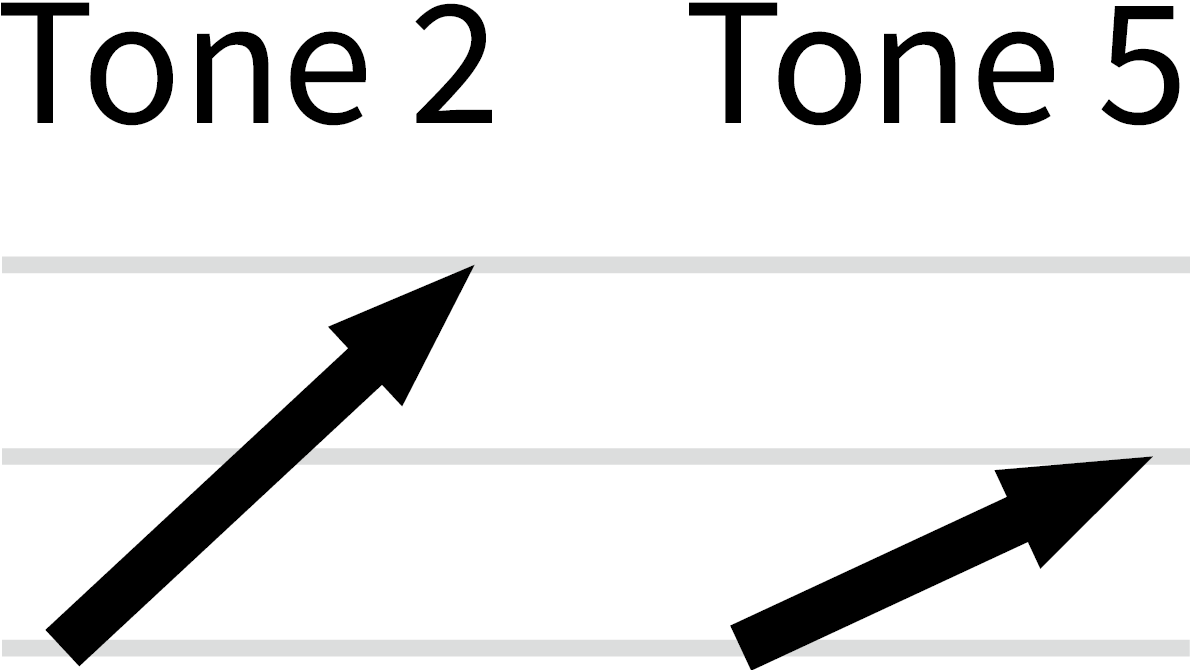 | si2 si5 | 主婦 zyu2 fu5 housewife | 警署 ging2 cyu5 police station | 考試 haau2 si5 exam |
| 12. | 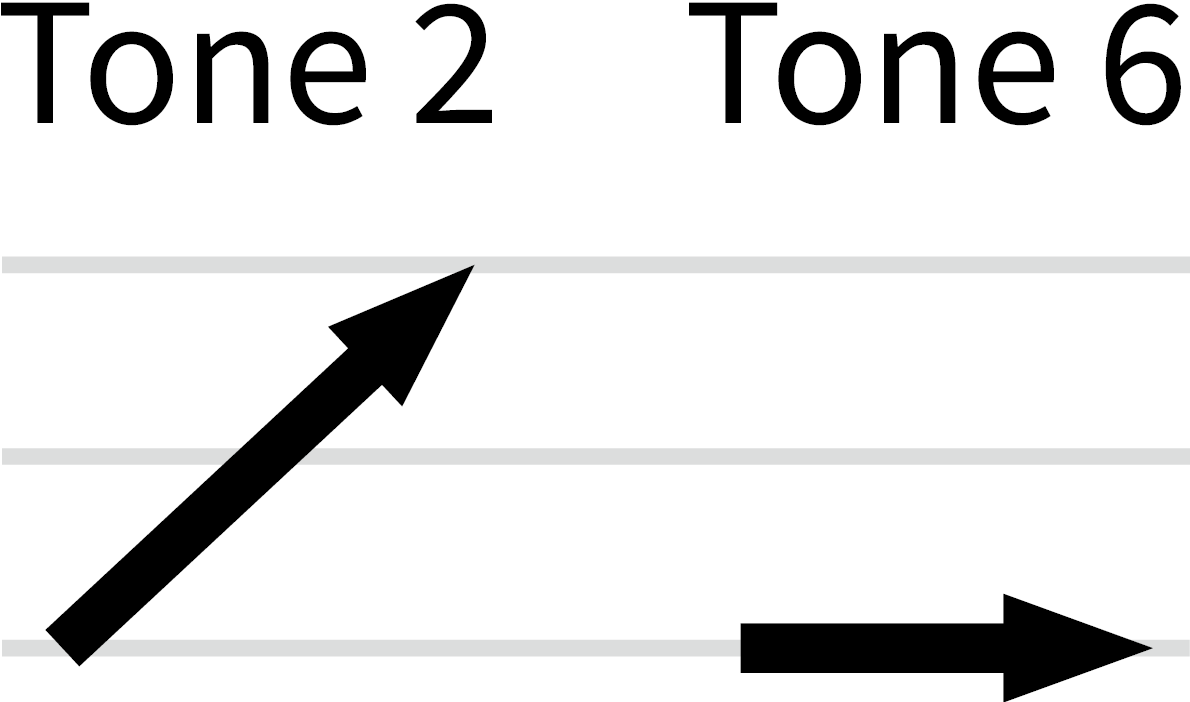 | si2 si6 | 可樂 ho2 lok6 coke | 小學 siu2 hok6 elementary school | 跑步 paau2 bou6 to run |
| 13. | 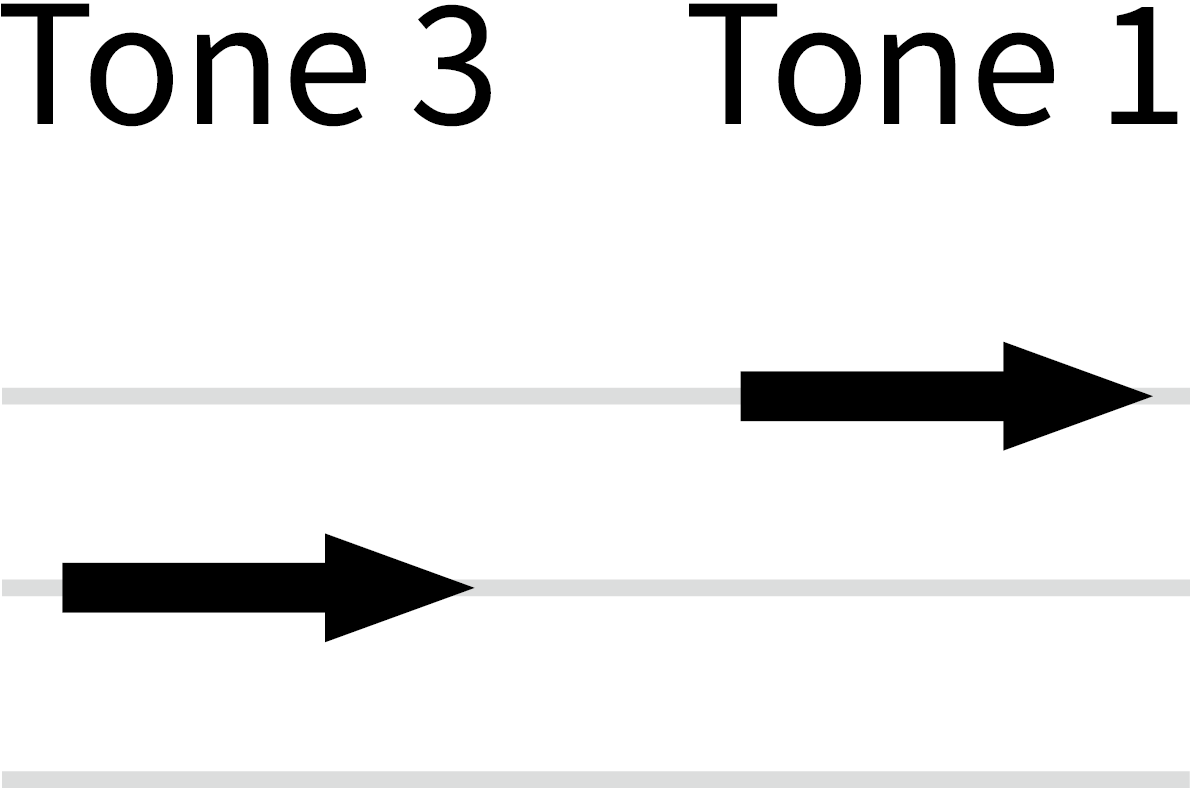 | si3 si1 | 雪糕 syut3 gou1 ice cream | 爆谷 paau3 guk1 popcorn | 課室 fo3 sat1 classroom |
| 14. | 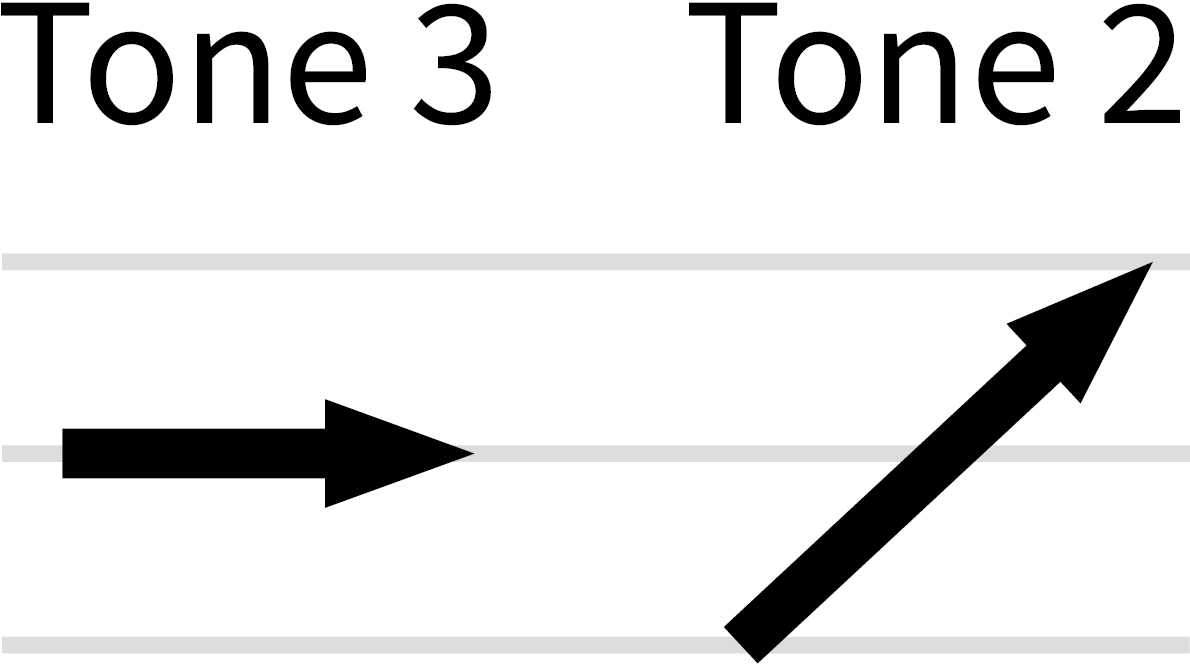 | si3 si2 | 意粉 ji3 fan2 spaghetti | 戲院 hei3 jyun2 movie theatre | 教堂 gaau3 tong2 church |
| 15. | 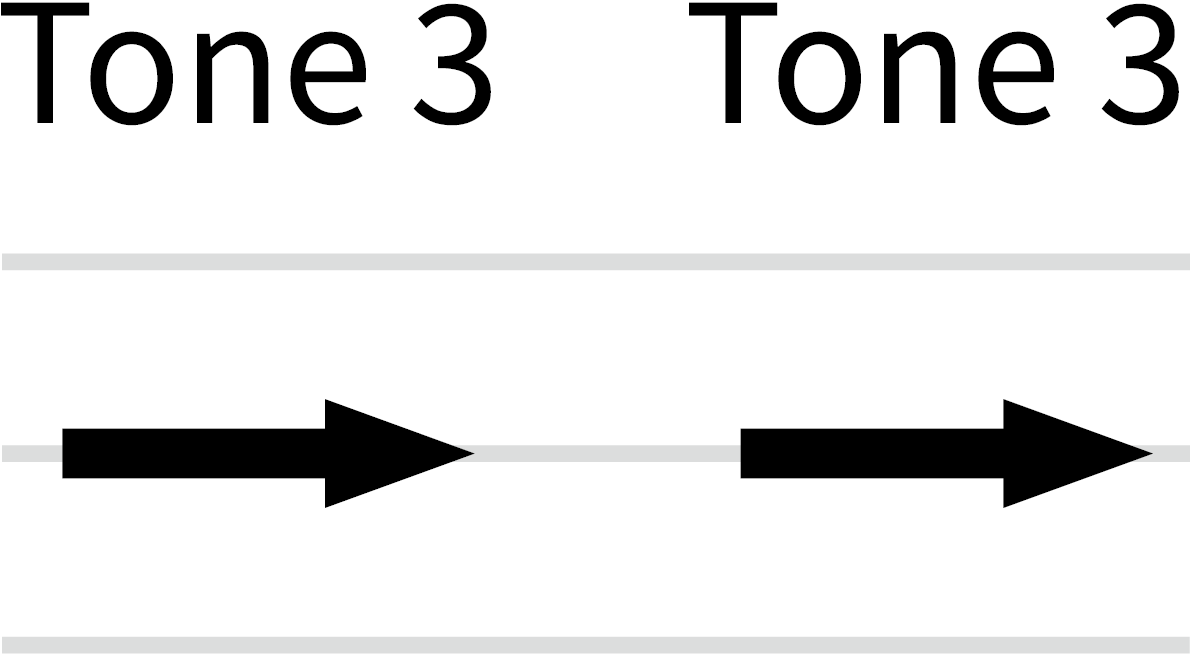 | si3 si3 | 法國 faat3 gwok3 France | 聖誕 sing3 daan3 Christmas | 設計 cit3 gai3 design |
| 16. | 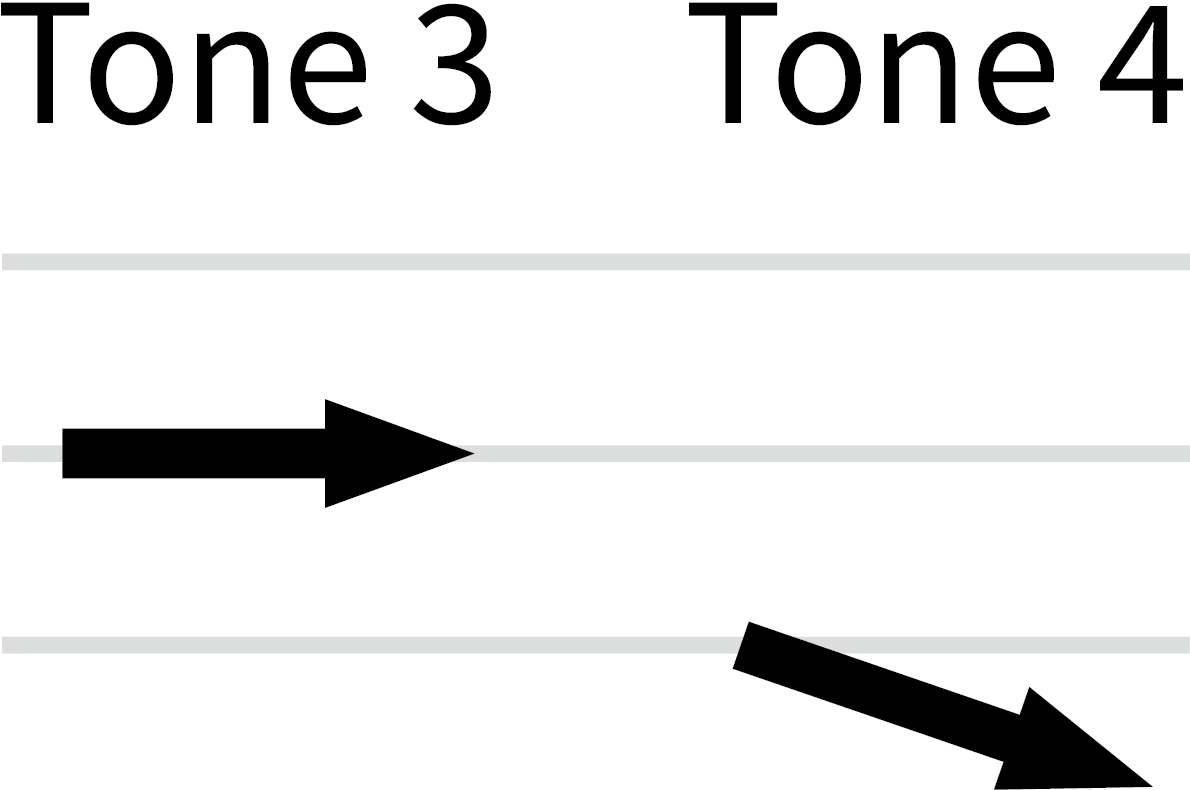 | si3 si4 | 蒜頭 syun3 tau4 garlic | 背囊 bui3 nong4 backpack | 器材 hei3 coi4 equipment |
| 17. | 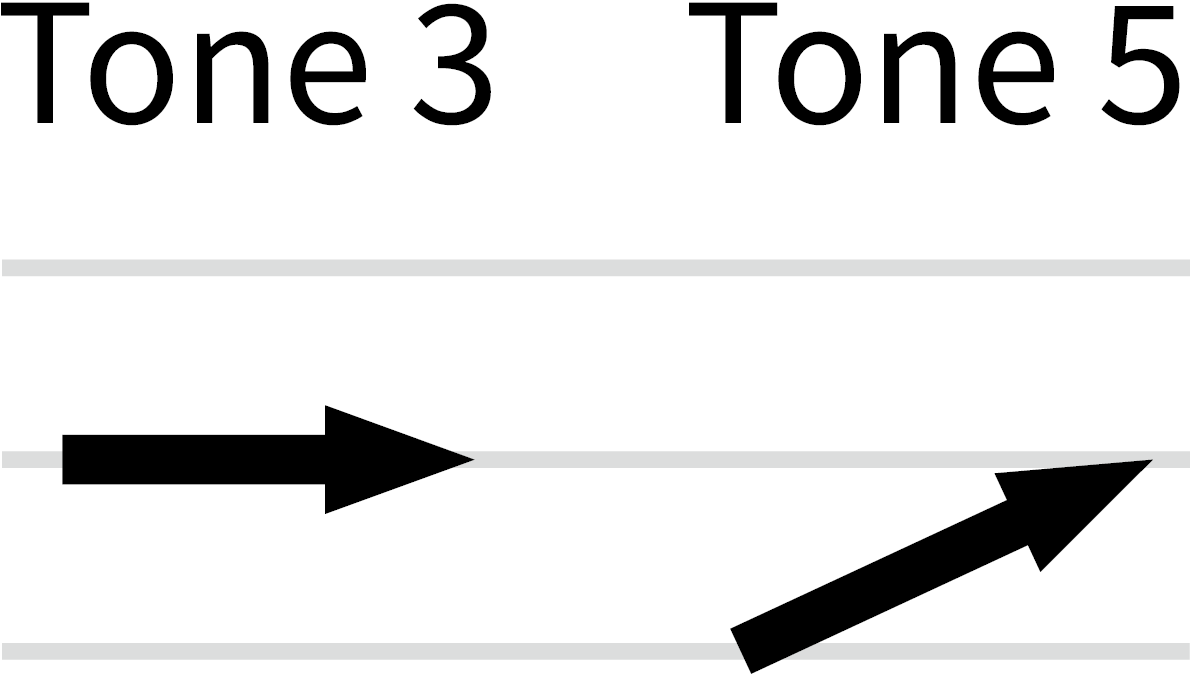 | si3 si5 | 糙米 cou3 mai5 brown rice | 正午 zing3 ng5 noon | 豁免 kut3 min5 to exempt |
| 18. | 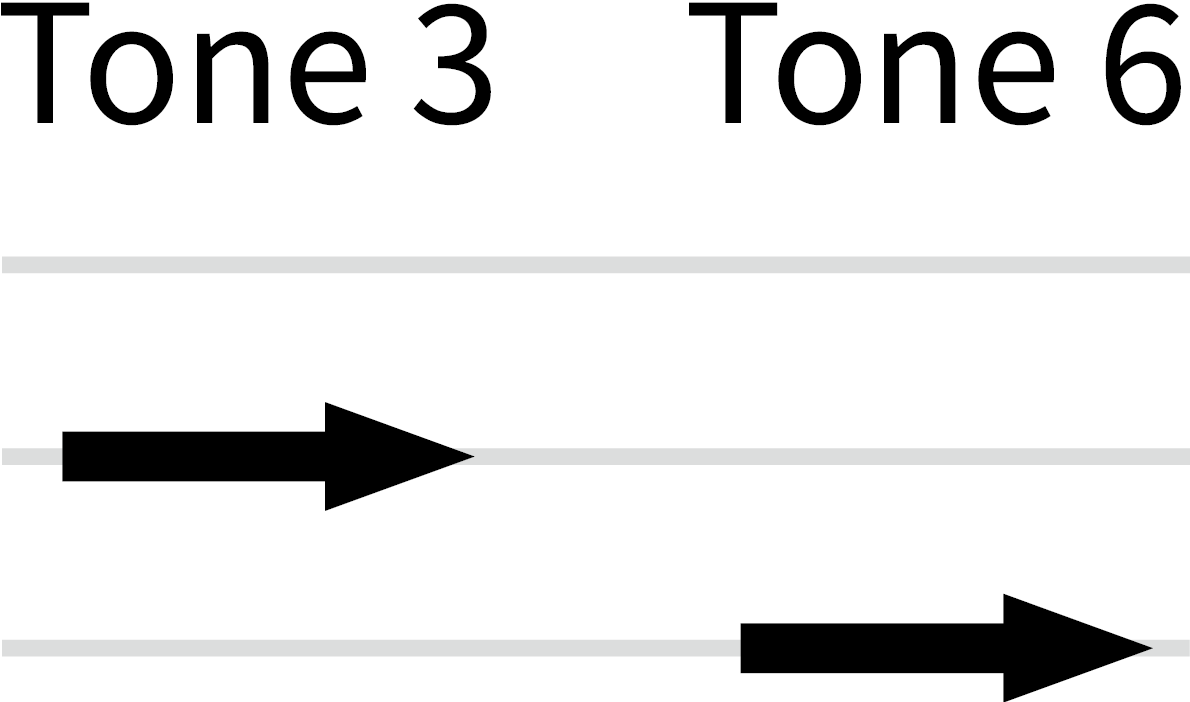 | si3 si6 | 教練 gaau3 lin6 coach | 雪櫃 syut3 gwai6 refrigerator | 作業 zok3 jip6 workbook |
| 19. | 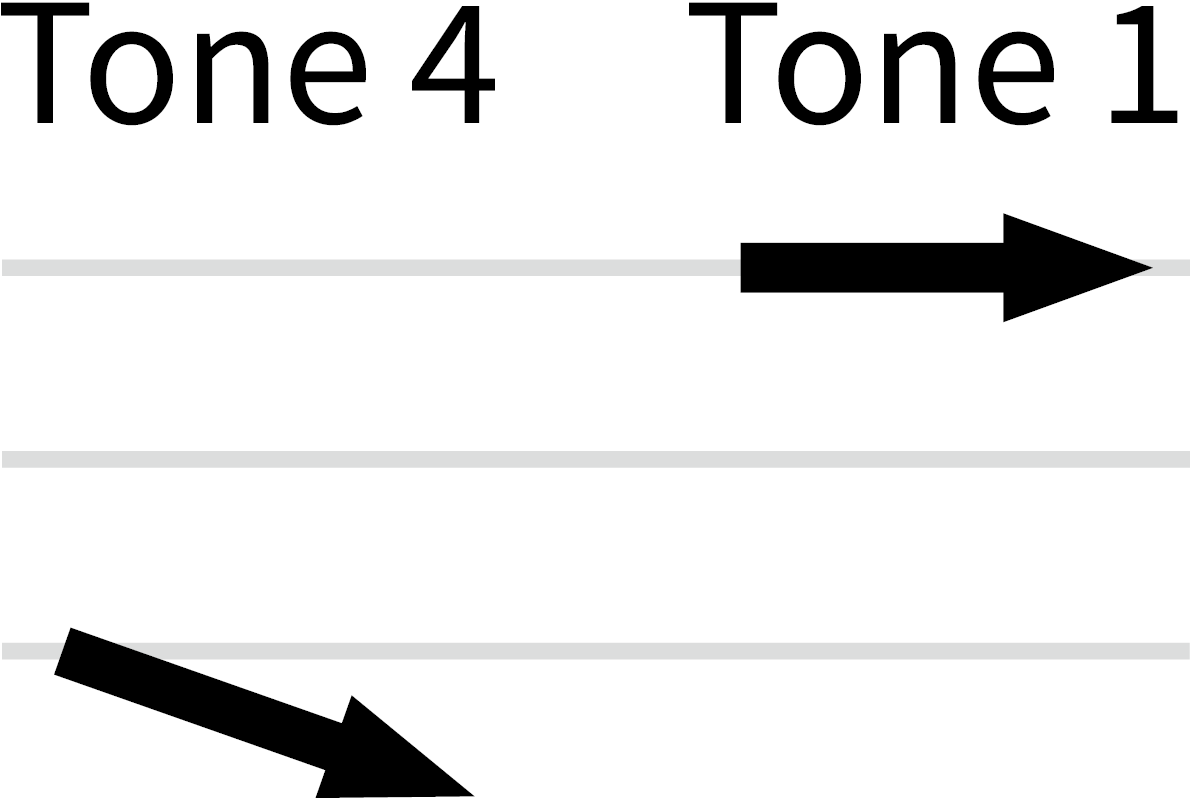 | si4 si1 | 檸檬 ning4 mung1 lemon | 洋蔥 joeng4 cung1 onion | 蘑菇 mo4 gu1 mushroom |
| 20. | 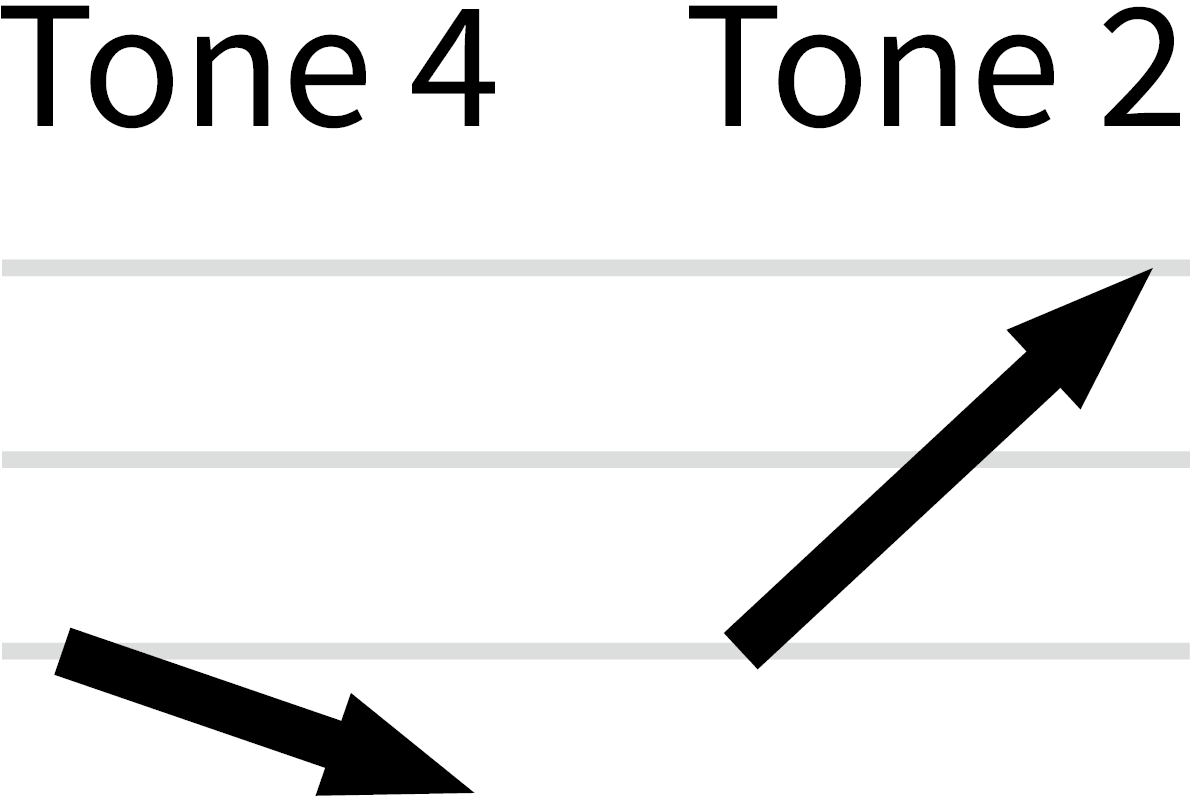 | si4 si2 | 蘋果 ping4 gwo2 apple | 薯仔 syu4 zai2 potato | 郵局 jau4 guk2 post office |
| 21. | 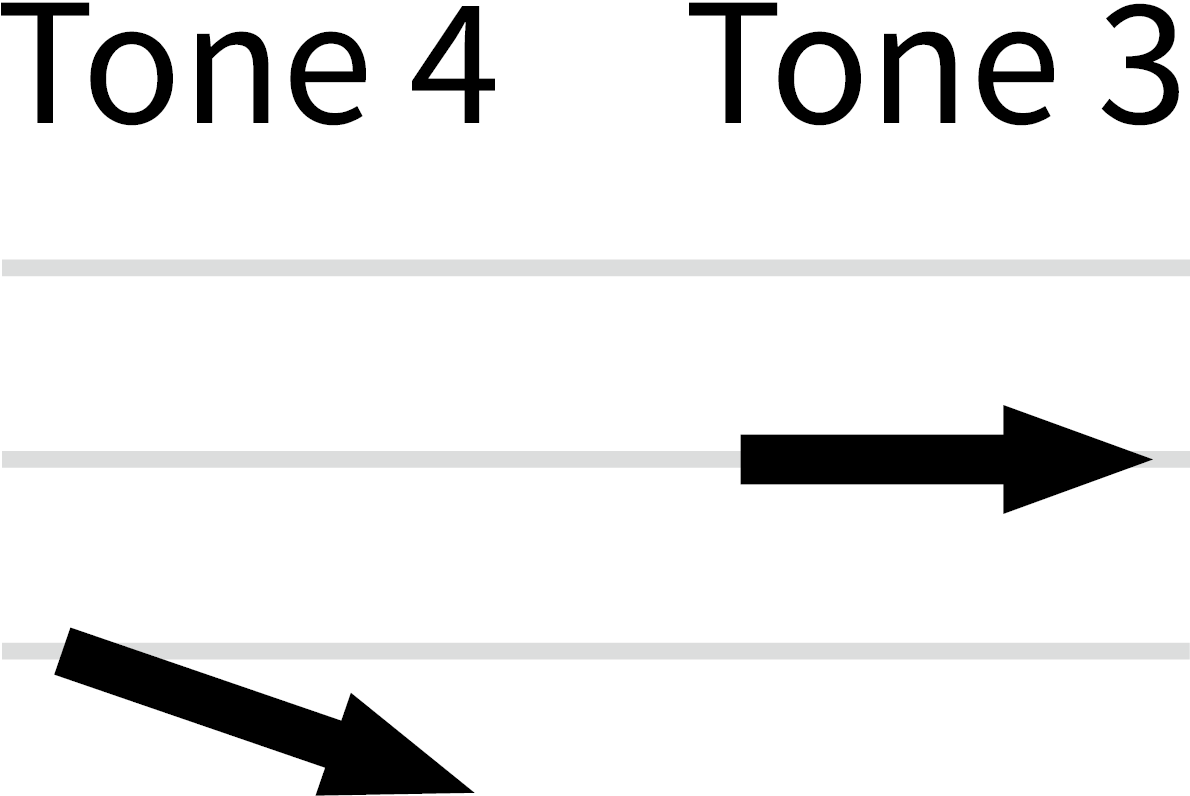 | si4 si3 | 椰菜 je4 coi3 cabbage | 玫瑰 mui4 gwai3 rose | 時間 si4 gaan3 time |
| 22. | 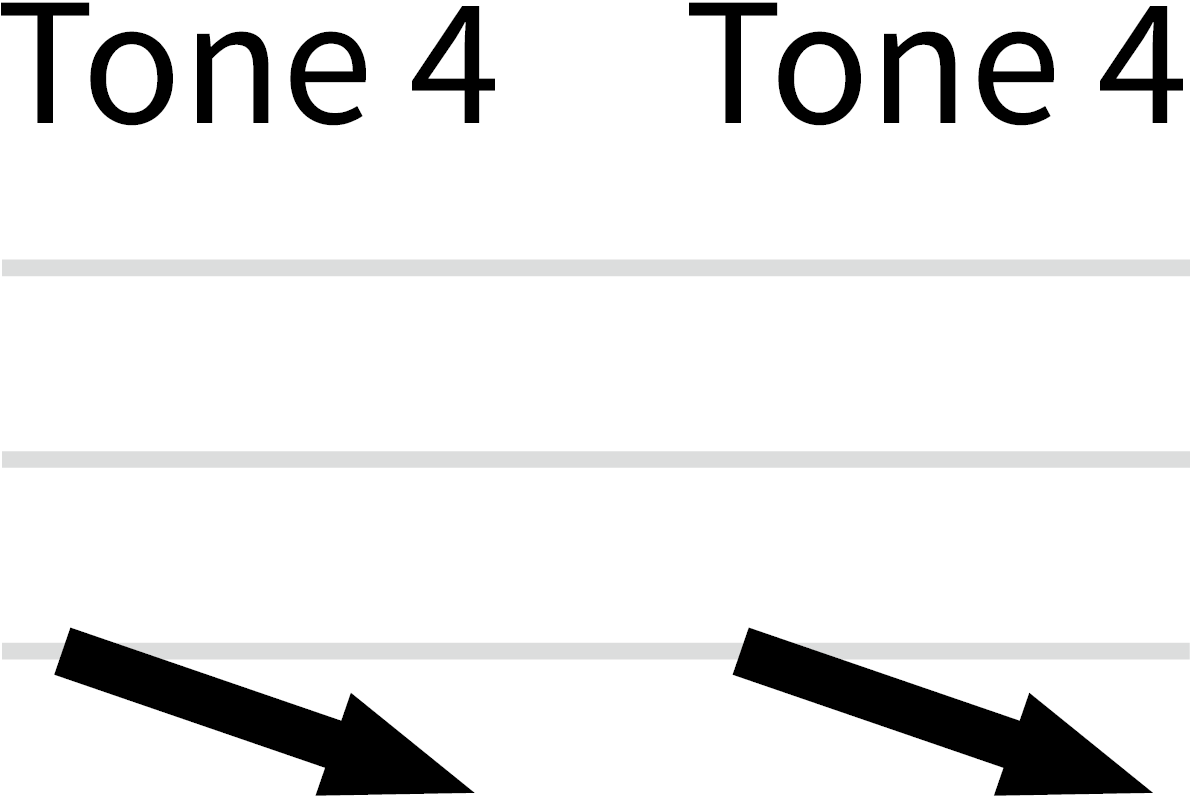 | si4 si4 | 牛油 ngau4 jau4 butter | 籃球 laam4 kau4 basketball | 銀行 ngan4 hong4 bank |
| 23. | 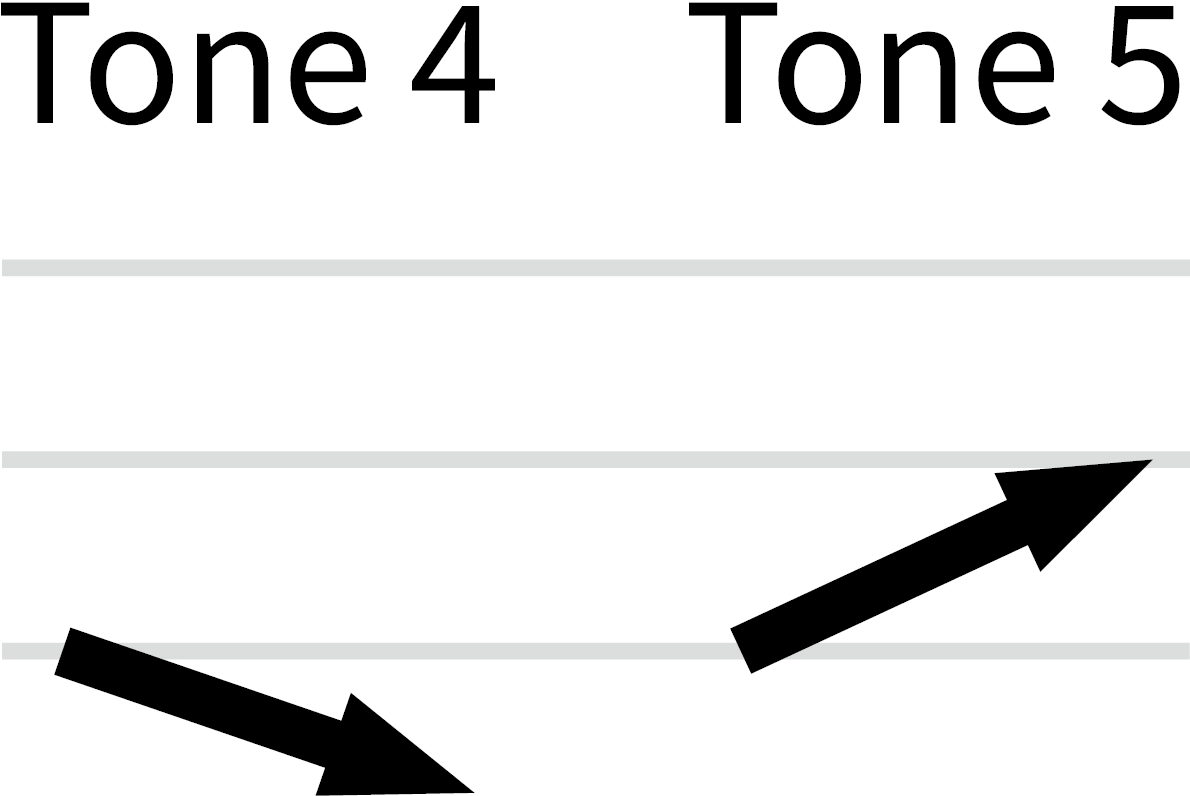 | si4 si5 | 牛奶 ngau4 naai5 milk | 朋友 pang4 jau5 friend | 迷你 mai4 nei5 mini |
| 24. | 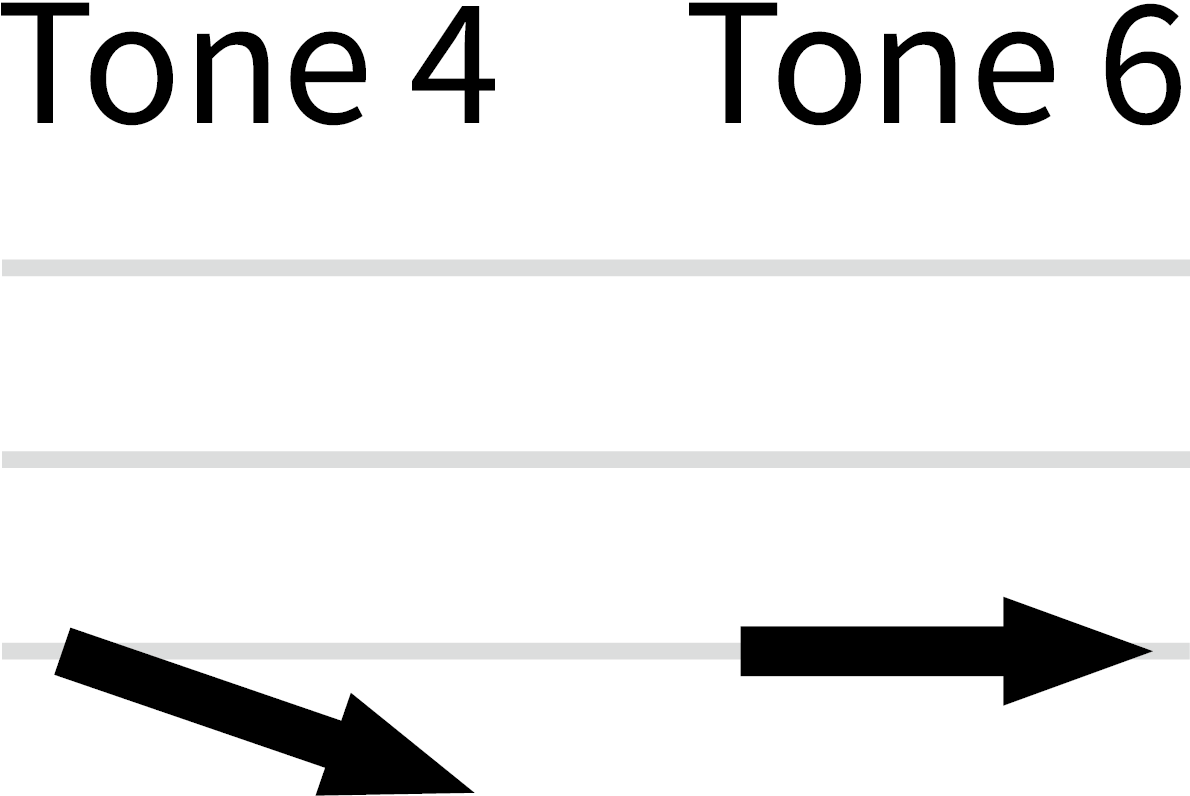 | si4 si6 | 同事 tung4 si6 colleague | 同學 tung4 hok6 classmate | 容易 jung4 ji6 easy |
| 25. | 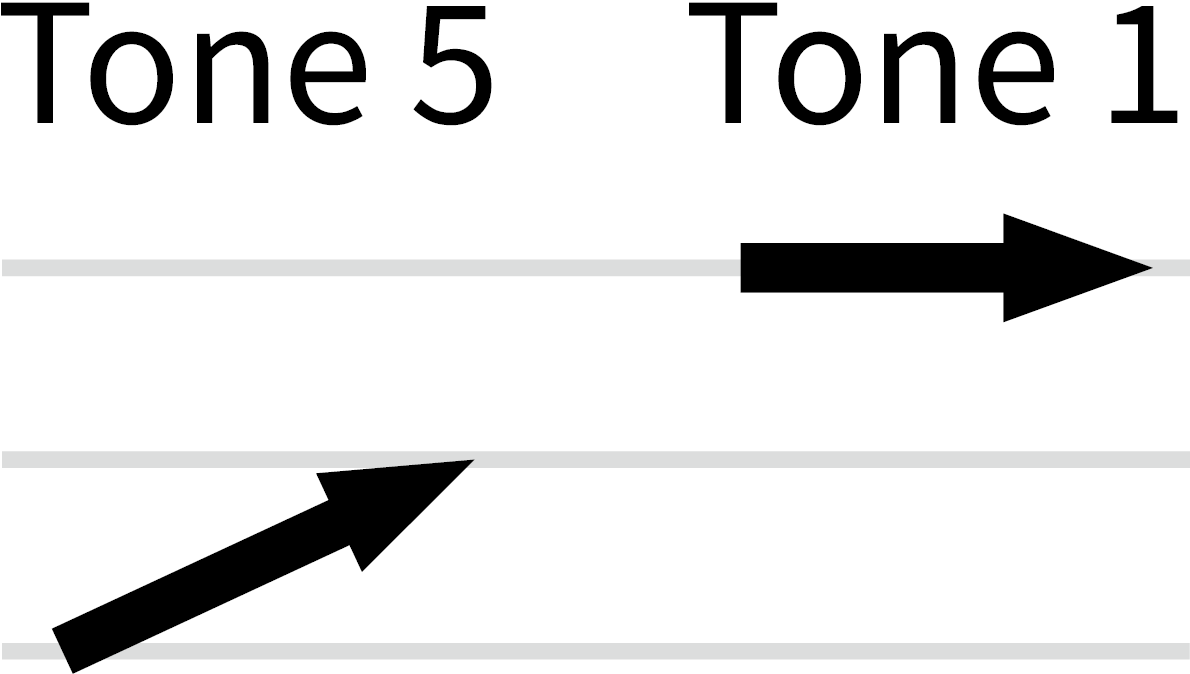 | si5 si1 | 老公 lou5 gung1 husband | 老師 lou5 si1 teacher | 領呔 leng5 taai1 tie |
| 26. | 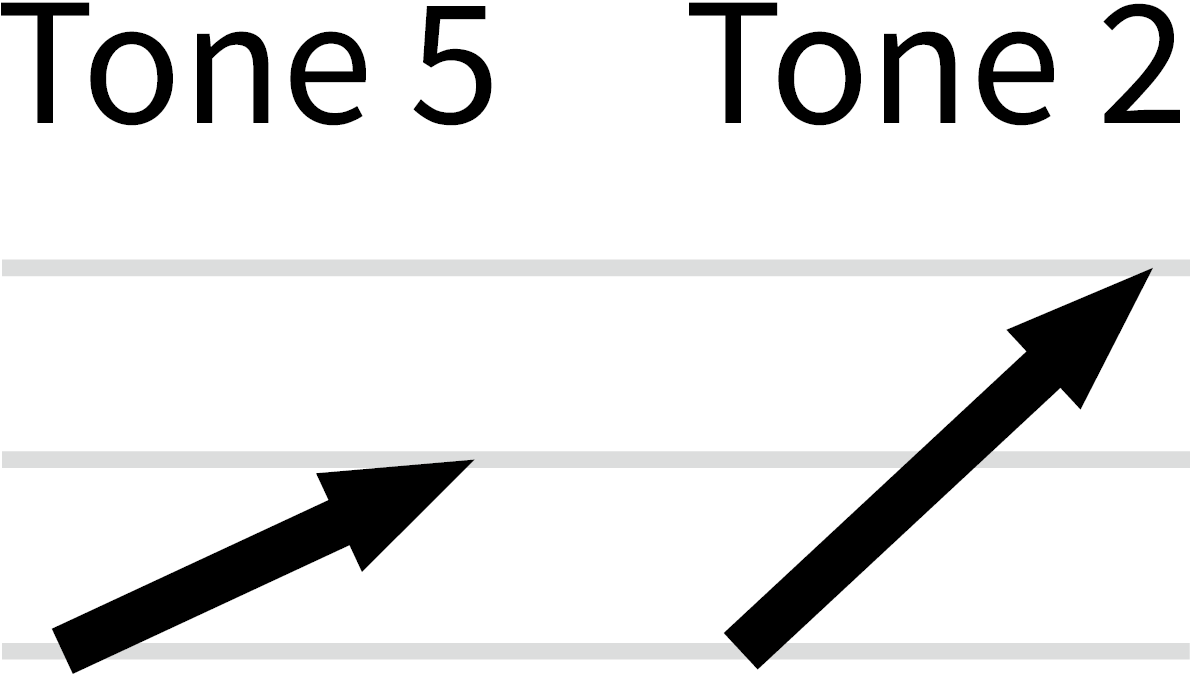 | si5 si2 | 老鼠 lou5 syu2 mouse | 眼鏡 ngaan5 geng2 glasses | 社會 se5 wui2 society |
| 27. | 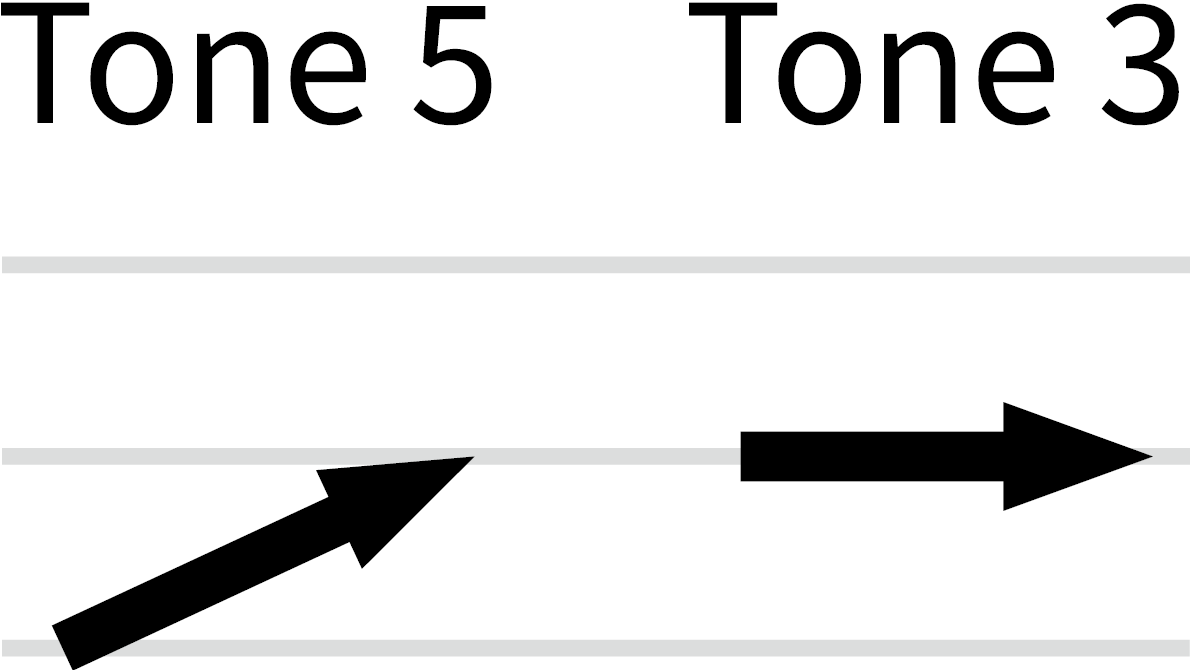 | si5 si3 | 老細 lou5 sai3 boss | 冷氣 laang5 hei3 air-conditioning | 免費 min5 fai3 free (price) |
| 28. | 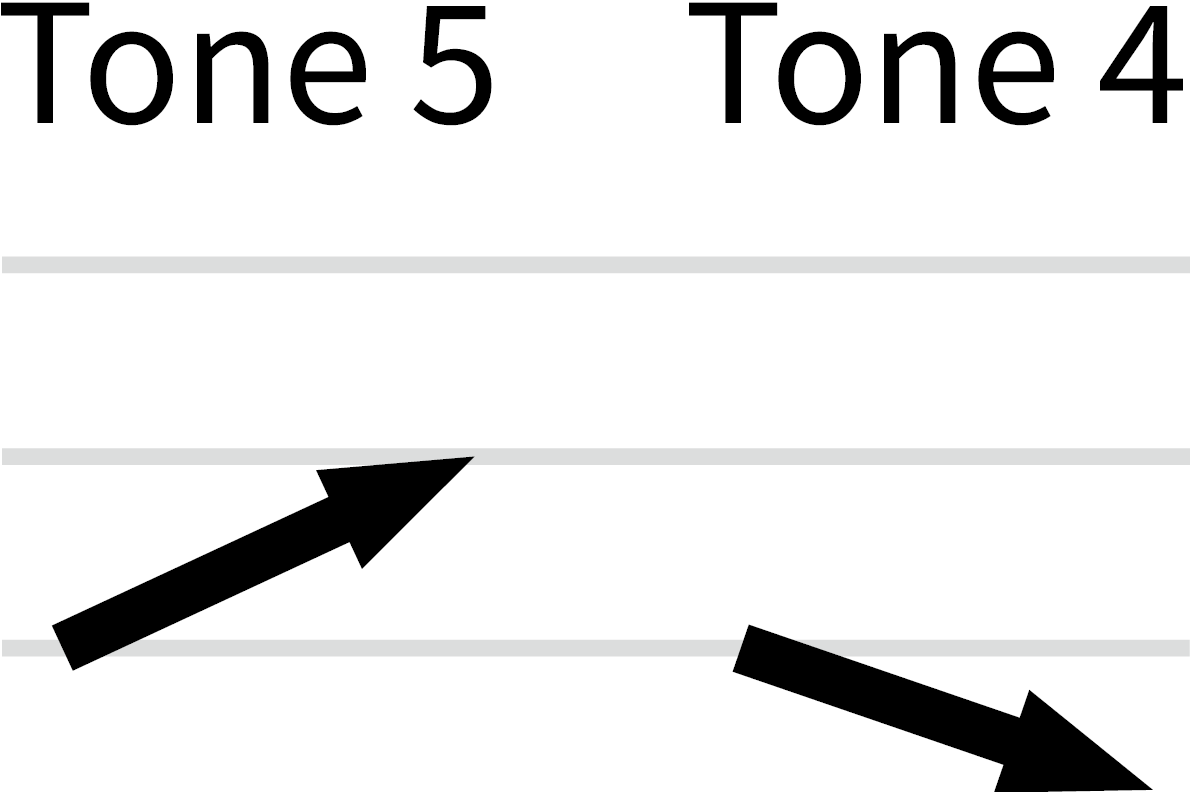 | si5 si4 | 老婆 lou5 po4 wife | 網球 mong5 kau4 tennis | 語言 jyu5 jin4 language |
| 29. | 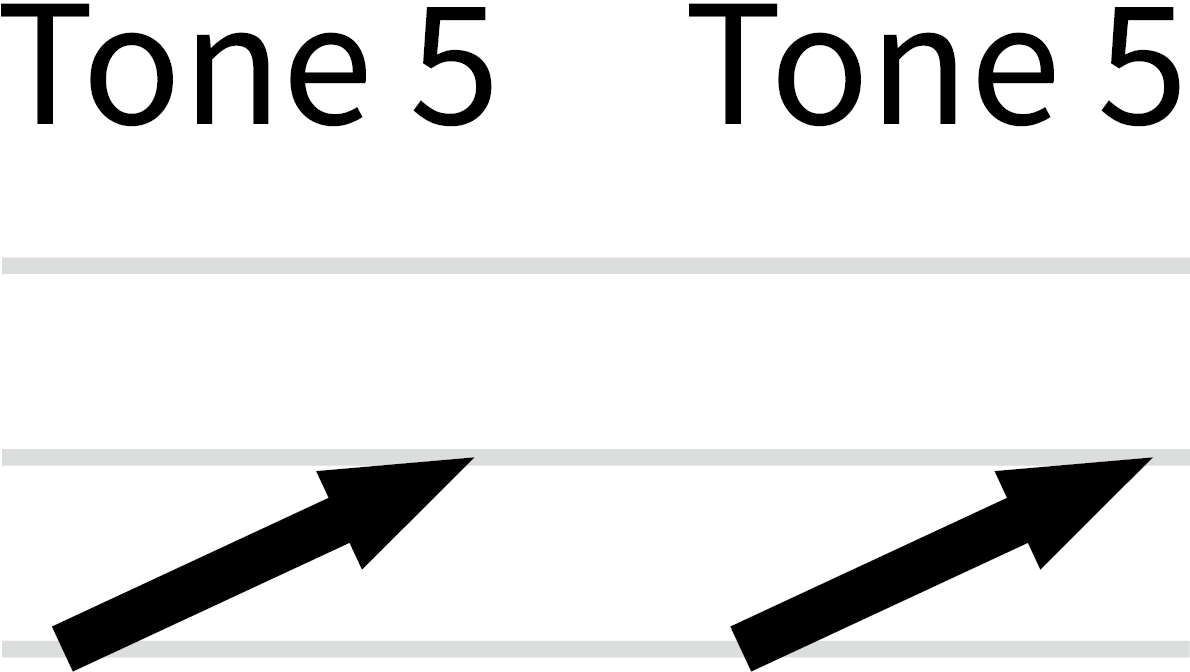 | si5 si5 | 螞蟻 maa5 ngai5 ant | 上網 soeng5 mong5 to surf the Internet | 永遠 wing5 jyun5 forever |
| 30. | 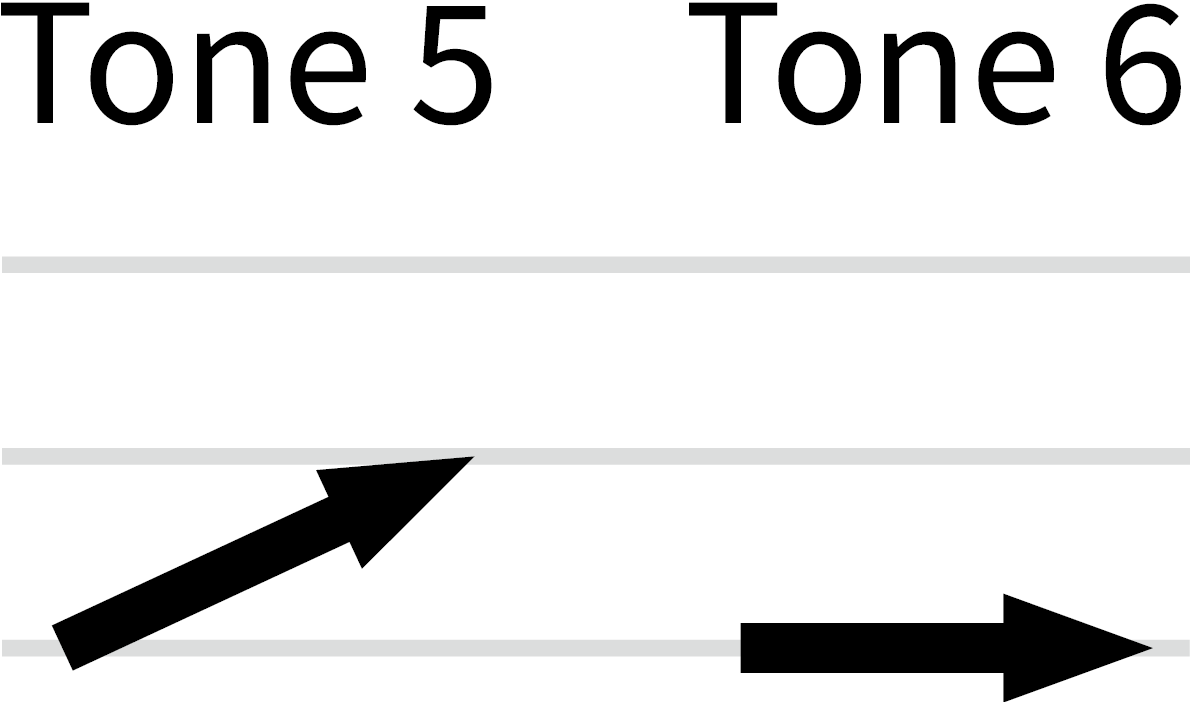 | si5 si6 | 乳酪 jyu5 lok6 yogurt | 禮物 lai5 mat6 gift | 肚餓 tou5 ngo6 hungry |
| 31. | 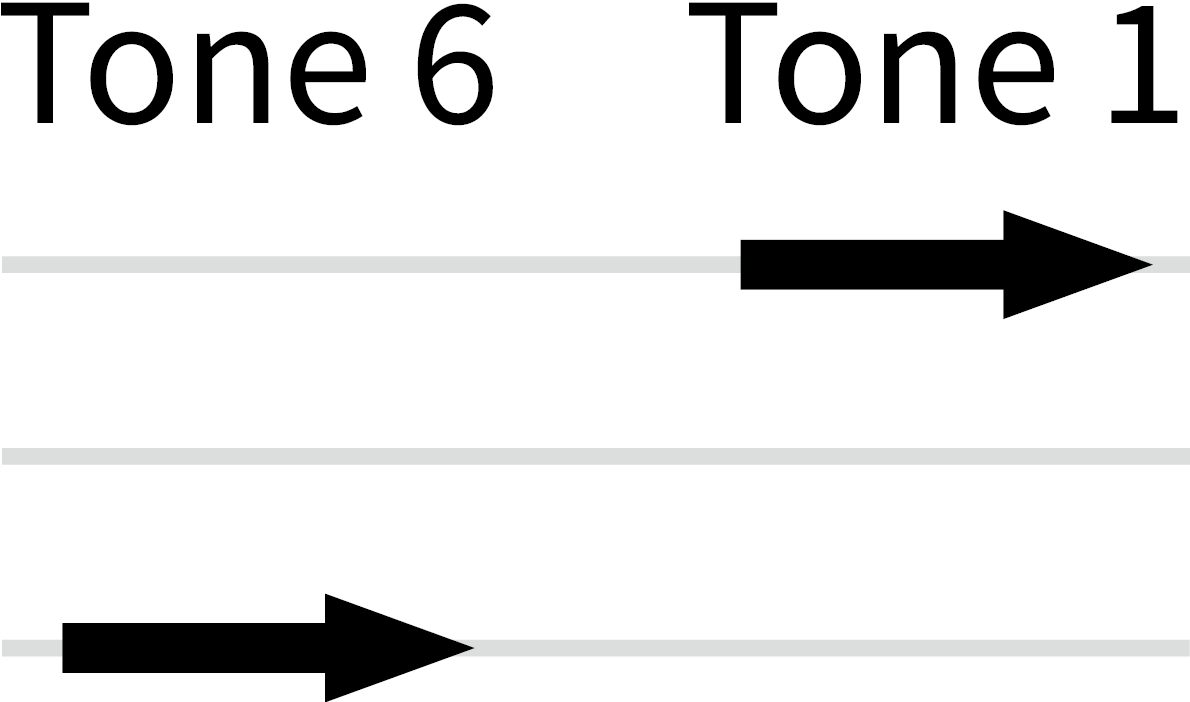 | si6 si1 | 麵包 min6 baau1 bread | 蛋糕 daan6 gou1 cake | 學生 hok6 saang1 student |
| 32. | 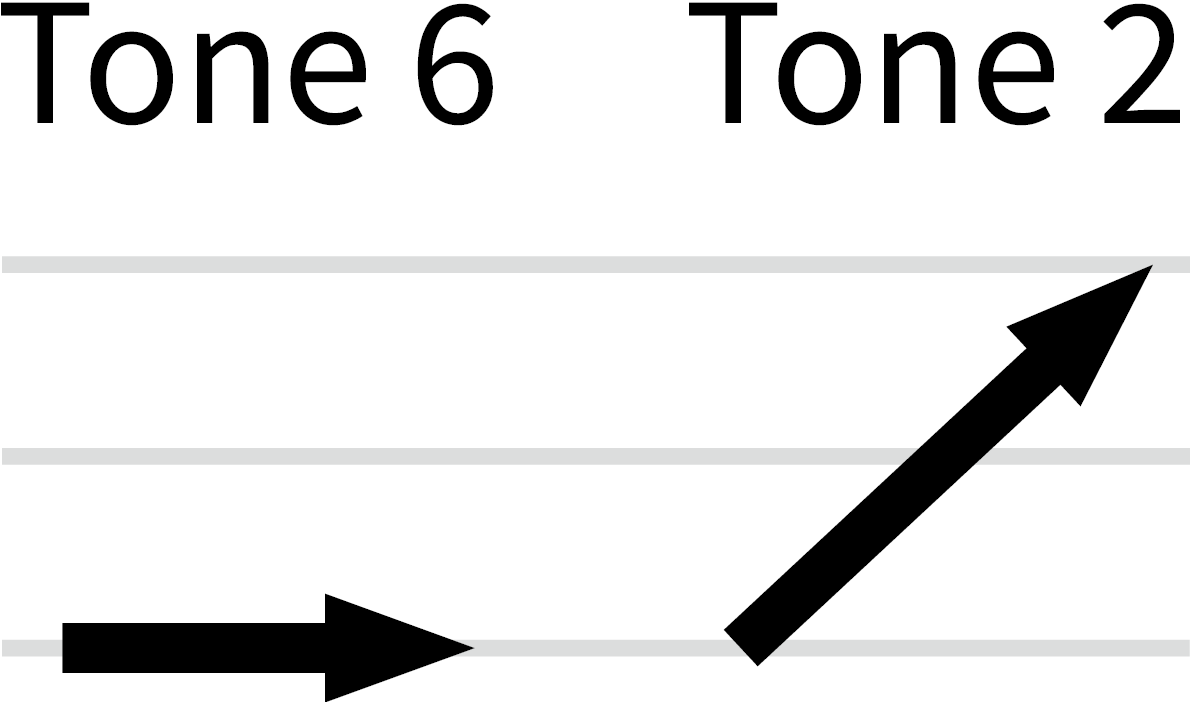 | si6 si2 | 熱狗 jit6 gau2 hot dog | 電話 din6 waa2 telephone | 字典 zi6 din2 dictionary |
| 33. | 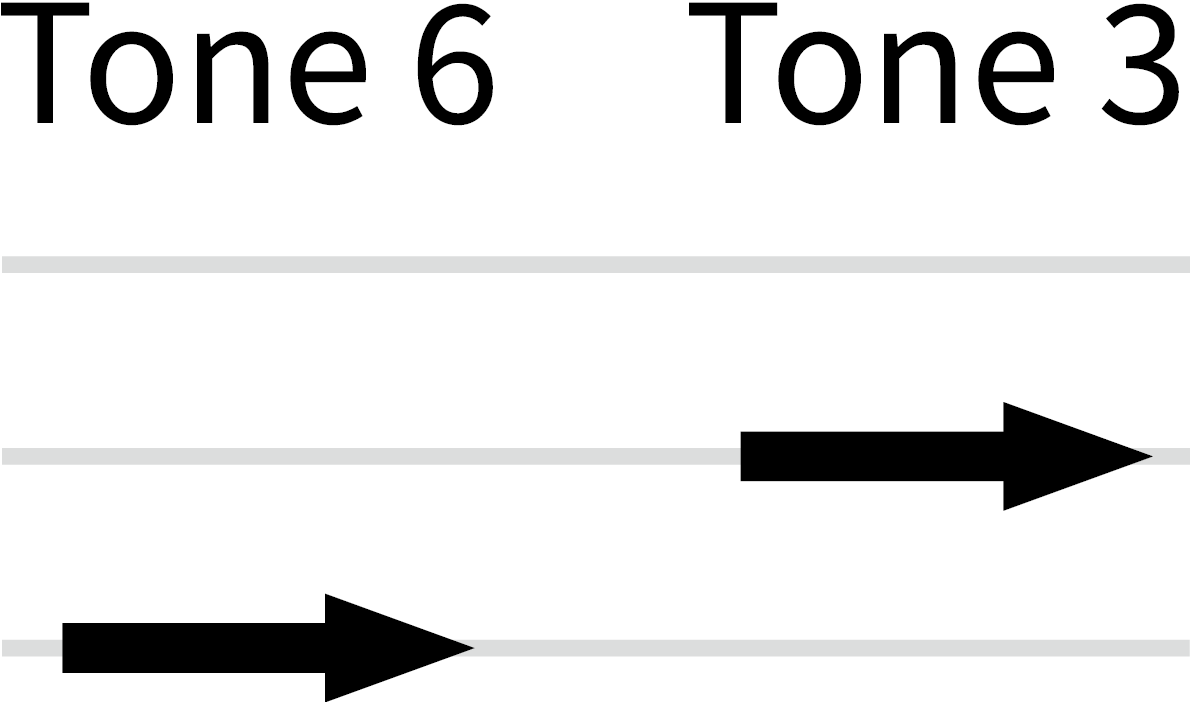 | si6 si3 | 侍應 si6 jing3 waiter / waitress | 地鐵 dei6 tit3 subway | 重要 zung6 jiu3 important |
| 34. | 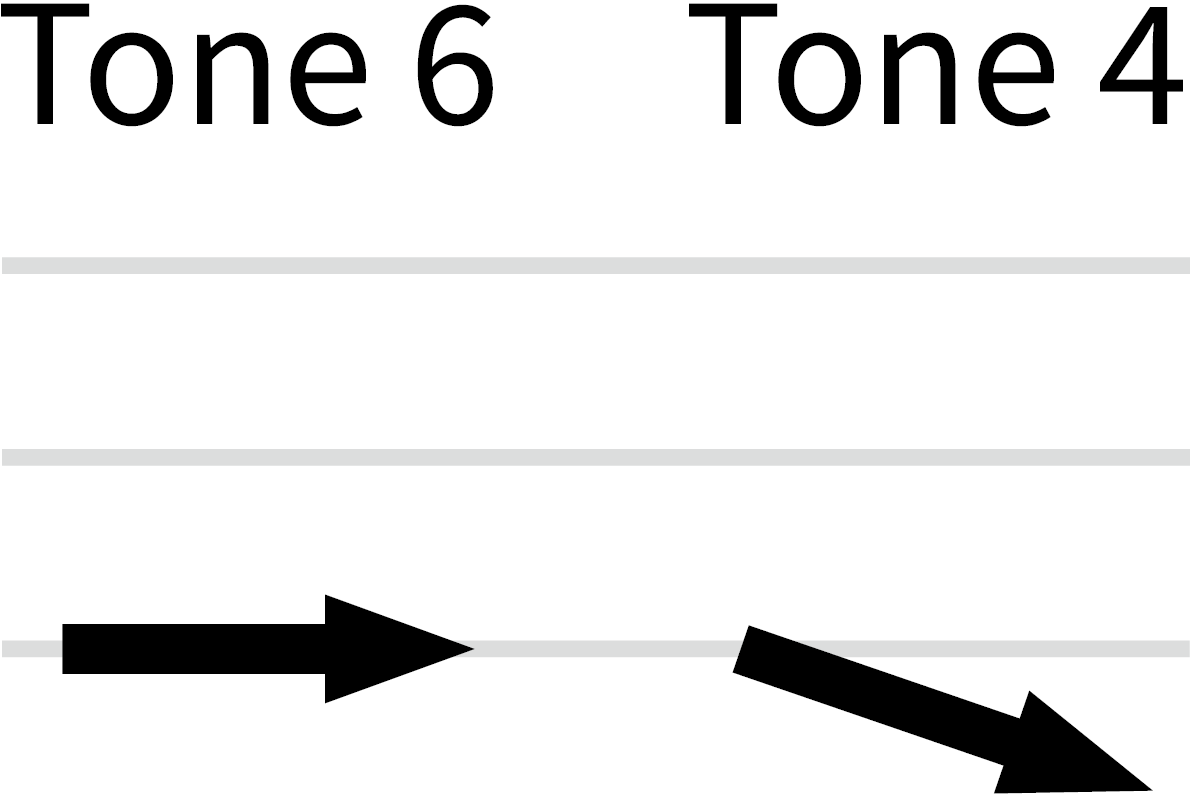 | si6 si4 | 泳池 wing6 ci4 swimming pool | 電郵 din6 jau4 | 問題 man6 tai4 question |
| 35. | 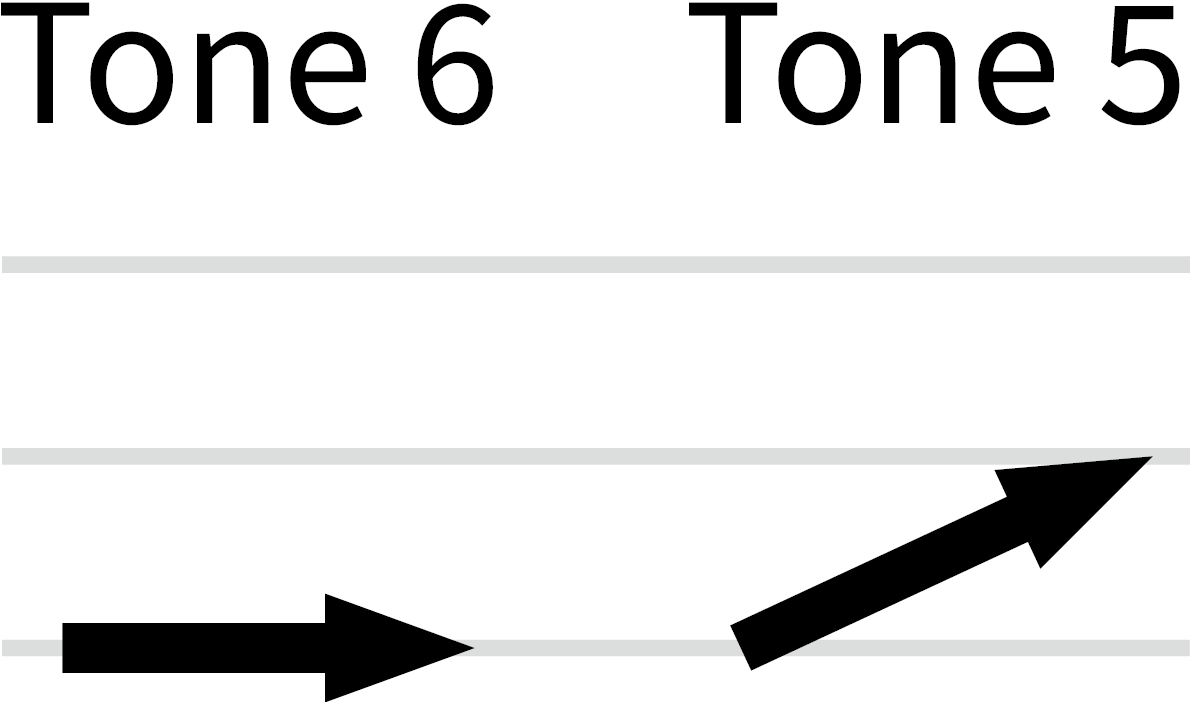 | si6 si5 | 電腦 din6 nou5 computer | 夜晚 je6 maan5 night | 物理 mat6 lei5 physics |
| 36. | 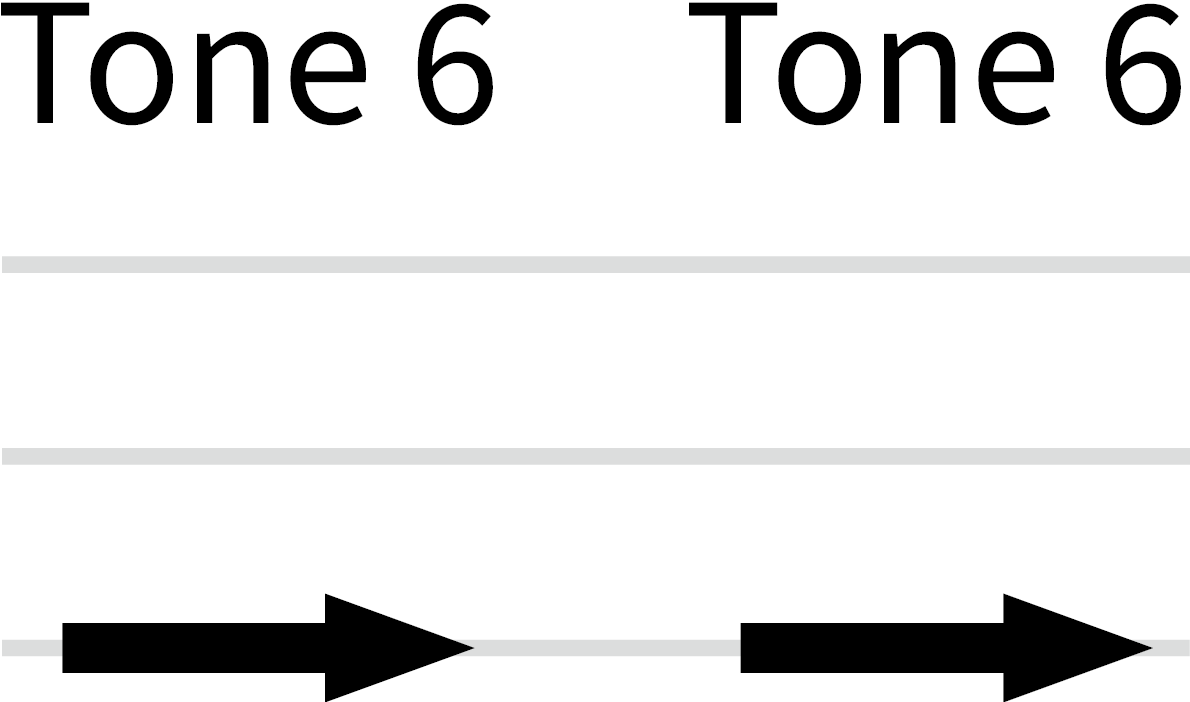 | si6 si6 | 護士 wu6 si6 nurse | 學校 hok6 haau6 school | 運動 wan6 dung6 sport |
💡 Tips
Come back and revise until you can say all the tone combinations smoothly and you are familiar with how each tone combination sounds like.
6. Revision Section A
Question 1
You will hear two syllables each time. Are their tones the same (S) or different (D)?
- S / D
- S / D
- S / D
- S / D
- S / D
- S / D
- S / D
- S / D
- S / D
- S / D
- S / D
- S / D
- S / D
- S / D
Question 2
You will hear seven syllables each time. The first six syllables are Tone 1 to Tone 6 respectively. Which tone is the last syllable?
- si____
- si____
- si____
- si____
- si____
- si____
- fu____
- fan____
- hon____
- soeng____
- fu____
- fan____
Question 3
You will hear one syllable each time. Which tone is the syllable?
- si____
- si____
- si____
- si____
- si____
- si____
- fu____
- fan____
- hon____
- soeng____
- fu____
- fan____
Instructions for Questions 4 to 5
Follow the steps below to complete each question.
Step 1: Say the word or sentence aloud yourself.
Step 2: Listen to the recording and compare your pronunciation to the recording.
Step 3: Follow the recording and say the word or sentence again.
Question 4
Say the words below.
- 眼鏡 ngaan5 geng2 glasses
- 頸巾 geng2 gan1 scarf
- 領呔 leng5 taai1 tie
- 恤衫 seot1 saam1 shirt
- 連身裙 lin4 san1 kwan4 dress
- 手襪 sau2 mat6 mittens / gloves
- 皮帶 pei4 daai2 belt
- 拖鞋 to1 haai2 slippers
Question 5
Say the sentences below.
- 㨴去第二頁。
kin2 heoi3 dai6 ji6 jip6.
Turn to page 2.
- 跟住我讀。
gan1 zyu6 ngo5 duk6.
Repeat after me.
- 啱喇,非常好!
ngaam1 laa3, fei1 soeng4 hou2!
Correct. Very Good!
When you listen to this sentence, do you notice that the initial of one syllable is not pronounced? Listen again and circle the initial.
- 唔啱呀,再試吓吖。
m4 ngaam1 aa3, zoi3 si3 haa5 aa1.
Not correct. Try again.
- 有冇問題?
jau5 mou5 man6 tai4?
Any questions?
7. Revision Section B
Question 1
You will hear two syllables each time. Are their tones the same (S) or different (D)?
- S / D
- S / D
- S / D
- S / D
- S / D
- S / D
- S / D
- S / D
- S / D
- S / D
- S / D
- S / D
- S / D
- S / D
Question 2
You will hear seven syllables each time. The first six syllables are Tone 1 to Tone 6 respectively. Which tone is the last syllable?
- si____
- si____
- si____
- si____
- si____
- si____
- hon____
- soeng____
- fu____
- fan____
- hon____
- soeng____
Question 3
You will hear one syllable each time. Which tone is the syllable?
- si____
- si____
- si____
- si____
- si____
- si____
- hon____
- soeng____
- fu____
- fan____
- hon____
- soeng____
Instructions for Questions 4 to 8
Follow the steps below to complete each question.
Step 1: Say the sound, word or sentence aloud yourself.
Step 2: Listen to the recording and compare your pronunciation to the recording.
Step 3: Follow the recording and say the sound, word or sentence again.
Question 4
Say the initials below. Click the initials to hear the sounds. Click + to go to the page of each initial.
Question 5
Say the finals below. Click the finals to hear the sounds. Click + to go to the page of each final.
Question 6
Say the syllable si with the tones below. Click the tones to hear the sounds. Click + to go to the page of each tone.
Question 7
Say the words below.
- 學生 hok6 saang1 student
- 老師 lou5 si1 teacher
- 律師 leot6 si1 lawyer
- 農夫 nung4 fu1 farmer
- 演員 jin2 jyun4 actor / actress
- 化妝師 faa3 zong1 si1 makeup artist
- 警察 ging2 caat3 police officer
- 消防員 siu1 fong4 jyun4 firefighter
Question 8
Say the sentences below.
- 請問呢個字點讀呀?
cing2 man6 ni1 go3 zi6 dim2 duk6 aa3?
How to pronounce this word?
- 請問「巴士」點解呀?
cing2 man6 ‘baa1 si2’ dim2 gaai2 aa3?
What is the meaning for ‘baa1 si2’?
💡 Tips: baa1 si2 is the word for bus in Cantonese.
- 請問「巴士」嘅拼音係咩呀?
cing2 man6 ‘baa1 si2’ ge3 ping3 jam1 hai6 me1 aa3?
What is the Romanized Cantonese for ‘baa1 si2’?
- 請問「bus」嘅廣東話係咩呀?
cing2 man6 ‘bus’ ge3 gwong2 dung1 waa2 hai6 me1 aa3?
How to say ‘bus’ in Cantonese?
- 請問可唔可以講慢啲呀?
cing2 man6 ho2 m4 ho2 ji5 gong2 maan6 di1 aa3?
Can you speak more slowly, please?
- 請問可唔可以講多次呀?
cing2 man6 ho2 m4 ho2 ji5 gong2 do1 ci3 aa3?
Can you repeat it, please?
- 唔好意思,我唔係好明呀。
m4 hou2 ji3 si1, ngo5 m4 hai6 hou2 ming4 aa3.
Sorry, I don’t quite get it.
Congratulations! 🎉
You have completed the pronunciation guide. In this pronunciation guide, you have learned to say the Cantonese sounds (the initials, finals and tones) and read Romanized Cantonese in Jyutping.
💭 Think!
Do you find anything in this pronunciation guide particularly challenging? Do you think you are ready to use Jyutping to learn Cantonese in the coming units?