Print or Export
埋單吖唔該。
maai4 daan1 aa1 m4 goi1.
maai4 daan1 aa1 m4 goi1.
Listen and Speak
Step 1
Listen to a conversation. A guest will pay the check at the cashier counter of a cha chaan teng. Fill in each blank with a number.
| 客 haak3 | 埋單吖唔該。 maai4 daan1 aa1 m4 goi1. |
A few moments later… | |
| 職員 zik1 jyun4 | 多謝你____ ____ ____蚊。 do1 ze6 nei5 ____ ____ ____ man1. |
A few moments later… | |
| 職員 zik1 jyun4 | 收你____百蚊嘅,找返____蚊俾你嘅。 sau1 nei5 ____ baak3 man1 ge3, zaau2 faan1 ____ man1 bei2 nei5 ge3. |
| 客 haak3 | 唔該晒。 m4 goi1 saai3. |
| 職員 zik1 jyun4 | 多謝晒,拜拜。 do1 ze6 saai3, baai1 baai3. |
- 埋單 maai4 daan1 = to pay the bill
- 多謝 do1 ze6 = to thank
- 蚊 man1 = dollar
- 收 sau1 = to receive
- 百 baak3 = hundred
- 找 zaau2 = to give change
- 返 faan1 = back
Step 2
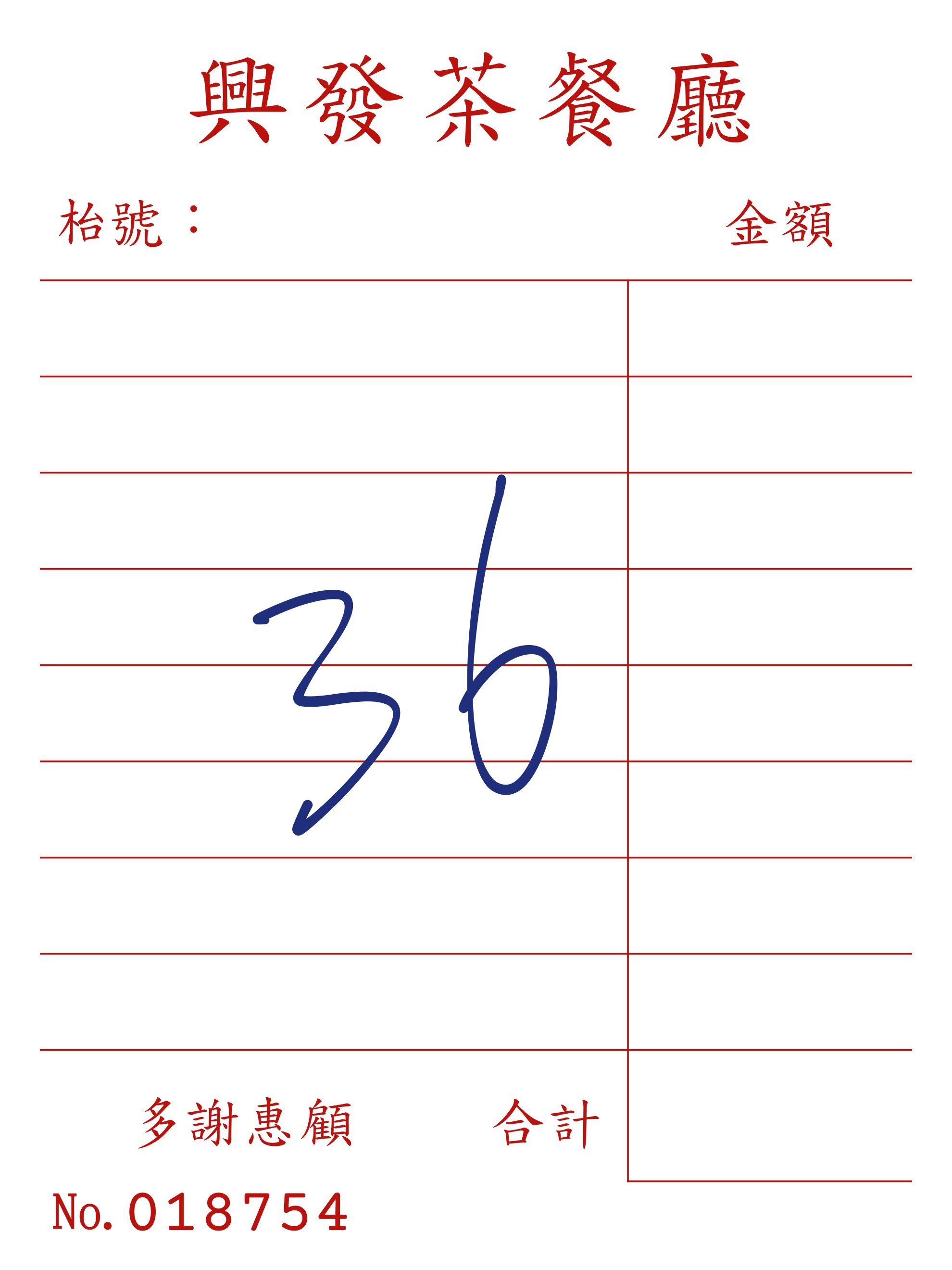
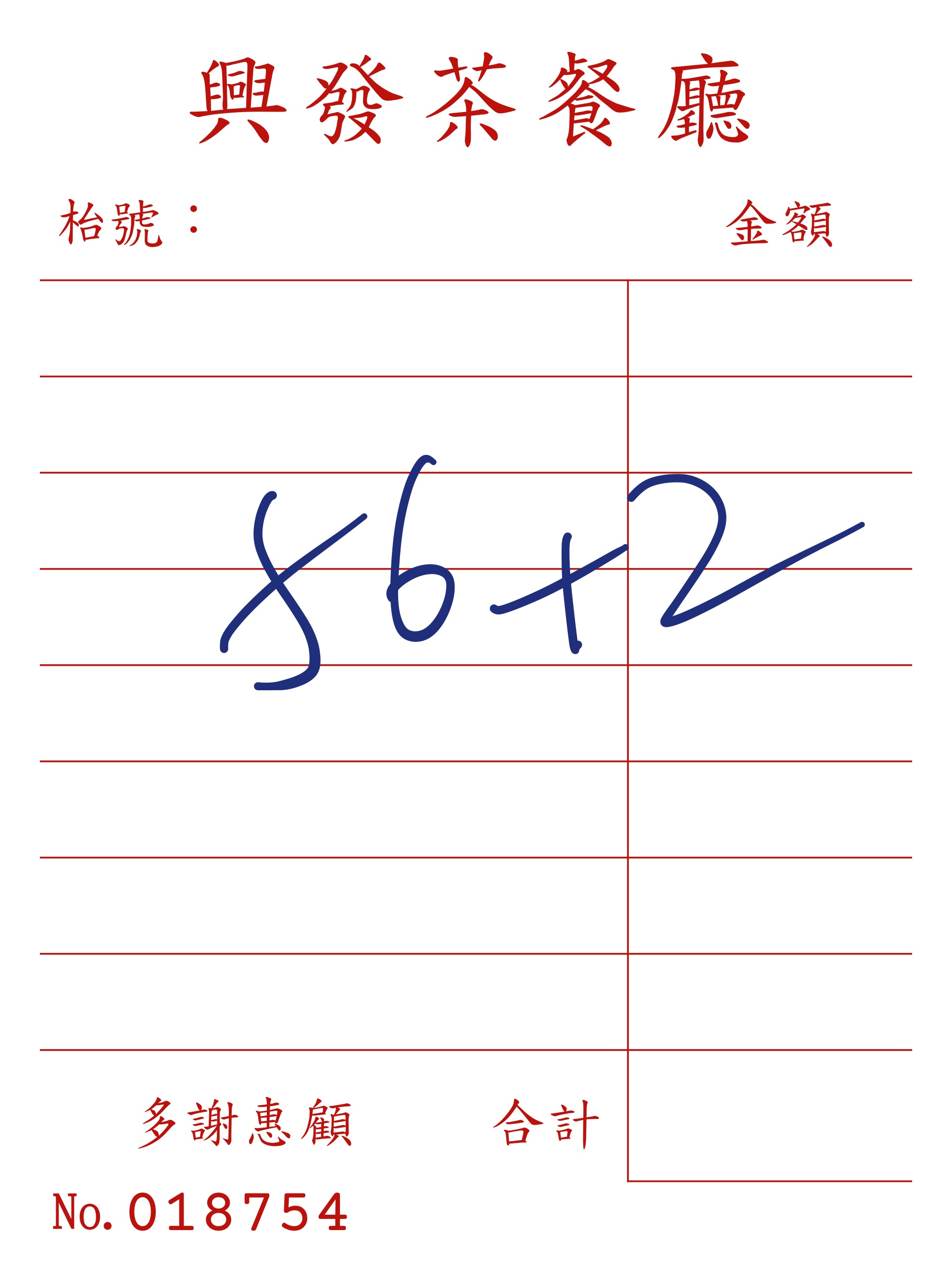
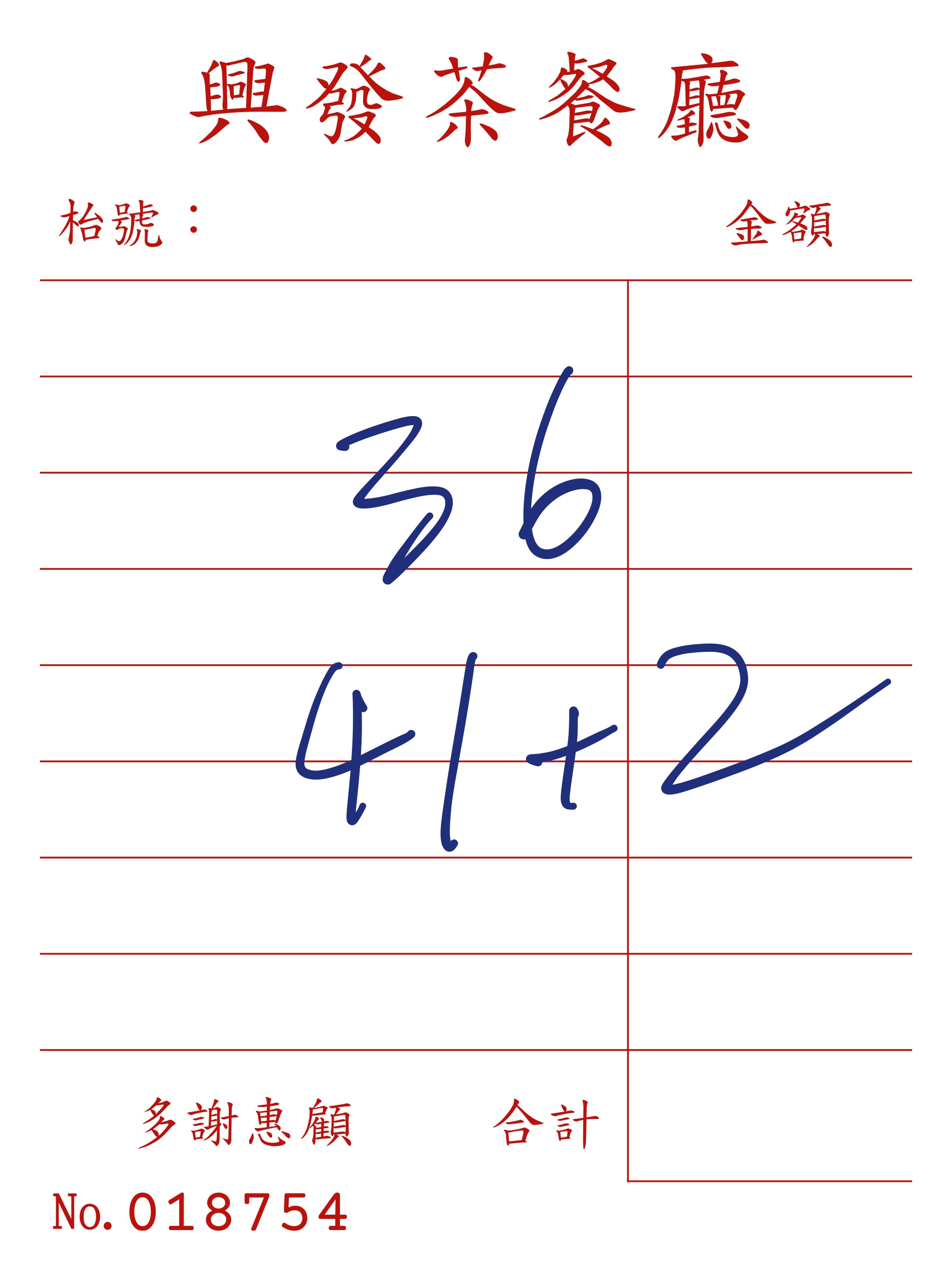
Listen to the conversation again. Choose the correct record card.
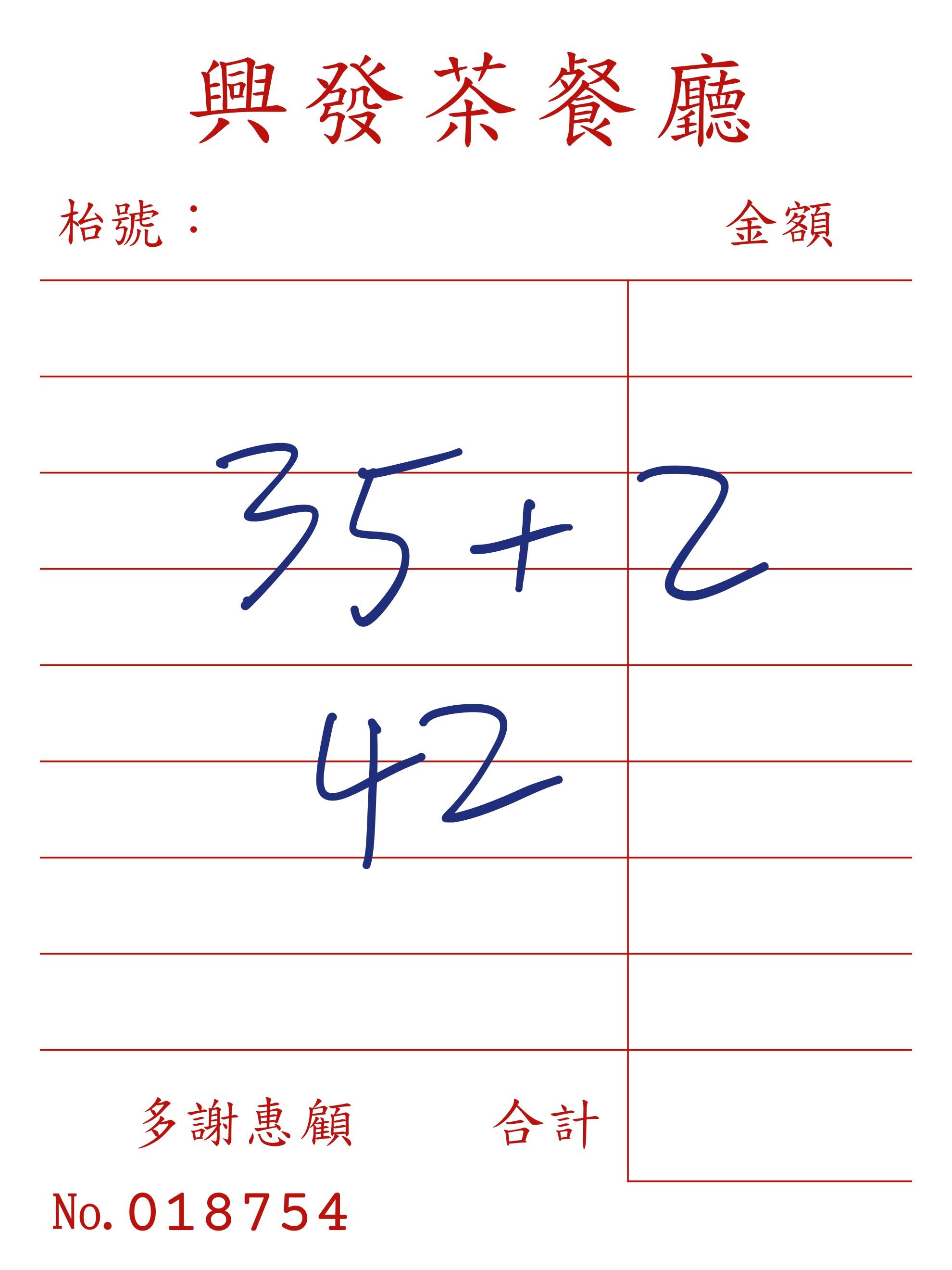
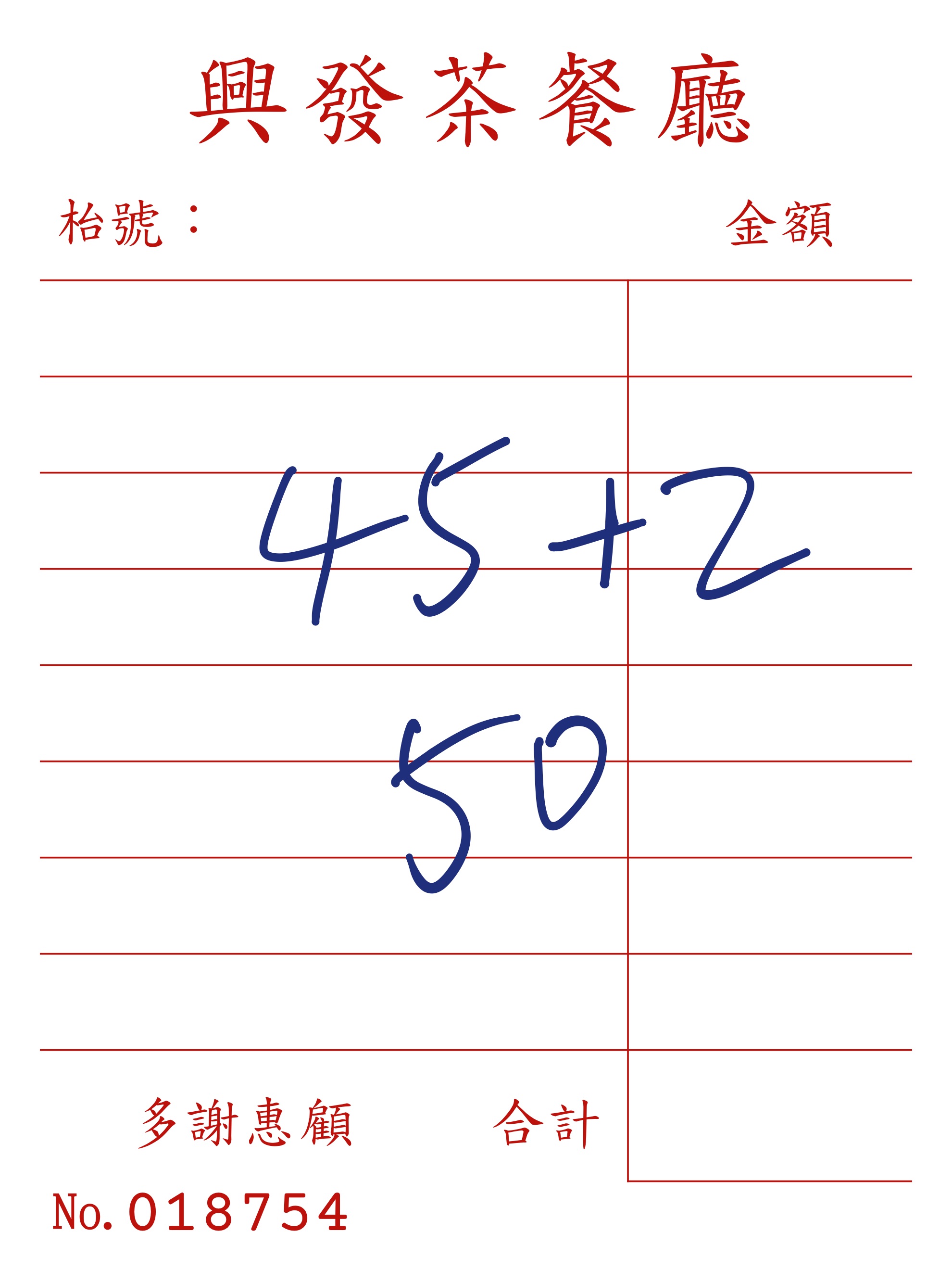
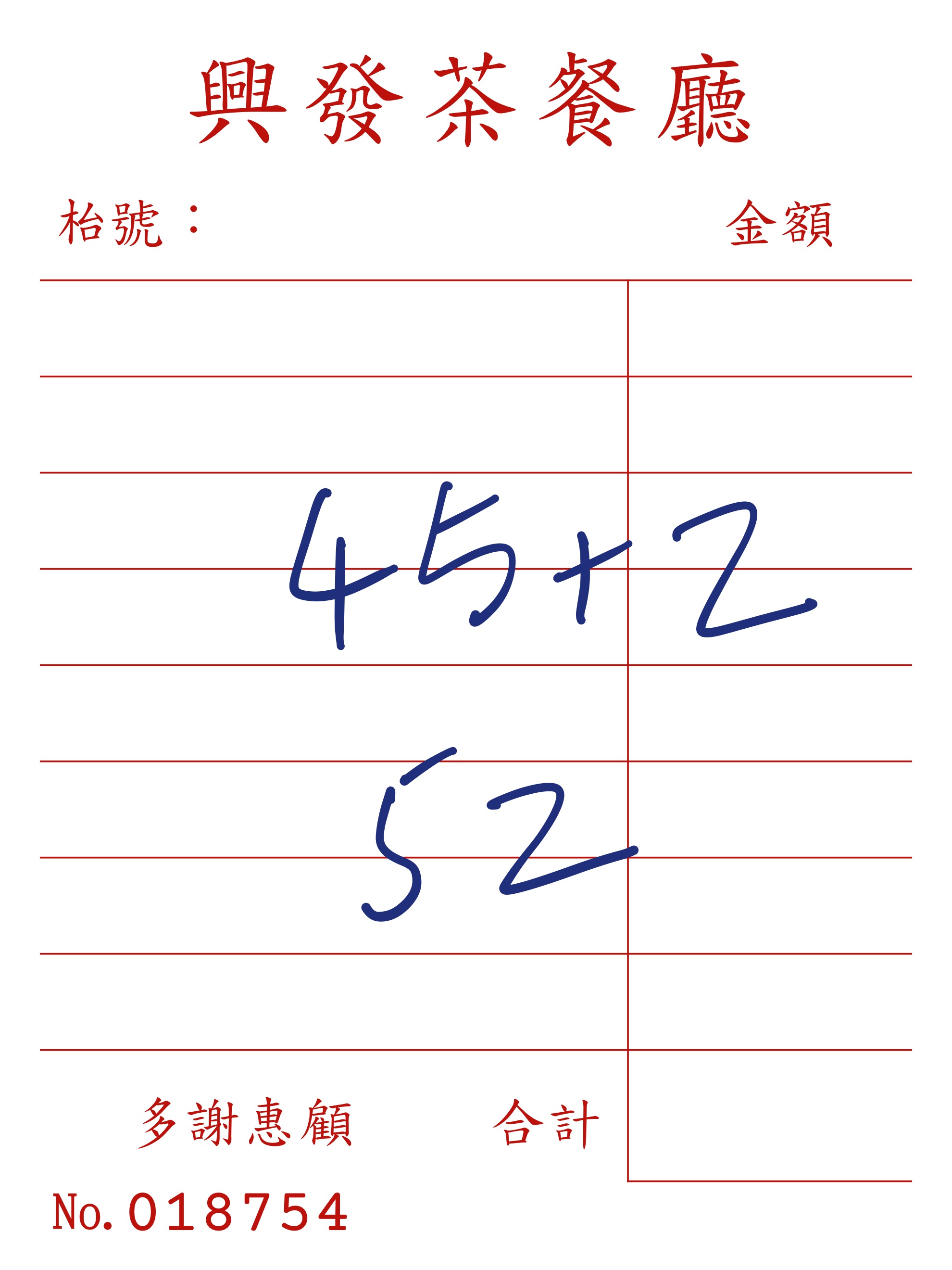
Some cha chaan teng will use a hand-written card to record the prices of the ordered food. The plus sign indicates items that require an extra charge (e.g., $2 for iced drinks). When we have finished our meal, we will bring the card to the cashier counter to pay the bill.
Step 3
Listen to the conversation again. Read the script while listening. Check your answers.
| 客 haak3 | 埋單吖唔該。 maai4 daan1 aa1 m4 goi1. Pay the bill, please. [= I want to pay the bill, please.] |
A few moments later… | |
| 職員 zik1 jyun4 | 多謝你九十七蚊。 do1 ze6 nei5 gau2 sap6 cat1 man1. Thank you for $97. |
A few moments later… | |
| 職員 zik1 jyun4 | 收你一百蚊嘅,找返三蚊俾你嘅。 sau1 nei5 jat1 baak3 man1 ge3, zaau2 faan1 saam1 man1 bei2 nei5 ge3. We receive $100 from you. We give change of $3 back to you. |
| 客 haak3 | 唔該晒。 m4 goi1 saai3. Thank you so much [for the service]. |
| 職員 zik1 jyun4 | 多謝晒,拜拜。 do1 ze6 saai3, baai1 baai3. Thank you so much [for the money]. Bye. |
Step 4
Listen and repeat.
Step 5
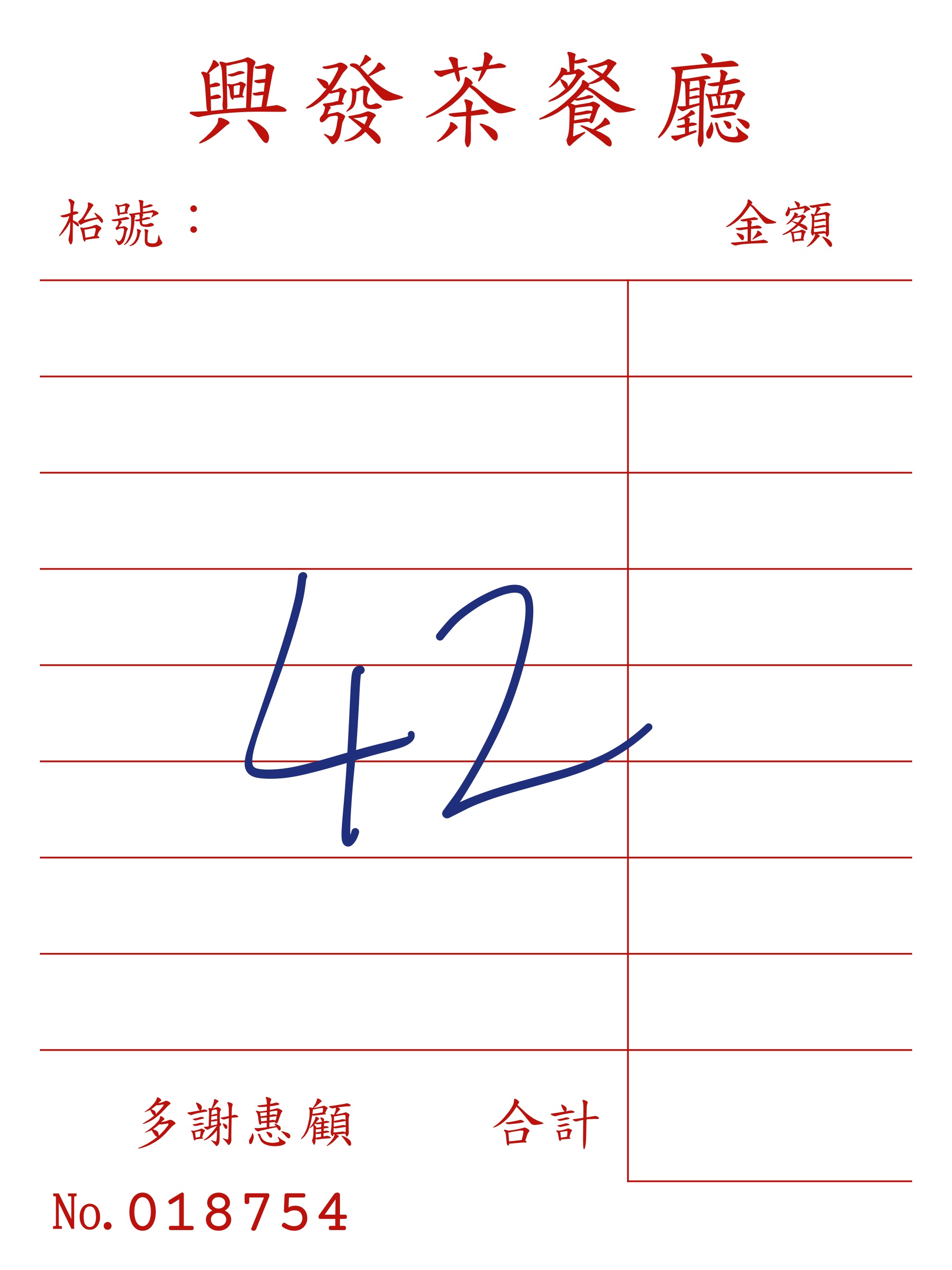
Replace the highlighted words in the script with the prices below to make your conversations.
Grammar and Vocabulary
In the Grammar and Vocabulary section, you will learn:
- Numbers III (Larger Numbers)
- Prices I
- The Question Word 幾多錢 gei2 do1 cin2 / 幾錢 gei2 cin2 (‘how much’ for money)
- The Verbal Particle 返 / 番 / 翻 faan1 II (‘back’)
- The Verb 收 sau1 (‘to receive; to accept’)
- The Verb 找 zaau2 (‘to give change’)
- The Adverb 未 mei6 II (‘not yet; yet’)
- Vocabulary List
- Vocabulary: Payment Methods in Hong Kong
- Vocabulary: Money in Hong Kong
34.1 Numbers III (Larger Numbers)
For 100, 200, 300, etc., we say 一 jat1 to 九 gau2 and then 百 baak3 (the place value for hundreds).
For 1000, 2000, 3000, etc., we say 一 jat1 to 九 gau2 and then 千 cin1 (the place value for thousands).
For 10000, 20000, 30000, etc., we say 一 jat1 to 九 gau2 and then 萬 maan6 (the place value for ten thousands).
Note that we usually use 兩 loeng5 for ‘two’ only when it is the first digit of a number (i.e., no other digits come before it).
Also, note that although we can put 二 ji6 or 兩 loeng5 before 百 baak3, 千 cin1 and 萬 maan6, we only put 二 ji6 but not 兩 loeng5 before 十 sap6 (the place value for tens).
✔️ 二十
ji6 sap6
❌ 兩十
loeng5 sap6
20 [2 x 10]
We say a number from the leftmost digit to the rightmost digit. We insert the corresponding place value after each digit, except the ones digit (the last digit), which is not followed by a place value.
When there is a zero (0) between other digits (1 to 9), we need to say 零 ling4 for the zero.
If there are consecutive zeros (00, 000, etc.), we say 零 ling4 only once.
We don’t need to say a zero if it is not followed by other digits (1 to 9).
When there is another digit before 10, 11, 12, etc., we say 一十 jat1 sap6 instead of 十 sap6.
Note that when there is no digit before 10, 11, 12, etc., we say 十 sap6 instead.
In Grammar and Vocabulary 12.1, we learned that we can use the contracted forms of the tens digits (e.g., 廿 jaa6 for 20, 卅呀 saa1 aa6 for 30) when the tens digit is followed by a ones digit other than zero (1 to 9) or a classifier. When saying numbers larger than 99, we can also use these contracted forms. However, we don’t usually say 廿 jaa6 for 20 when the ones digit is zero even if it is followed by a classifier. Also, as the number gets larger, we tend to say it without contracted forms.
We can also contract 一十 jat1 sap6 to 一呀 jat1 aa6 when it is followed by a ones digit other than 0 (1 to 9) or a classifier.
For longer numbers, we sometimes say them without the place values (萬 maan6, 百 baak3, 千 cin1, 十 sap6, etc.) so that they are easier to understand.
Note that when saying a number this way, we will say every zero.
Grammar Practice 1
Say each number. Use both the full and contracted forms of the tens digit whenever possible. Then, check your answers and repeat after the recordings.
1. 7054
2. 312
3. 43261
4. 2753
5. 1794
6. 58004
7. 9500
8. 543
9. 23819
10. 5902
11. 360
12. 70056
34.2 Prices I
There are three types of prices:
1. Prices without Cents
The classifier 蚊 man1 means ‘dollar’. It is also the unit of money in Hong Kong.
To say a price without cents, we put 蚊 man1 after the number. We can use contracted forms of the tens digits (e.g., 廿 jaa6 for 20, 卅呀 saa1 aa6 for 30). See Grammar and Vocabulary 34.1 for the rules.
Since 蚊 man1 is a classifier, for ‘$2’, we use 兩 loeng5 instead of 二 ji6.
2. Prices with Cents Only
The classifiers 毫 hou4 and 毫子 hou4 zi2 mean ‘10 cents ($0.1)’. 毫子 hou4 zi2 is more informal than 毫 hou4.
To mean ‘10 cents, 20 cents, 30 cents, etc.’, we take the first digit (1, 2, 3, etc.) and put 毫 hou4 or 毫子 hou4 zi2 after it. Notice we take the first digit only, but not the complete number (10, 20, 30, etc.).
Since 毫 hou4 and 毫子 hou4 zi2 are classifiers, for ‘20 cents ($0.2)’, we usually use 兩 loeng5, but 二 ji6 is also used sometimes.
The classifier 仙 sin1 means ‘1 cent ($0.01)’. 仙 sin1 is rarely used in Hong Kong nowadays. So you don’t need to remember its use if you will only say prices in Hong Kong dollars!
To mean ’1 cent, 2 cents, 3 cents, etc.’, we put 仙 sin1 after the number.
Since 仙 sin1 is a classifier, for ‘2 cents ($0.02)’, we use 兩 loeng5 instead of 二 ji6.
To say prices like $0.99 and $0.55, we can use 毫 hou4 or 仙 sin1 in the structures below.
Using 毫 hou4
When using 毫 hou4, we can optionally add 子 zi2 at the end. We usually say 5 cents ($0.05) as 半 bun3 (‘half’).
Using 仙 sin1
When using 仙 sin1, we say the number in the price like in English (e.g., ninety-nine cents for ‘$0.99’ and fifty-five cents for ‘$0.55’).
3. Prices with Cents
There are two methods to say a price with cents. We use Method 2 more often, especially in less formal contexts.
Method 1
We use 蚊 man1 and 毫 hou4 together, as we have learned above. We can optionally add 零 ling4 (‘zero’) between the dollars and the cents.
Method 2
We put the classifier 個 go3 between the dollars and the cents. We usually say ‘50 cents ($0.5)’ as 半 bun3 (‘half’).
We usually use Method 1 if both the tens digit and the ones digit (the two digits before the decimal point) are zero (e.g., $100.4, 2500.5, 36000.6).
To indicate the price of an item, we simply put the price after the item to form a sentence. Note that we don’t need to add a verb between the item and the price. It is a sentence structure that has a predicate without a verb (see Grammar and Vocabulary 12.4).
Grammar Practice 2
Say each price. Use the full form of the tens digit. For prices with cents, use both Method 1 and Method 2 whenever possible. Then, check your answers and repeat after the recordings.
1. $0.3
2. $69.6
3. $12009
4. $427.5
5. $24.9
6. $65319
7. $32057
8. $968.5
9. $94600.3
10. $0.8
The prices below include one cent ($0.01). You can skip them if you won’t use it.
11. $0.05
12. $0.67
13. $5.98
14. $0.06
15. $0.83
16. $10.45
17. $0.02
18. $0.76
19. $2.89
34.3 The Question Word 幾多錢 gei2 do1 cin2 / 幾錢 gei2 cin2 (‘how much’ for money)
The question word 幾多錢 gei2 do1 cin2 is similar to how much in English (as in how much does one person pay?). We can use it to form a question that elicits an amount of money as the answer. It is formed by combining 幾多 gei2 do1 (‘how much’) and 錢 cin2 (‘money’). We can optionally contract 幾多錢 gei2 do1 cin2 to 幾錢 gei2 cin2.
| A: | 一個人俾幾多錢呀? jat1 go3 jan4 bei2 gei2 do1 cin2 aa3? 一個人俾幾錢呀? jat1 go3 jan4 bei2 gei2 cin2 aa3? How much does one person pay? |
| B: | 一個人俾九十五個七。 jat1 go3 jan4 bei2 gau2 sap6 ng5 go3 cat1. One person pays $95.7. |
To ask for the price of an item, we simply put 幾多錢 gei2 do1 cin2 / 幾錢 gei2 cin2 after the item to form a question. Note that we don’t need to add a verb between the item and 幾多錢 gei2 do1 cin2 / 幾錢 gei2 cin2. It is a sentence structure that has a predicate without a verb (see Grammar and Vocabulary 12.4).
| A: | 西炒飯幾多錢呀? sai1 caau2 faan6 gei2 do1 cin2 aa3? 西炒飯幾錢呀? sai1 caau2 faan6 gei2 cin2 aa3? How much is Western Fried Rice? |
| B: | 西炒飯四十五蚊。 sai1 caau2 faan6 sei3 sap6 ng5 man1. Western Fried Rice is $45. |
34.4 The Verbal Particle 返 / 番 / 翻 faan1 II (‘back’)
In Grammar and Vocabulary 32.5, we learned that the verbal particle 返 faan1 (also written as 番 or 翻) can add the meaning of ‘left’ to the sentence (as in there are two cans of beer left).
The verbal particle 返 faan1 can also add the meaning of ‘back’ to the sentence (as in let me give you back the card). We can use 返 faan1 to indicate that something is returned to someone.
俾返張卡你先呀吓。
bei2 faan1 zoeng1 kaat1 nei5 sin1 aa3 haa2.
I will give the card back to you first.
返 faan1 is used to indicate that the card will be given back to the listener (the gust).
請問要唔要返張單嘅?
cing2 man6 jiu3 m4 jiu3 faan1 zoeng1 daan1 ge2?
May I ask if you want the receipt back?
返 faan1 is used to ask if the listener (the guest) wants the receipt back. 返 faan1 is used here because the receipt is something the listener can have and is held by the speaker (the server) temporarily. It can be returned to the listener if needed.
34.5 The Verb 收 sau1 (‘to receive; to accept’)
The verb 收 sau1 means ‘to receive’. We can put two objects after 收 sau1. The first one is an indirect object (the giver, i.e. the person who gives the thing). The second one is a direct object (the thing received).
收 sau1 can also mean ‘to accept (a payment method)’. We put the payment method after 收 sau1.
34.6 The Verb 找 zaau2 (‘to give change’)
The verb 找 zaau2 means ‘to give change’. We can put two objects after 找 zaau2. The first one is an indirect object (the recipient, i.e. the person who receives the change). The second one is a direct object (the amount of change). We often use 找 zaau2 with the verb particle 返 faan1 because the change is returned to someone.
We can optionally omit the indirect object (the recipient).
找 zaau2 is a verb with the sense of giving something. We can add 俾 bei2 to indicate the recipient using the sentence structure below (See Grammar and Vocabulary 32.2).
34.7 The Adverb 未 mei6 II (‘not yet; yet’)
In Grammar and Vocabulary 13.8, we learned that the adverb 未 mei6 means ‘not yet’ in sentences and ‘yet’ in yes-no questions.
We can also put 未 mei6 after an activity to ask if we are doing the activity yet. We often use this type of question to ask whether we should do the activity now or whether someone wants to do the activity now (at the time of speaking).
我哋埋單未呀?
ngo5 dei6 maai4 daan1 mei6 aa3?
Are we paying the bill yet?
[= Should we pay the bill now? / Do you want to pay the bill now?]
我哋走未呀?
ngo5 dei6 zau2 mei6 aa3?
Are we leaving yet?
[= Should we leave now? / Do you want to leave now?]
This type of question usually functions as a suggestion. We can respond to it like we are responding to a suggestion. For negative answers, we usually indicate the reason for rejecting the suggestion directly.
| A: | 我哋走未呀? ngo5 dei6 zau2 mei6 aa3? Are we leaving yet? [= Should we leave now? / Do you want to leave now?] |
| B: | → 好呀,走啦。 hou2 aa3, zau2 laa1. Good. [= Yes.] Let’s leave. → 我想坐多一陣先呀。 ngo5 soeng2 co5 do1 jat1 zan6 sin1 aa3. I want to sit for a moment more first. |
34.8 Vocabulary List
34.9 Vocabulary: Payment Methods in Hong Kong
34.10 Vocabulary: Money in Hong Kong
Banknotes
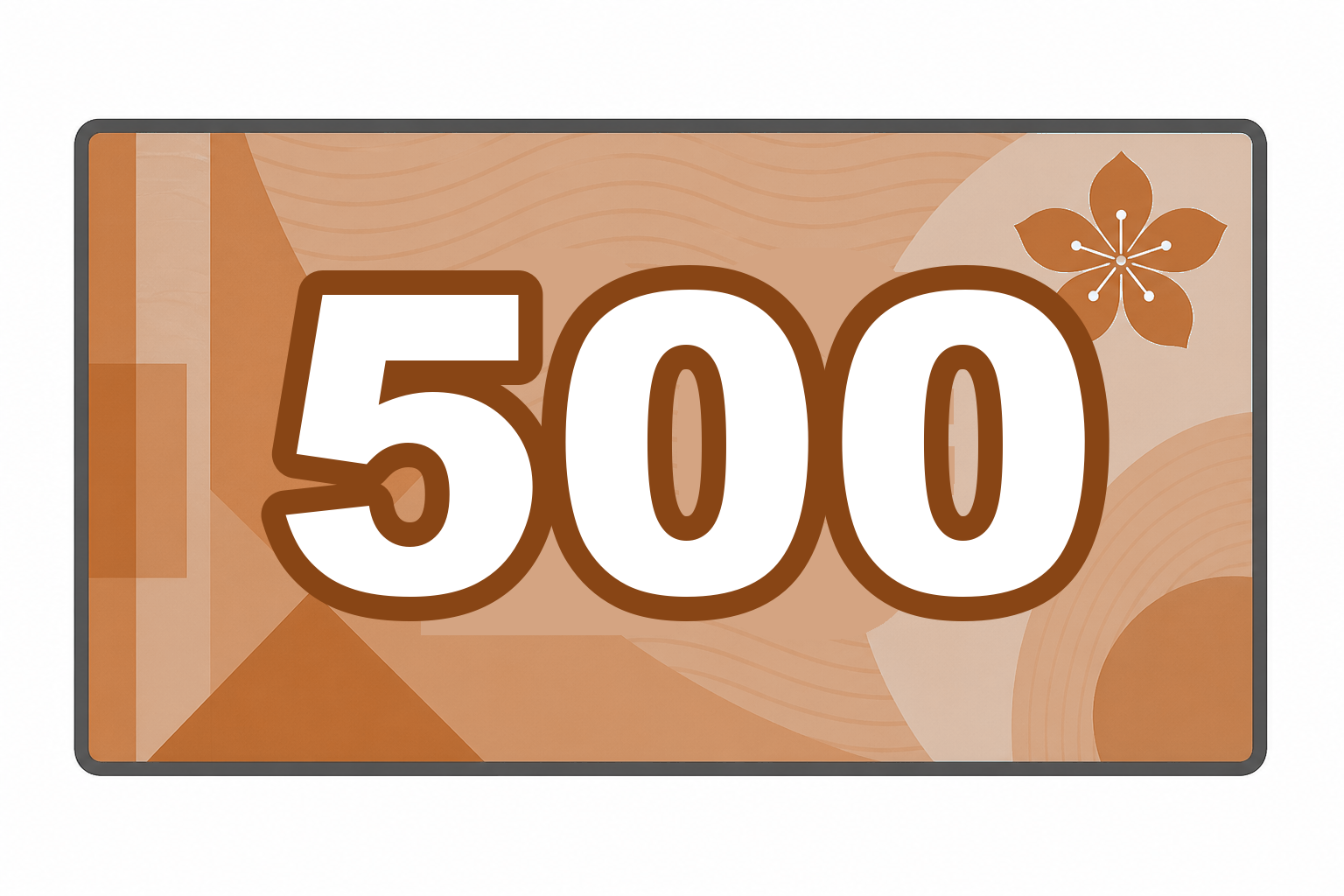
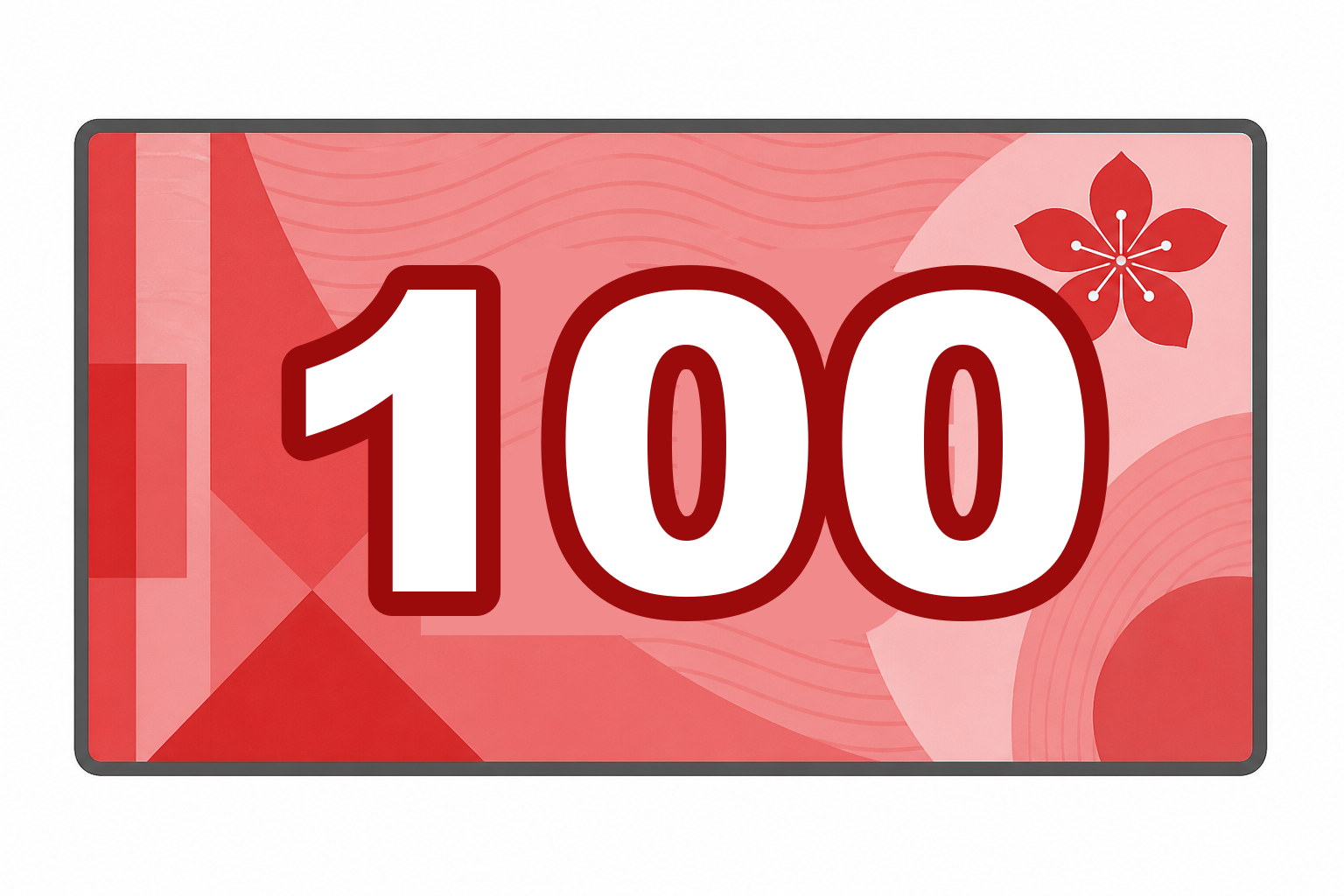
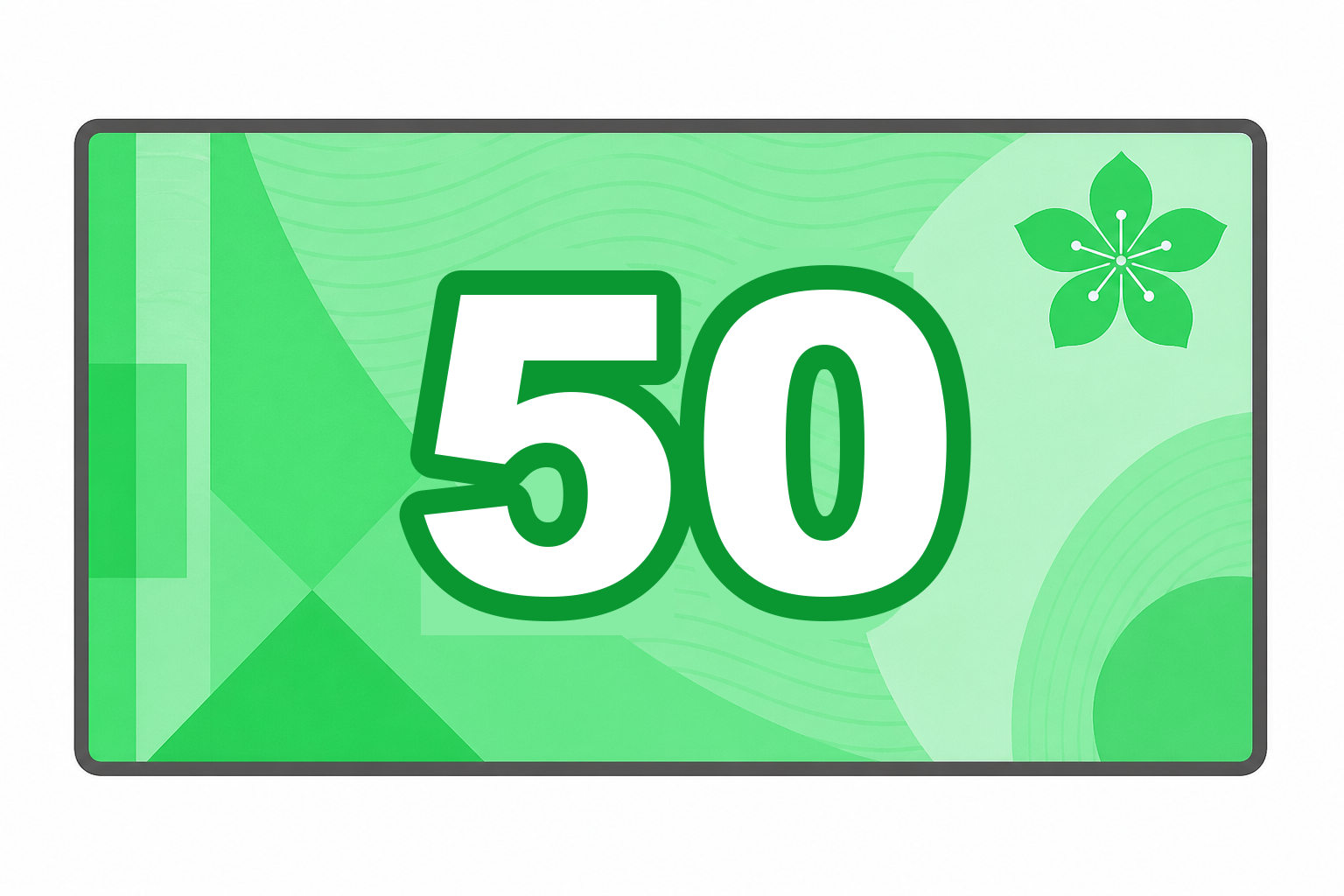
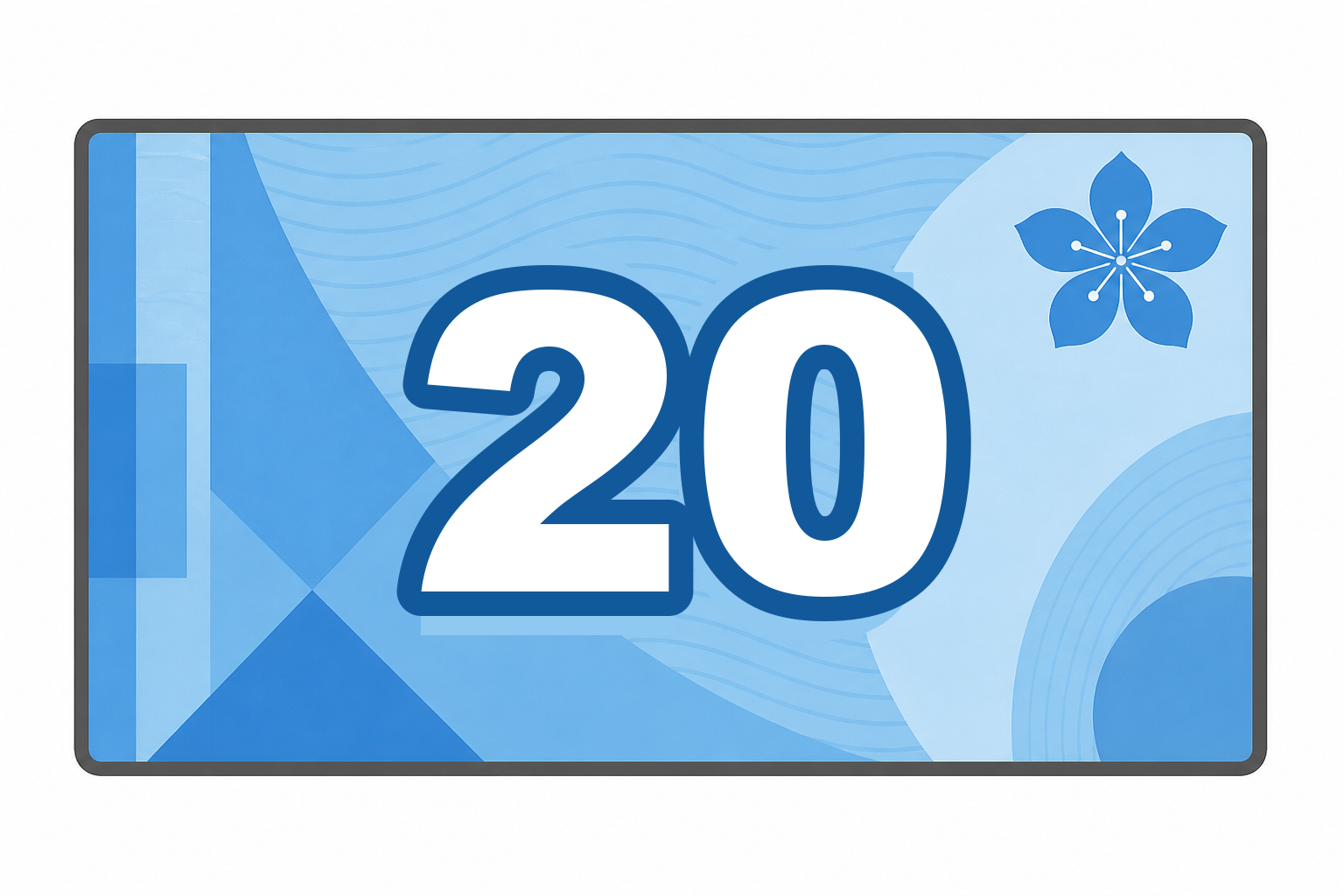
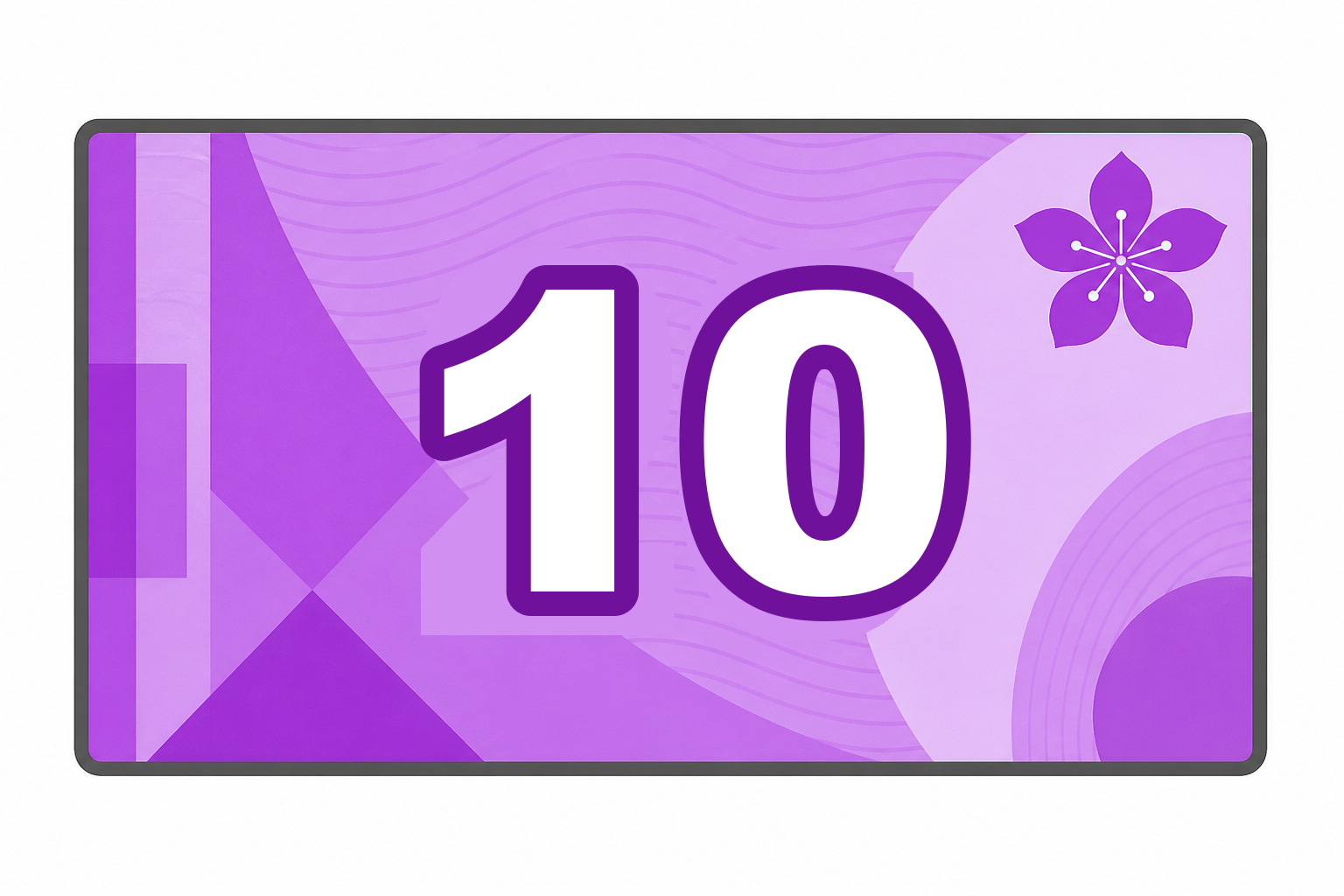
The banknotes in Hong Kong are in six different values: $10, $20, $50, $100, $500 and $1000. Banknotes, except those for $10, are issued by different banks in Hong Kong. Each bank has their own designs, but the banknotes in the same value are the same color. The $10 banknotes are issued by the government and there is only one design.
When referring to the banknotes, we sometimes add the word 紙 zi2 (‘paper’) after the value.
We use the classifier 張 zoeng1 with banknotes.
一張五百蚊(紙)
jat1 zoeng1 ng5 baak3 man1 (zi2)
one $500 banknote
Coins
The coins in Hong Kong are in seven different values: $10, $5, $2, $1, 50 cents, 20 cents and 10 cents.
When referring to coins of $1 or above, we sometimes add the word 銀 ngan2 (‘silver’) after the value.
We use the classifier 個 go3 with coins.
一個十蚊(銀)
jat1 go3 sap6 man1 (ngan2)
one $10 coin
Communication
In the Communication section, you will learn:
- Paying the Bill
Paying the Bill
When we’ve finished a meal, we can ask if other people are ready to pay the bill.
If we want to treat other people, we can pretend to go to the washroom and pay the bill in advance secretly. This can prevent other people from grabbing the bill later. If we’ve done so successfully, we can proudly say:
To get the bill from the server, we can say:
In some restaurants (e.g., cha chaan teng), we will pay the bill at the cashier counter near the entrance. The server will ask us to take the bill there to pay.
- 拎張單出去俾 ling1 zoeng1 daan1 ceot1 heoi3 bei2 is a type of serial verb construction. We will examine it in later lessons.
When the server brings us the bill, they may ask who will pay.
If we’re not sure what payment methods are accepted, we can ask:
If we’re not sure whether a payment method is accepted, we can ask:
Route A: Yes (Pay by credit card)
In Hong Kong, the server will usually ask us to tap our credit card on a payment terminal nowadays.
In some restaurants, the server will still take our credit card to the cashier counter and then come back with a credit card receipt for us to sign on it.
A few moments later…
A few moments later…
Route B: No (Pay in cash)
A few moments later…
If we don’t need the change, we can say:
The server may ask if we want the receipt.
If the server doesn’t give us a receipt, we can say:
Parking is usually not free in Hong Kong, especially in shopping malls. However, if we eat at a restaurant in a shopping mall, we can often use our receipts to redeem free parking. The server may ask whether we drive to see if we need a receipt.
- 揸車嚟 zaa1 ce1 lai4 is a type of serial verb construction. We will examine it in later lessons.
Route A: Yes
Route B: No
If the server doesn’t ask, we can say:
If we want to split the bill and pay back the person who paid the bill, we can say:
If we order our own food individually and want to pay for our own food, we can say:
We can also ask for the price of our food directly.
If we want to treat other people, we can reply:
If we want to ask if other people are ready to leave, we can say:
When we leave the restaurant, the server may sometimes say:
- Since we are giving money to the restaurant, the server will say 多謝 do1 ze6 instead of 唔該 m4 goi1.
Exercises
Exercise 1
Complete the descriptions.
1.
The verb particle ________ can add the meaning of ‘back’ to the sentence (as in let me give you back the card).
2.
The verb ________ means ‘to receive’. We can put two objects after it. The first one is an indirect object (________). The second one is a direct object (________).
3.
The verb ________ means ‘to give change’. We can put two objects after it. The first one is an indirect object (________). The second one is a direct object (________). We often use it with the verb particle ________.
4.
We can put the adverb ________ after an activity to ask if we are doing the activity yet.
Exercise 2
Listen to the sentences and identify the prices in the sentences.
Example
多謝你三百八十三蚊。
do1 ze6 nei5 saam1 baak3 baat3 sap6 saam1 man1.
Thank you for $383.
Price: $383
1.
________
Price: ________
2.
________
Price: ________
3.
________
Price: ________
4.
________
Price: ________
5.
________
Price: ________
6.
________
Price: ________
7.
________
Price: ________
8.
________
Price: ________
9.
________
Price: ________
10.
________
Price: ________
11.
________
Price: ________
12.
________
Price: ________
Exercise 3
Follow the examples to complete the conversations. Then, listen to the recordings to check your answers. Finally, repeat after the recordings.
Example
$383 ÷ 4 = $95.8 → $95
| A | 一個人俾幾多錢呀? jat1 go3 jan4 bei2 gei2 do1 cin2 aa3? How much does one person pay? |
| B | 我計下先,三百八十三蚊除四, 一個人俾九十五個八,俾九十五蚊我得喇。 ngo5 gai3 haa5 sin1, saam1 baak3 baat3 sap6 saam1 man1 ceoi4 sei3, jat1 go3 jan4 bei2 gau2 sap6 ng5 go3 baat3, bei2 gau2 sap6 ng5 man1 ngo5 dak1 laa3. Let me calculate it first. $383 divided by 4. One person pays $95.8. Paying $95 to me is okay already. ⭐ In this exercise, say the prices without the contracted forms of the tens digits. Also, use Method 2 to say the prices with cents whenever possible. |
1.
$467 ÷ 3 = $155.7 → $155
| A | ________ |
| B | ________ |
2.
$2817 ÷ 7 = $402.4 → $400
| A | ________ |
| B | ________ |
3.
$893 ÷ 6 = $148.8 → $148
| A | ________ |
| B | ________ |
4.
$4045 ÷ 4 = $1011.3 → $1000
| A | ________ |
| B | ________ |
5.
$904 ÷ 9 = $100.4 → $100
| A | ________ |
| B | ________ ⭐ |
6.
$9382 ÷ 12 = $781.8 → $780
| A | ________ |
| B | ________ |
Exercise 4
Listen to A and choose the correct responses for B. Each question may have more than one correct response or none. Then, check your answers. Finally, repeat after the recordings.
Example
| A | 一個人俾幾多錢呀? jat1 go3 jan4 bei2 gei2 do1 cin2 aa3? How much does one person pay? | ||||
| B |
|
1.
| A | ________ | ||||
| B |
|
2.
| A | ________ | ||||
| B |
|
3.
| A | ________ | ||||
| B |
|
4.
| A | ________ | ||||
| B |
|
5.
| A | ________ | ||||
| B |
|
6.
| A | ________ | ||||
| B |
|
7.
| A | ________ | ||||
| B |
|
8.
| A | ________ | ||||
| B |
|
Activities
Activity 1
Listen to three conversations. The guests will pay the check. After each conversation, listen and answer the questions.
Conversation 1
1. ________
________
2. ________
________
3. ________
💡 Circle the banknotes given out before the change is returned.
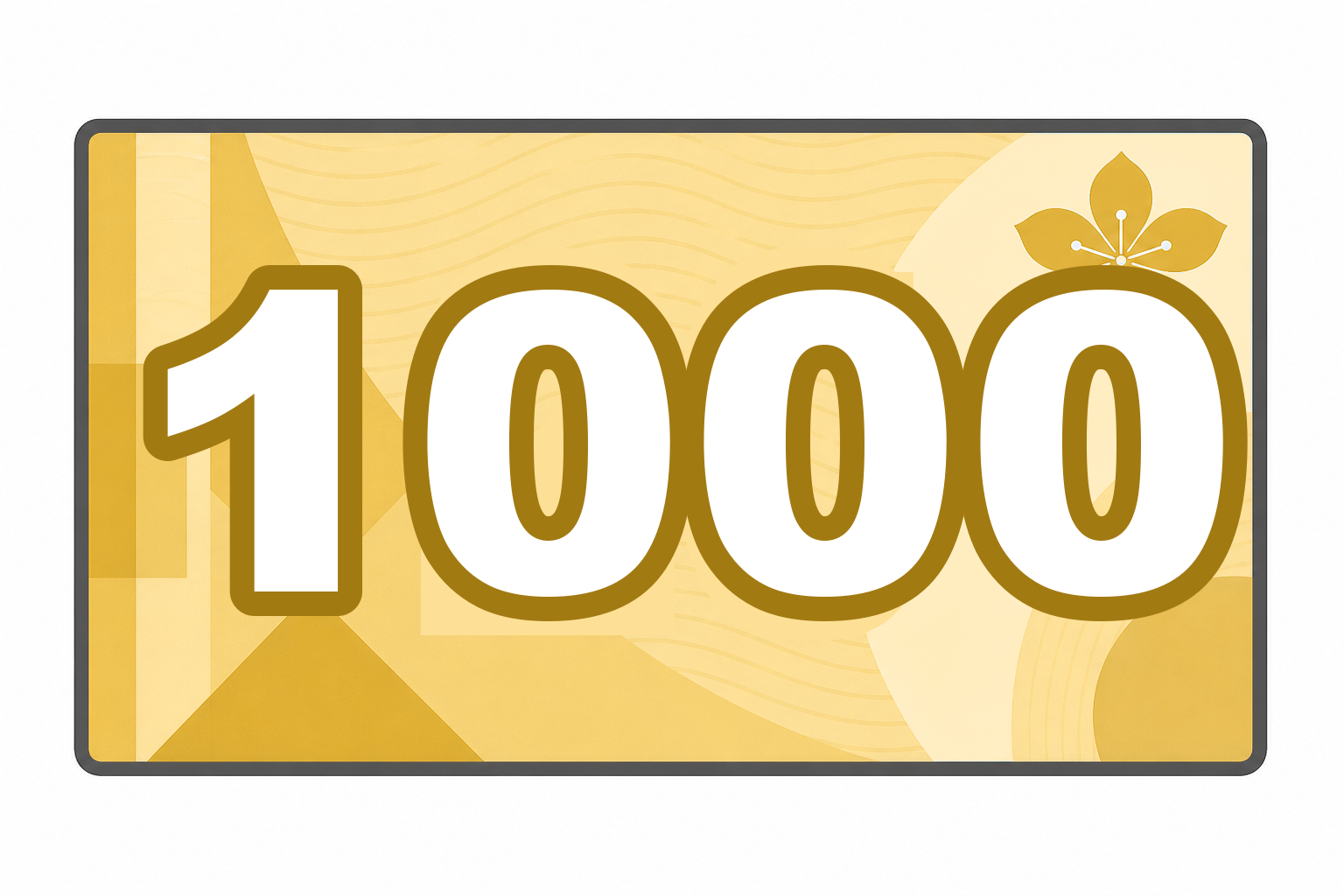
4. ________
💡 Circle the banknotes given out before the change is returned.
| A | |
| 職員 zik1 jyun4 | |
A few moments later… | |
| 職員 zik1 jyun4 | |
| A | |
| 職員 zik1 jyun4 | |
| A | |
| 職員 zik1 jyun4 | |
| A | |
| 職員 zik1 jyun4 | |
A few moments later… | |
| 職員 zik1 jyun4 | |
| A | |
| 職員 zik1 jyun4 | |
| A | |
| 職員 zik1 jyun4 | |
A few moments later… | |
| B | |
| A | |
| B | |
| A | |
| B | |
… |
Conversation 2
1. ________
________
2. ________
________
3. ________
________
4. ________
________
| A | |
| 職員 zik1 jyun4 | |
A few moments later… | |
| 職員 zik1 jyun4 | |
| A | |
| 職員 zik1 jyun4 | |
| A | |
| 職員 zik1 jyun4 | |
A few moments later… | |
| 職員 zik1 jyun4 | |
A few moments later… | |
| 職員 zik1 jyun4 | |
| A | |
| 職員 zik1 jyun4 | |
| A | |
| 職員 zik1 jyun4 | |
| A | |
A few moments later… | |
| 職員 zik1 jyun4 | |
| A | |
A few moments later… | |
| B | |
| A | |
| B | |
| A | |
| B |
Conversation 3
1. ________
________
2. ________
| A | |
| 職員 zik1 jyun4 | |
| A | |
A few moments later… | |
| A | |
A few moments later… | |
| 職員 zik1 jyun4 | |
| A | |
| 職員 zik1 jyun4 | |
| A | |
A few moments later… | |
| B | |
| A | |
| B | |
| A | |
| B | |
| A | |
| B |
Transcripts with Translation
Conversation 1
| A | 埋單吖唔該。 maai4 daan1 aa1 m4 goi1. Pay the bill, please. [= I want to pay the bill, please.] |
| 職員 zik1 jyun4 | 好,請等一等。 hou2, cing2 dang2 jat1 dang2. Good. [= Sure.] Please wait for a while. |
A few moments later… | |
| 職員 zik1 jyun4 | 請問邊位俾嘅? cing2 man6 bin1 wai2 bei2 ge2? May I ask who will pay? |
| A | 我俾吖唔該。 ngo5 bei2 aa1 m4 goi1. I will pay, please. |
| 職員 zik1 jyun4 | 多謝你一千四百零七蚊。 do1 ze6 nei5 jat1 cin1 sei3 baak3 ling4 cat1 man1. Thank you for $1407. |
| A | 請問收唔收卡嘅? cing2 man6 sau1 m4 sau1 kaat1 ge2? May I ask if you accept credit cards? |
| 職員 zik1 jyun4 | 唔好意思,我哋淨係收現金咋。 m4 hou2 ji3 si1, ngo5 dei6 zing6 hai6 sau1 jin6 gam1 zaa3. Sorry, we only accept cash. |
| A | 唔緊要,噉我俾現金啦。 m4 gan2 jiu3, gam2 ngo5 bei2 jin6 gam1 laa1. Never mind. Then, let me pay in cash. |
| 職員 zik1 jyun4 | 收你一千五百蚊嘅,請等一等。 sau1 nei5 jat1 cin1 ng5 baak3 man1 ge3, cing2 dang2 jat1 dang2. We receive $1500 from you. Please wait for a while. |
A few moments later… | |
| 職員 zik1 jyun4 | 找返你九十三蚊嘅。 zaau2 faan1 nei5 gau2 sap6 saam1 man1 ge3. We give change of $93 back to you. |
| A | 唔該晒。 m4 goi1 saai3. Thank you so much. |
| 職員 zik1 jyun4 | 請問要唔要返張單嘅? cing2 man6 jiu3 m4 jiu3 faan1 zoeng1 daan1 ge2? May I ask if you want the receipt back? |
| A | 唔使喇,唔該。 m4 sai2 laa3, m4 goi1. I don’t need it. Thank you. |
| 職員 zik1 jyun4 | 多謝晒。 do1 ze6 saai3. Thank you so much. |
A few moments later… | |
| B | 一個人俾幾多錢呀? jat1 go3 jan4 bei2 gei2 do1 cin2 aa3? How much does one person pay? |
| A | 我計下先,一千四百零七蚊除四,一個人三百五十一個八,俾三百五十蚊我得喇。 ngo5 gai3 haa5 sin1, jat1 cin1 sei3 baak3 ling4 cat1 man1 ceoi4 sei3, jat1 go3 jan4 saam1 baak3 ng5 sap6 jat1 go3 baat3, bei2 saam1 baak3 ng5 sap6 man1 ngo5 dak1 laa3. Let me calculate it first. $1407 divided by 4. One person pays $351.8. Paying $350 to me is okay already. |
| B | 嗱,三百六十蚊。 naa4, saam1 baak3 luk6 sap6 man1. Here you go. $360. |
| A | 嗱,找返十蚊俾你。 naa4, zaau2 faan1 sap6 man1 bei2 nei5. Here you go. I give change of $10 back to you. |
| B | 唔該。 m4 goi1. Thank you. |
… |
Conversation 2
| A | 埋單吖唔該。 maai4 daan1 aa1 m4 goi1. Pay the bill, please. [= I want to pay the bill, please.] |
| 職員 zik1 jyun4 | 好,請等一等。 hou2, cing2 dang2 jat1 dang2. Good. [= Sure.] Please wait for a while. |
A few moments later… | |
| 職員 zik1 jyun4 | 請問邊位埋嘅? cing2 man6 bin1 wai2 maai4 ge2? May I ask who will pay the bill? |
| A | 我埋吖唔該。 ngo5 maai4 aa1 m4 goi1. I will pay the bill, please. |
| 職員 zik1 jyun4 | 多謝你八百四十七蚊,請問俾乜嘢嘅? do1 ze6 nei5 baat3 baak3 sei3 sap6 cat1 man1, cing2 man6 bei2 mat1 je5 ge2? Thank you for $847. May I ask what you will pay by? |
| A | 俾卡吖唔該。 bei2 kaat1 aa1 m4 goi1. I will pay by credit card, please. |
| 職員 zik1 jyun4 | 收你Visa嘅,請等一等。 sau1 nei5 Visa ge3, cing2 dang2 jat1 dang2. We receive Visa from you. Please wait for a while. |
A few moments later… | |
| 職員 zik1 jyun4 | 麻煩你簽一簽名吖。 maa4 faan4 nei5 cim1 jat1 cim1 meng2 aa1. Please sign. |
A few moments later… | |
| 職員 zik1 jyun4 | 俾返張卡你先呀吓。 bei2 faan1 zoeng1 kaat1 nei5 sin1 aa3 haa2. I will give the card back to you first. |
| A | 唔該晒。 m4 goi1 saai3. Thank you so much. |
| 職員 zik1 jyun4 | 請問有冇揸車嚟嘅? cing2 man6 jau5 mou5 zaa1 ce1 lai4 ge2? May I ask if you drive to come? |
| A | 有呀,唔該。 jau5 aa3, m4 goi1. Yes. Thank you. |
| 職員 zik1 jyun4 | 我俾張單你吖,請等一等。 ngo5 bei2 zoeng1 daan1 nei5 aa1, cing2 dang2 jat1 dang2. Let me give you a receipt. Please wait for a while. |
| A | 唔該晒。 m4 goi1 saai3. Thank you so much. |
A few moments later… | |
| 職員 zik1 jyun4 | 嗱,多謝晒。 naa4, do1 ze6 saai3. Here you go. Thank you so much. |
| A | 唔該晒。 m4 goi1 saai3. Thank you so much. |
A few moments later… | |
| B | 俾返幾錢你呀? bei2 faan1 gei2 cin2 nei5 aa3? How much do I pay back to you? |
| A | 唔使喇,我請你啦。 m4 sai2 laa3, ngo5 ceng2 nei5 laa1. You don’t need to. Let me treat you. |
| B | 唔好嘅。 m4 hou2 ge3. Not good. |
| A | 唔使啦,你下次請返我啦。 m4 sai2 laa1, nei5 haa6 ci3 ceng2 faan1 ngo5 laa1. You don’t need to. Why don’t you treat me back next time? |
| B | 噉好啦,多謝晒。 gam2 hou2 laa1, do1 ze6 saai3. Okay then. Thank you so much. |
Conversation 3
| A | 埋單吖唔該。 maai4 daan1 aa1 m4 goi1. Pay the bill, please. [= I want to pay the bill, please.] |
| 職員 zik1 jyun4 | 拎張單出去埋吖。 ling1 zoeng1 daan1 ceot1 heoi3 maai4 aa1. Take the bill to go out to pay the bill. |
| A | 好,唔該。 hou2, m4 goi1. Good. [= Okay.] Thank you. |
A few moments later… | |
| A | 唔該埋單吖。 m4 goi1 maai4 daan1 aa1. Please pay the bill. [= I want to pay the bill, please.] |
A few moments later… | |
| 職員 zik1 jyun4 | 九十五蚊。 gau2 sap6 ng5 man1. $95. |
| A | 嗱。 naa4. Here you go. |
| 職員 zik1 jyun4 | 收你一百蚊,找返五蚊。 sau1 nei5 jat1 baak3 man1, zaau2 faan1 ng5 man1. We receive $100 from you. We give change of $5 back. |
| A | 唔該晒。 m4 goi1 saai3. Thank you so much. |
A few moments later… | |
| B | 俾返幾錢你呀? bei2 faan1 gei2 cin2 nei5 aa3? How much do I pay back to you? |
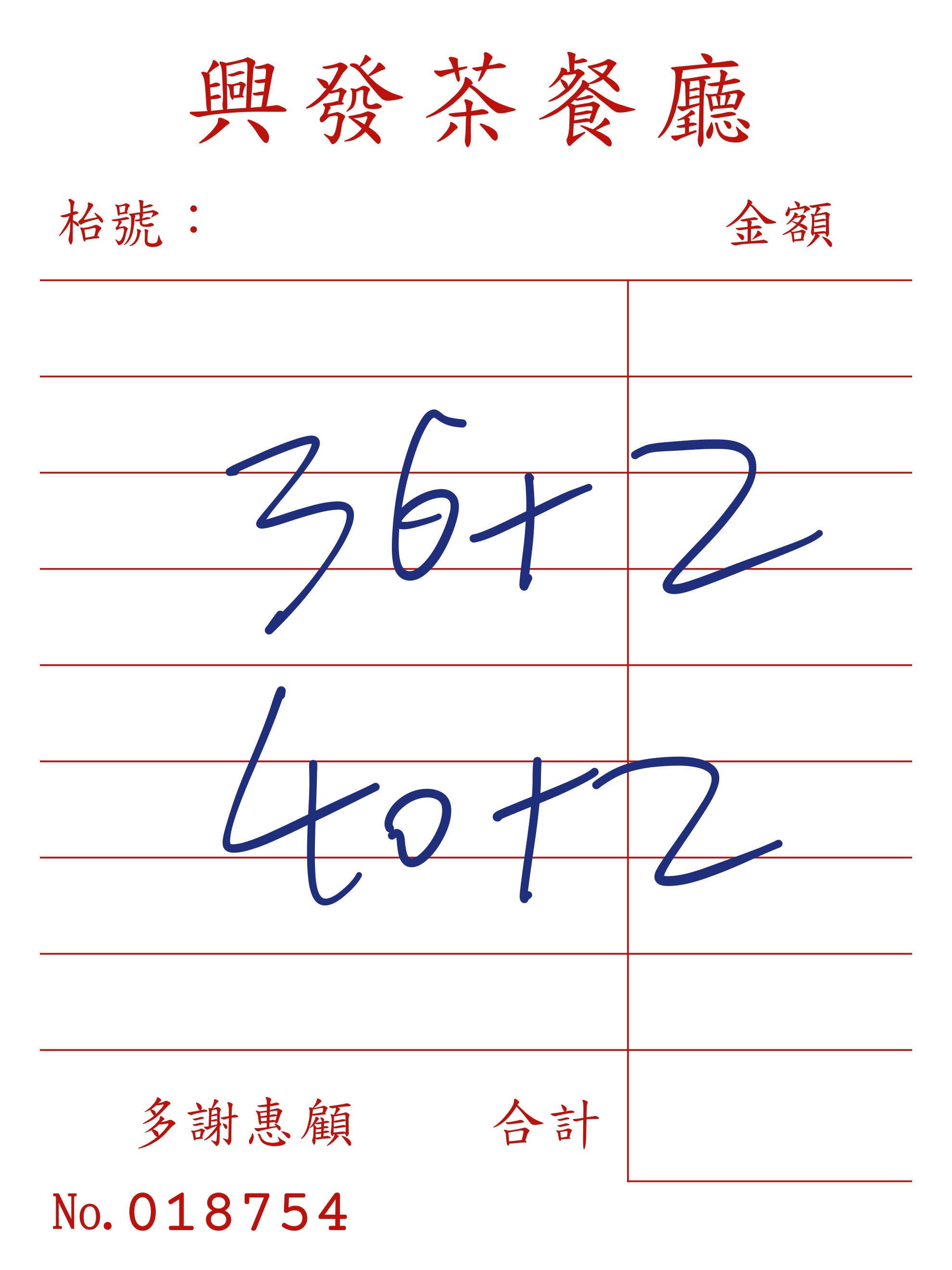
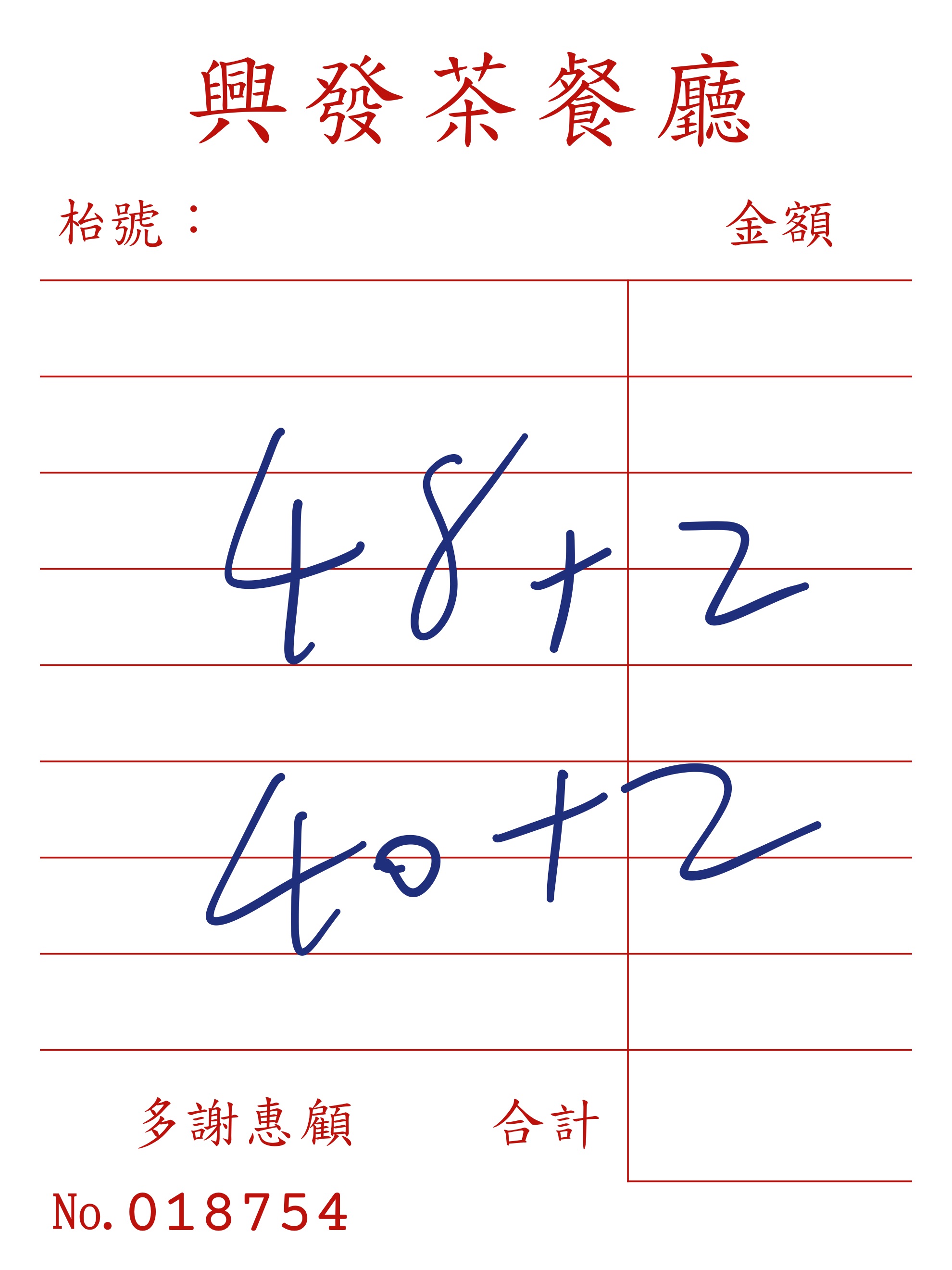
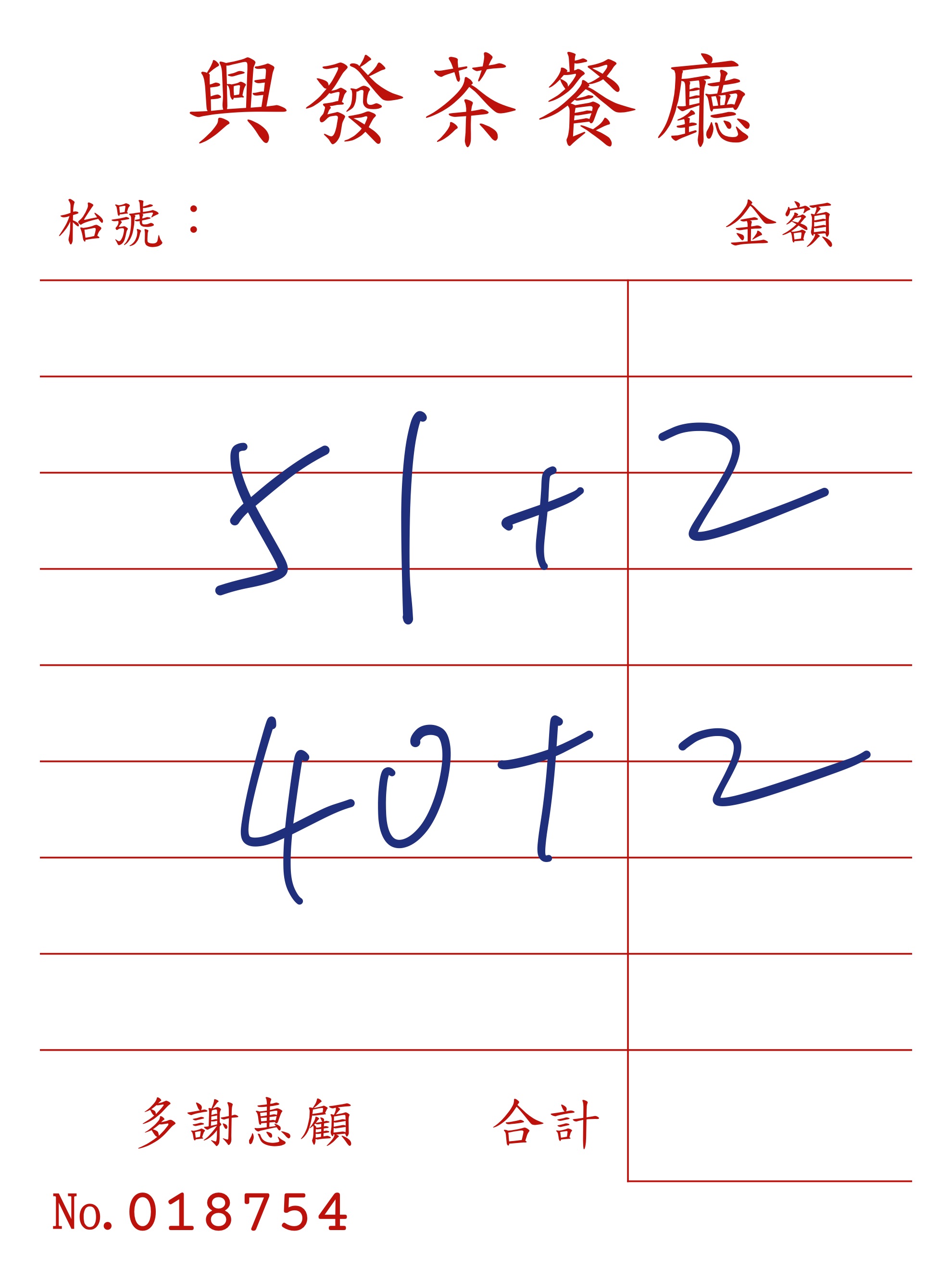
| A | 特餐四十蚊,凍飲加兩蚊,夾埋四十二蚊。 dak6 caan1 sei3 sap6 man1, dung3 jam2 gaa1 loeng5 man1, gaap3 maai4 sei3 sap6 ji6 man1. Special Meal is $40. For the iced drink, add $2. $42 in total. |
| B | 你有冇八蚊呀? nei5 jau5 mou5 baat3 man1 aa3? Do you have $8? |
| A | 我睇下先。 (Coin sound) 有呀。 ngo5 tai2 haa5 sin1. (Coin sound) jau5 aa3. I will have a look first. (Coin sound) Yes. |
| B | 嗱,五十蚊。 naa4, ng5 sap6 man1. Here you go. $50. |
| A | 嗱,找返八蚊俾你。 naa4, zaau2 faan1 baat3 man1 bei2 nei5. Here you go. I give change of $8 back to you. |
| B | 唔該。 m4 goi1. Thank you. |
Activity 2
Form a group of three. Get a set of role cards. Make three conversations based on the role cards.
- 商場 soeng1 coeng4 = shopping mall
Role Cards
Role A
Role B
Role C