37.2 Location Expressions II
In Grammar and Vocabulary 26.3, we learned that we can use the location expressions below to refer to different locations. Most of them end with 邊 bin6 / bin1 (‘side’) or 面 min6 (‘side’). 邊 bin is usually more often pronounced with Tone 6 (bin6) nowadays, except in the words for ‘left’, ‘right’, ‘left-hand side’ and ‘right-hand side’, where 邊 bin is still commonly pronounced with both Tone 6 (bin6) and Tone 1 (bin1).
For expressions with more than one pronunciation, we will only use the highlighted pronunciations (the ones with bin6) in this book. You can focus on them first and learn the other pronunciations later.
In this lesson, we will learn these new location expressions:
The location expressions for compass directions end with 邊 bin6 / bin1 (‘side’) or 面 min6 (‘side’). For ‘east’, ‘south’, ‘west’ and ‘north’, 邊 bin can be pronounced with Tone 6 (bin6) or Tone 1 (bin1). For ‘northeast’, ‘southeast’, ‘southwest’ and ‘northwest’, 邊 bin is usually only pronounced with Tone 6 (bin6).
| 西北邊 sai1 bak1 bin6 西北面 sai1 bak1 min6 | 北邊 bak1 bin6 / bak1 bin1 北面 bak1 min6 | 東北邊 dung1 bak1 bin6 東北面 dung1 bak1 min6 |
| 西邊 sai1 bin6 / sai1 bin1 西面 sai1 min6 | 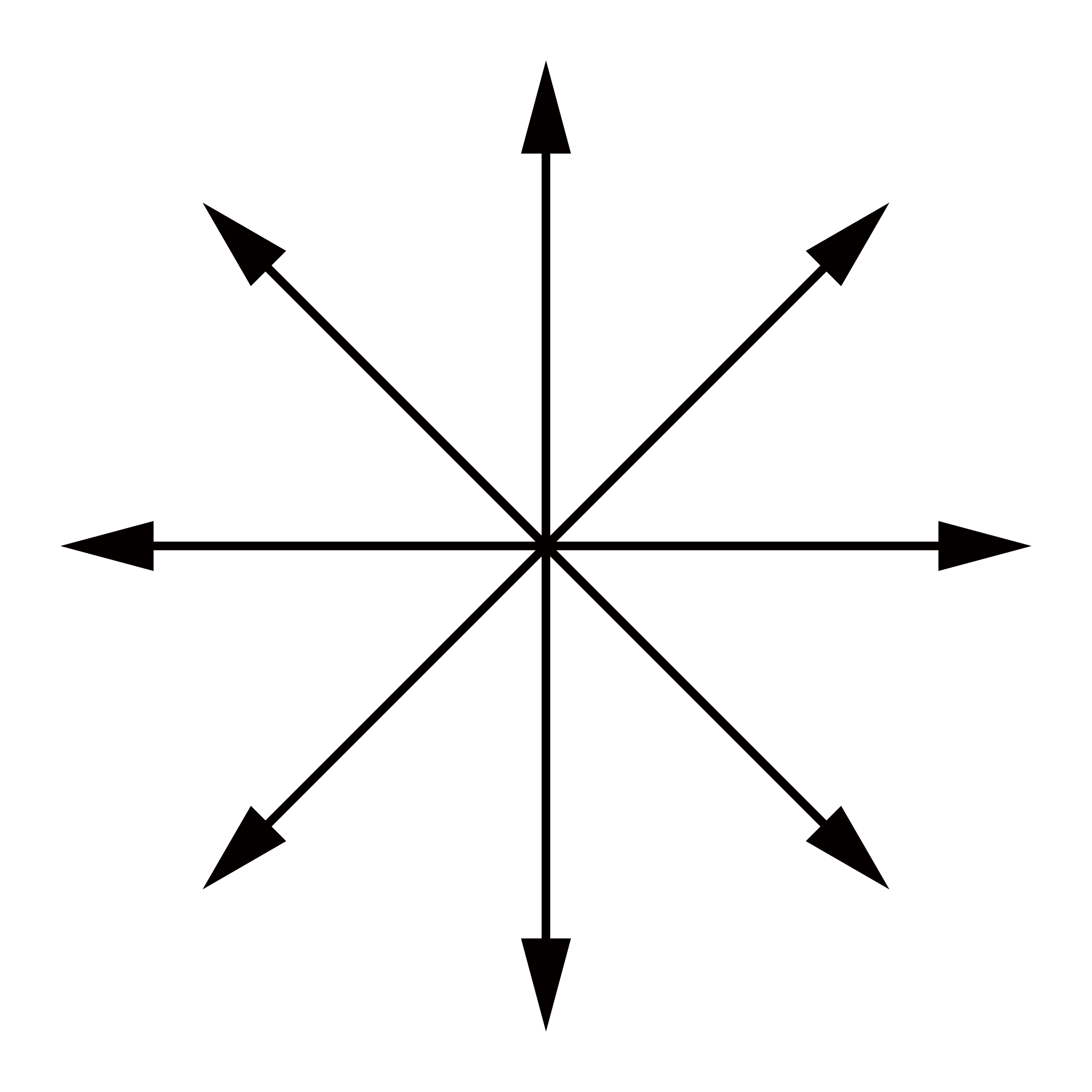 | 東邊 dung1 bin6 / dung1 bin1 東面 dung1 min6 |
| 西南邊 sai1 naam4 bin6 西南面 sai1 naam4 min6 | 南邊 naam4 bin6 / naam4 bin1 南面 naam4 min6 | 東南邊 dung1 naam4 bin6 東南面 dung1 naam4 min6 |
We will learn several structures with a location expression below. Pay attention to the word order. It may be different from English.
To refer to a location relative to a place, we can put the reference point before a location expression. We can optionally add the particle 嘅 ge3 between the reference point and the location expression. 嘅 ge3 functions like the apostrophe s (’s) in English here.
In grammar, a location expression put right after a noun without 嘅 ge3 is called a postposition. Postpositions are similar to prepositions, but postpositions appear after a noun. Postpositions can also be called localizers because they are usually related to locations.
To refer to a location between two places, we can use 中間 zung1 gaan1 (‘between’) with the structure below. We use 同 tung4 / 同埋 tung4 maai4 (‘and’) to connect the two reference points.
We can use the structure below to refer to something at a specific location.
We sometimes don’t indicate a reference point. We often do so when the reference point is our current position.
We can add 呢 ni1 or 嗰 go2 before the classifier to indicate whether the thing is close to or far away from us.
We can use the verb 喺 hai2 / 响 hoeng2 (‘to be in, on, at’) to indicate the location of something with this structure:
We can use the verb 有 jau5 (‘to have’) or 冇 mou5 (‘to not have’) to indicate a specific location has or doesn’t have something with this structure: