22.1 Time
To indicate the hour of the time, we say the number of the hour and then the classifier 點 dim2 (‘o’clock’) or 點鐘 dim2 zung1 (‘o’clock’).
To mean ‘2 o’clock’, we use 兩 loeng5 instead of 二 ji6.
There are three methods to indicate the minute of the time when it is not zero.
Method 1
In this method, we first say the hour, and then the number of the minute and the classifier 分 fan1 (‘minute’). Note that if we indicate the minute, we usually only use 點 dim2 but not 點鐘 dim2 zung1 for the hour.
If the minute is 1 to 9, we add 零 ling4 before the number of the minute.
If the minute is 2, we use 二 ji6 instead of 兩 loeng5. Therefore, we use 兩 loeng2 before 點 dim2 or 點鐘 dim2 zung1, but 二 ji6 before 分 fan1.
Method 2
We can also use the number we see on a torque clock.
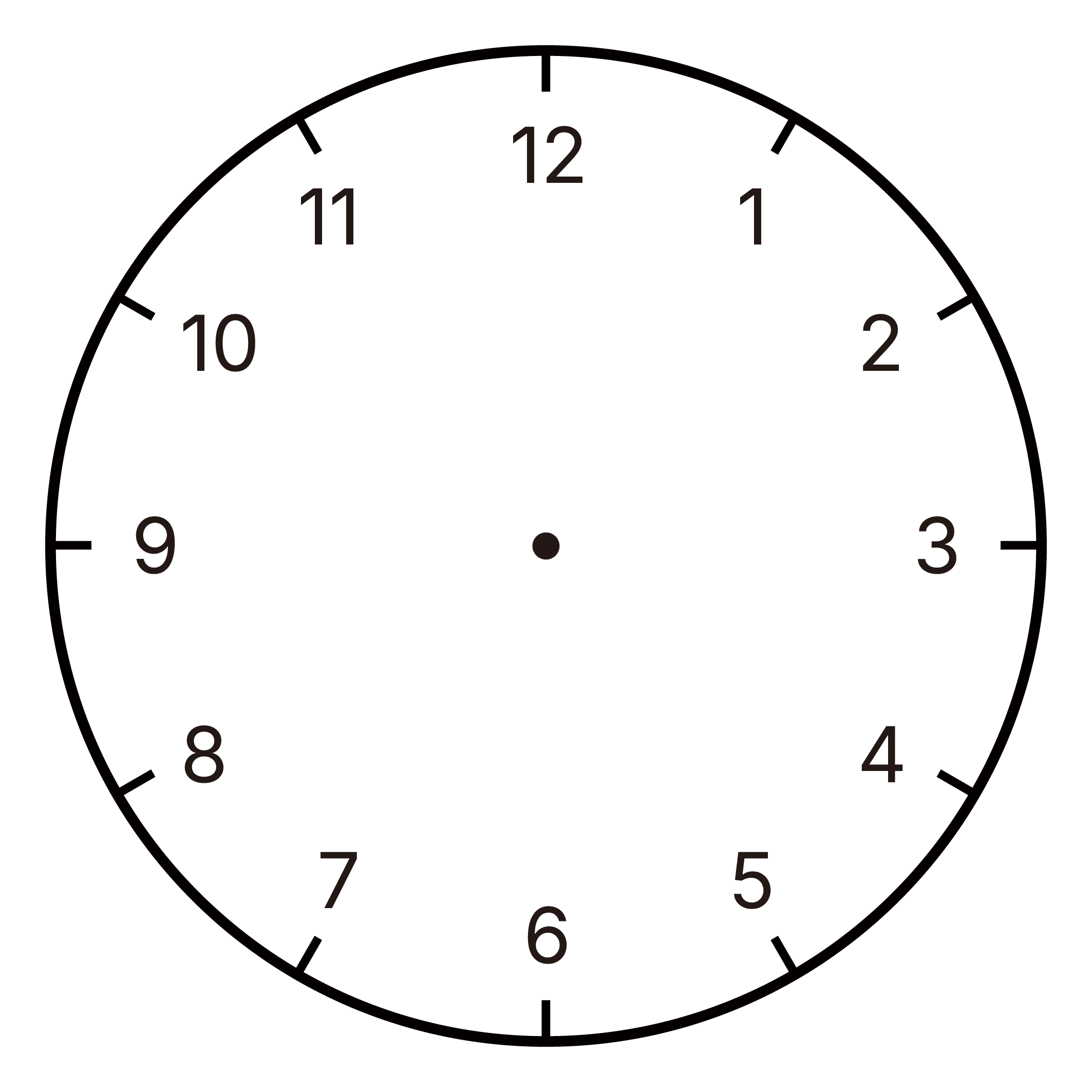
Notice the interval between one number and the next number is 5 minutes. For example, the interval between 12 and 1 is 5 minutes.
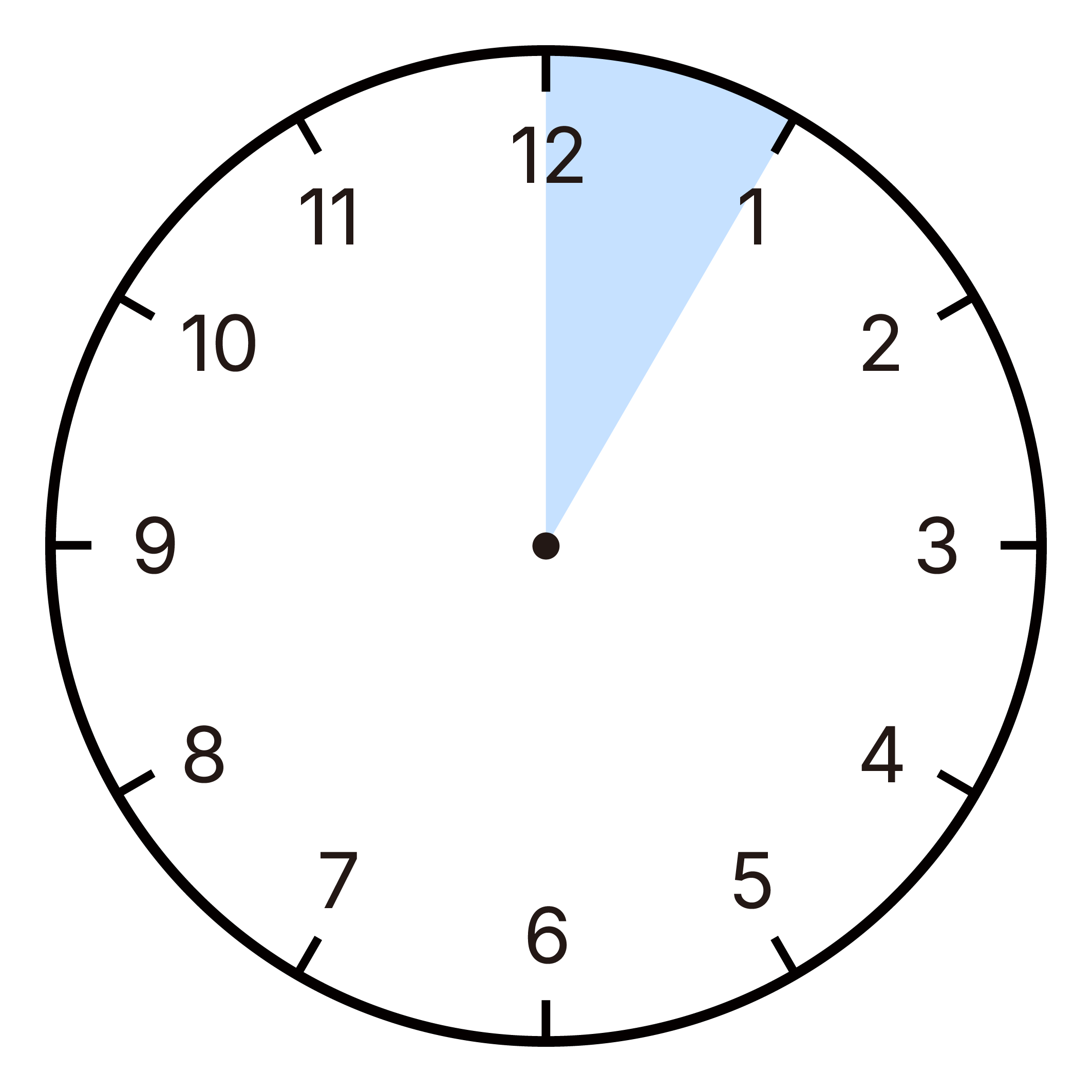
In this method, we first say the hour, and then 搭 daap6 (‘to step on’, also written as 踏) and the number which the minute hand is pointing to. 搭 daap6 here means that the minute hand is stepping on the number. We can often omit the word 搭 daap6. For example, when the time is 8:15, the minute hand will step on the number 3 so we can say 三 saam1 for the minute.
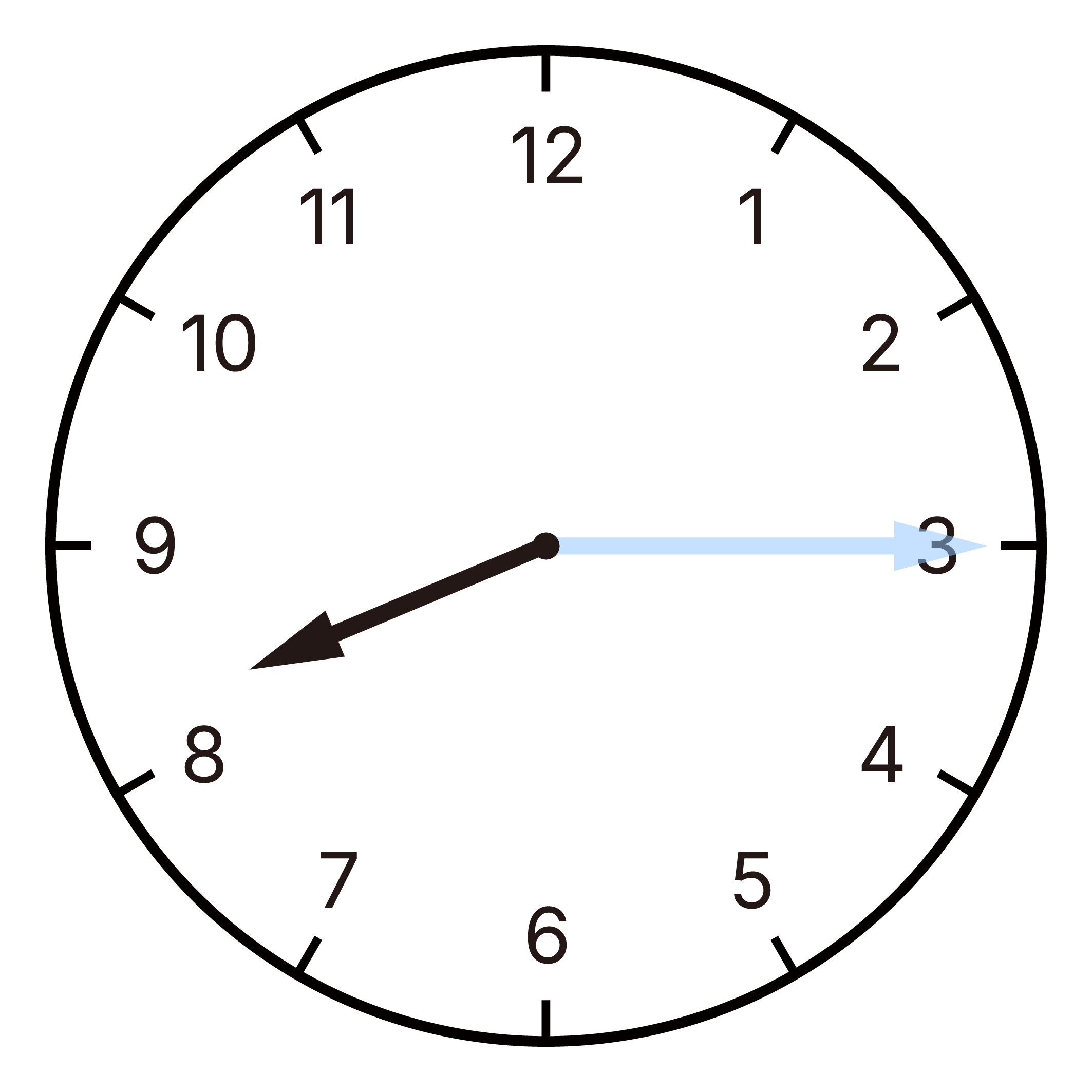
If the minute hand is pointing to 6, we usually say 半 bun3 (‘half’) instead of 六 luk6.
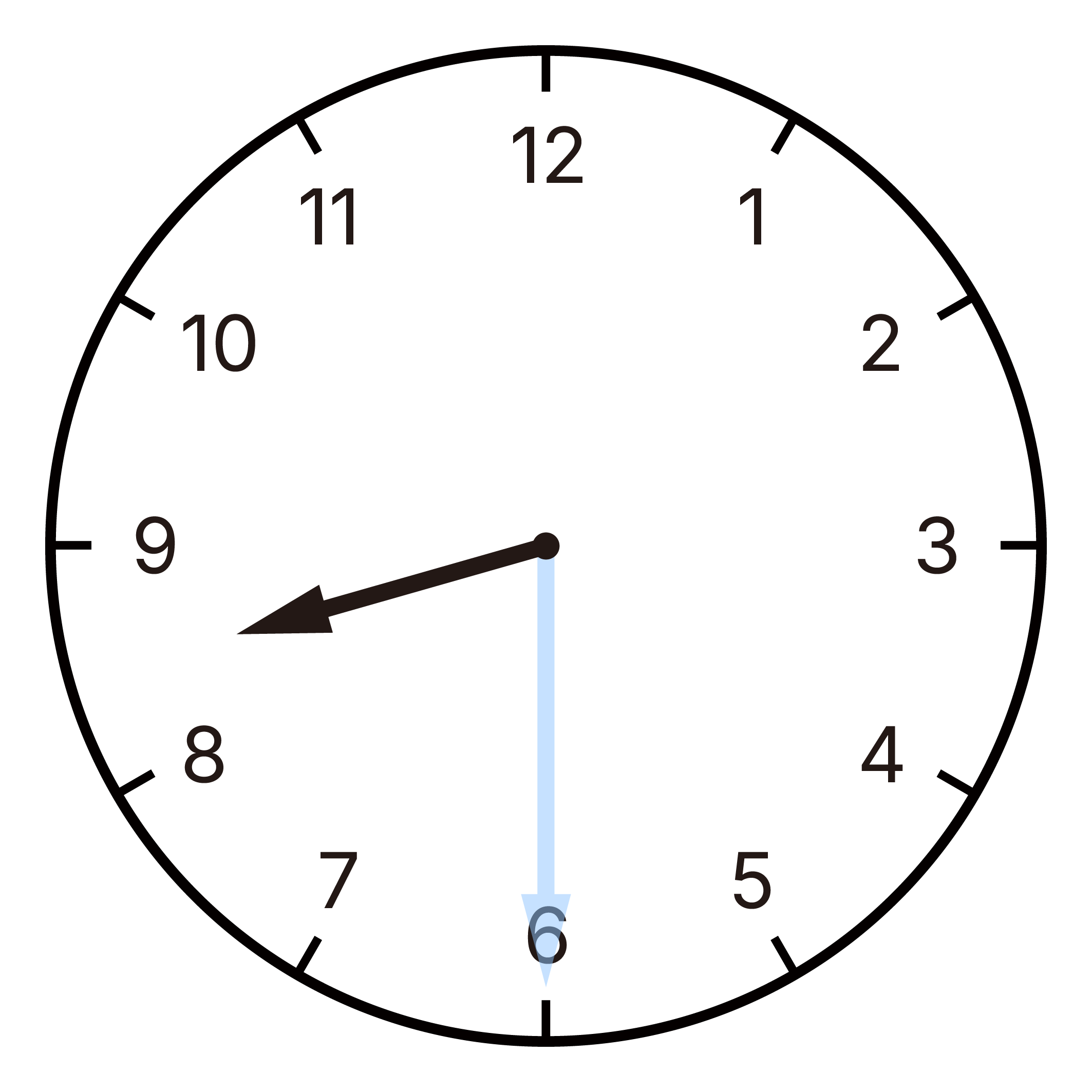
If the minute hand is pointing to 12, we usually say 正 zeng3 / zing3 (‘exact’) instead of 十二 sap6 ji6. Note that we only add 正 zeng3 / zing3 when we need to emphasize the time is exactly on the hour.
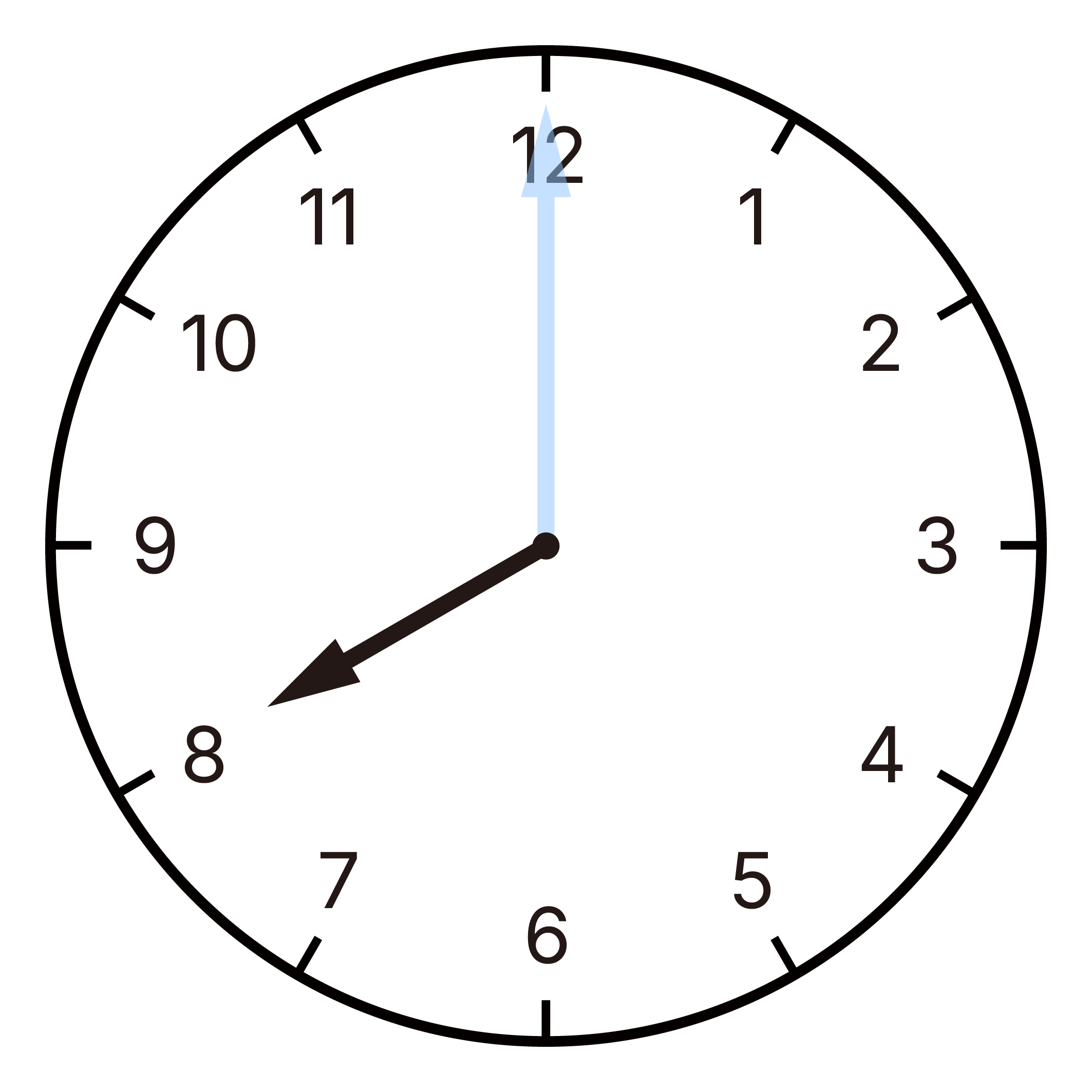
Method 3
We can also use the expression 個字 go3 zi6. 字 zi6 means ‘word’, which refers to the number we see on a torque clock. Here, we can understand 字 zi6 as ‘5 minutes’ because each 字 zi6 on a torque clock represents an interval of 5 minutes. 個 go3 is the classifier for 字 zi6.
In this method, we first say the hour, and then the number which the minute hand is pointing to and 個字 go3 zi6.
When the minute hand is pointing to the number 2, we use 兩 loeng5 instead of 二 ji6.
We don’t usually say 六個字 luk6 go3 zi6 when the minute hand is pointing to the number 6 or 十二個字 sap6 ji6 go3 zi6 when the minute hand is pointing to the number 12.
In daily conversations, we usually use Method 2 or Method 3 whenever possible. We use Method 2 more often than Method 3. We usually only use Method 1 when we can’t indicate the time with Method 2 or Method 3.
We can put the part of the day (e.g., 朝早 ziu1 zou2 ‘morning’, 晏晝 aan3 zau3 ‘afternoon’, 夜晚 je6 maan5 ‘evening, night’) before the time to indicate whether it is morning, afternoon or evening (See Grammar and Vocabulary 17.3 for parts of the day).
We put the time before the verb in a sentence, just as we do with other time expressions.
不如我哋七點食吖。
bat1 jyu4 ngo5 dei6 cat1 dim2 sik6 aa1.
Why don’t we eat at 7:00?
We can put the time after some verbs (e.g., 食 sik6 ‘to eat’ and 睇 tai2 ‘to watch’) to indicate the time of the activity.
不如我哋食七點吖。
bat1 jyu4 ngo5 dei6 sik6 cat1 dim2 aa1.
Why don’t we eat at 7:00?
However, we can only do so when the sentence doesn’t have an object.
❌ 不如我哋食早餐七點吖。
bat1 jyu4 ngo5 dei6 sik6 zou2 caan1 cat1 dim2 aa1.
✔️ 不如我哋七點食早餐吖。
bat1 jyu4 ngo5 dei6 cat1 dim2 sik6 zou2 caan1 aa1.
Why don’t we have breakfast at 7:00?
We can’t put the time 七點 cat1 dim2 after the verb 食 sik6 because the sentence has the object 早餐 zou2 caan1. We need to put 七點 cat1 dim2 before 食 sik6.