Print or Export
而家有冇折呀?
ji4 gaa1 jau5 mou5 zit3 aa3?
ji4 gaa1 jau5 mou5 zit3 aa3?
Listen and Speak
Step 1
Listen and complete each expression with a number.
| 1. | 2. | 3. | 4. | 5. |
 |  |  |  |  |
| ____折 ____ zit3 | ____折 ____ zit3 | ____折 ____ zit3 | ____折 ____ zit3 | ____折 ____ zit3 |
Observe the expressions and answer the questions.
-
What does the word 折 zit3 mean?
折 zit3 means ‘________% of the original price’. -
How do we express discounts in Cantonese?
________
Step 2
Listen to a conversation. A customer is shopping at a clothing store and will ask about the price of an item and the discount. Choose the correct promotion banner.

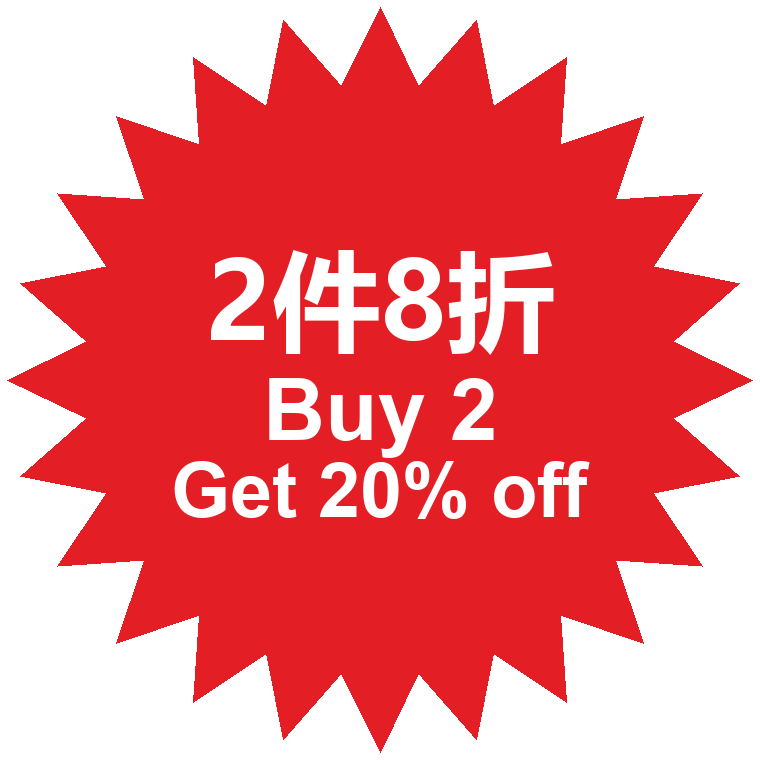


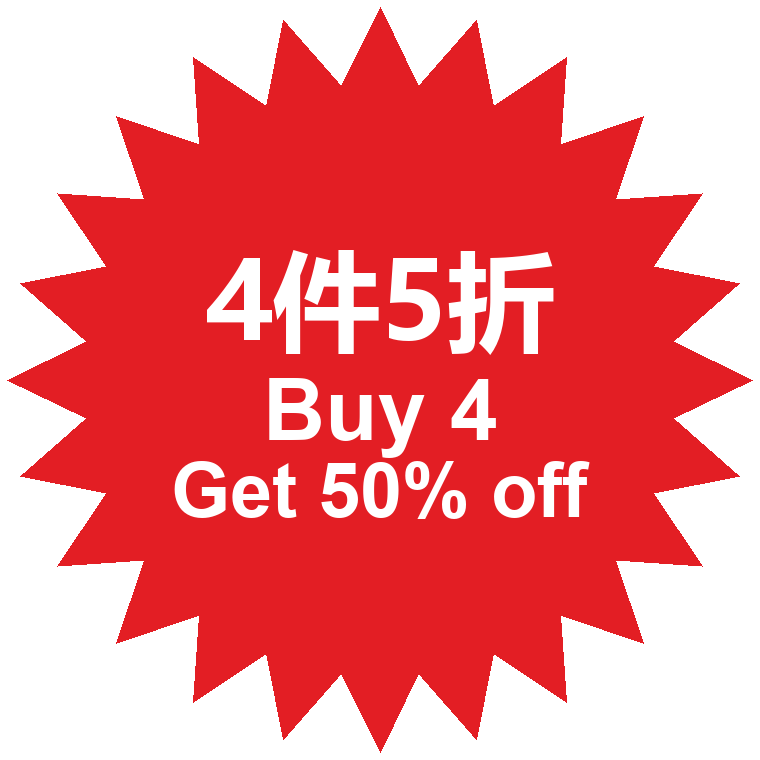
| 客 haak3 | |
| 店員 dim3 jyun4 | |
| 客 haak3 | |
| 店員 dim3 jyun4 | |
| 客 haak3 |
Step 3
Listen to the conversation again. Read the script while listening. Check your answer.
| 客 haak3 | 請問呢對鞋幾多錢呀? cing2 man6 ni1 deoi3 haai4 gei2 do1 cin2 aa3? May I ask how much this pair of shoes is? |
| 店員 dim3 jyun4 | 呢對鞋一千六百九十九蚊。 ni1 deoi3 haai4 jat1 cin1 luk6 baak3 gau2 sap6 gau2 man1. This pair of shoes is $1699. |
| 客 haak3 | 而家有冇折呀? ji4 gaa1 jau5 mou5 zit3 aa3? Are there discounts now? |
| 店員 dim3 jyun4 | 而家買夠三件貨品就有七折。 ji4 gaa1 maai5 gau3 saam1 gin6 fo3 ban2 zau6 jau5 cat1 zit3. If you buy at least three items, then there is 30% off now. |
| 客 haak3 | 好,唔該晒。 hou2, m4 goi1 saai3. Good. [= Okay.] Thank you so much. |
- 折 zit3 = discount; 10% of the original price
- 買夠 maai5 gau3 = to buy at least
- 件 gin6 = (Classifier for 貨品 fo3 ban2)
- 貨品 fo3 ban2 = item
Step 4
Listen and repeat.
Step 5
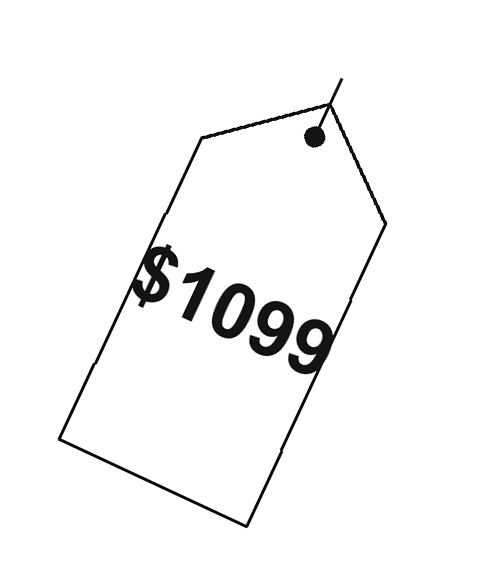
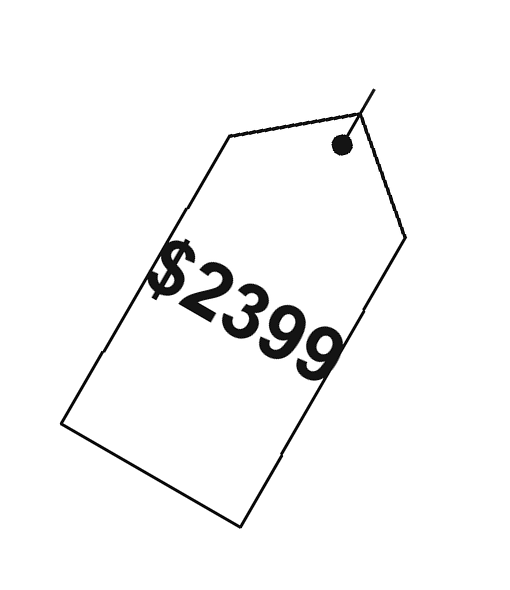
Replace the highlighted words in the script with the prices and the discounts below to make your conversations.
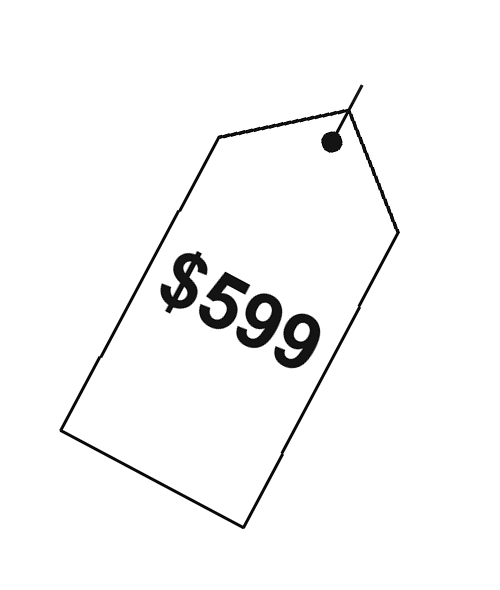
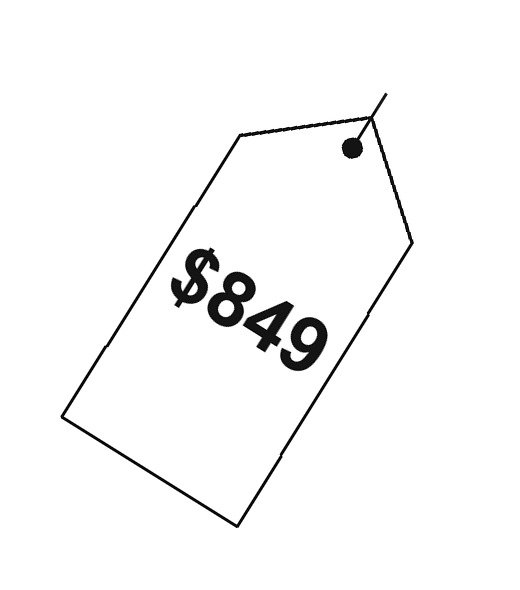
Grammar and Vocabulary
In the Grammar and Vocabulary section, you will learn:
- Discounts
- The Modal Verb 會 wui5 (‘will’) IV (Polite Invitation)
- The Pronoun 所有 so2 jau5 (‘all’)
- Vocabulary List
54.1 Discounts
When expressing discounts in Cantonese, we indicate the percentage of the original price we need to pay after the deduction instead of the percentage deducted. For example, a 10% discount will be expressed as paying 90% of the original price, and a 20% discount will be expressed as paying 80% of the original price.
The classifier 折 zit3 means ‘10% of the original price’. To mean ‘10% off, 20 off, etc.’, we first work out the percentage of the original price (90%, 80%, etc.). Then, we put the tens place of the percentage of the original price before 折 zit3 (90%, 80%, etc.)
10% off → 90% of the original price
九折
gau2 zit3
(9 × 10% = 90%)
20% off → 80% of the original price
八折
baat3 zit3
(8 × 10% = 80%)
Note that 折 zit3 refer to 10% of the original price instead of 1% of the original price.
10% off → 90% of the original price
❌ 九十折
gau2 sap6 zit3
(90 × 10% = 900%, which will be a price increase!)
✔️ 九折
gau2 zit3
(9 × 10% = 90%)
20% off → 80% of the original price
❌ 八十折
baat3 sap6 zit3
(80 × 10% = 800%)
✔️ 八折
baat3 zit3
(8 × 10% = 80%)
If the ones digit of the percentage of the original price is not zero (95%, 88%, etc.)’, we add the digit before 折 zit3.
5% off → 95% of the original price
九五折
gau2 ng5 zit3
(9 × 10 % + 5% = 95%)
12% off → 88% of the original price
八八折
baat3 baat3 zit3
(8 × 10 % + 8 % = 8 8 %)
To mean ‘half price’, we can say 半價 bun3 gaa3 (literally ‘half + price’).
54.2 The Modal Verb 會 wui5 (‘will’) IV (Polite Invitation)
In Grammar and Vocabulary 23.3, we learned that the modal verb 會 wui5 means ‘will’. In Grammar and Vocabulary 36.4, we learned to form yes-no questions with 會 wui5.
We can use yes-no questions with 會 wui5 to make polite invitations. We often hear this type of invitation in shops when the shop assistant wants to encourage us to buy something, or in restaurants when the server wants to encourage us to order something. We respond to this type of invitation like other invitations.
| A: | 你會唔會揀多一件嘅?買三件有八五折喎。 nei5 wui5 m4 wui5 gaan2 do1 jat1 gin6 ge2? maai5 saam1 gin6 jau5 baat3 ng5 zit3 wo3. Will you choose one more [item]? For buying three [items], there is a 15% discount. |
| B: | → 好呀,噉我再睇下先。 hou2 aa3, ngo5 zoi3 tai2 haa5 sin1. Good. [= Okay.] Then, I will take a look again first. → 唔使喇,唔該。 m4 sai2 laa3, m4 goi1. I don’t need it. Thank you. |
54.3 The Pronoun 所有 so2 jau5 (‘all’)
The pronoun 所有 so2 jau5 means ‘all’. We can use 所有 so2 jau5 to refer to all the things in a context. We put the type of thing after 所有 so2 jau5.
所有產品
so2 jau5 caan2 ban2
all the products
所有鞋
so2 jau5 haai4
all the shoes
In Grammar and Vocabulary 53.8, we learned that the pronoun 全部 cyun4 bou6 also means ‘all’.
全部產品
cyun4 bou6 caan2 ban2
all the products
全部鞋
cyun4 bou6 haai4
all the shoes
全部 cyun4 bou6 and 所有 so2 jau5 are similar, but there are subtle differences in their meanings:
54.4 Vocabulary List
Communication
In the Communication section, you will learn:
- Asking About Prices and Discounts
- Checking Out at a Store 💸
Asking About Prices and Discounts
If we want to ask about the price of an item, we can say:
If we want to check if there are any discounts, we can ask:
When we ask about the price of an item, the shop assistant often mentions the discount to encourage us to buy the item.
The shop assistant will sometimes mention the original price to emphasize how much the item is cheaper now.
If we want to confirm a discount, we say:
Checking Out at a Store 💸
After we have selected our items, we need to go to the counter to check out. If we are not sure where the counter is, we can ask:
If a shop assistant is serving us, they will usually guide us to the counter.
When queuing at the counter, we need to pay attention to the shop assistant’s signal for the next customer.
The shop assistant will sometimes confirm the number of items with us first.
The shop assistant will sometimes take the last chance to tempt us into buying more.
Route A: Temptation failed
Route B: Temptation succeeded
A few moments later…
The shop assistant will sometimes ask us to check the items.
- We can put a question-like clause after the verb 睇 tai2 (‘to look’). We will learn more about it in later books.
If we want to check the items but the shop assistant doesn’t ask, we can say:
If there are no problems, we can say:
If there are some problems, we can say:
Hong Kong has plastic bag levy. Therefore, the shop assistant will sometimes ask if we need a bag before providing one.
If we want to use a coupon or a voucher, we can say:
After calculating the total, the shop assistant will say:
The shop assistant will then ask how we would like to pay.
If we want to check the payment methods available, we can ask:
If we’re not sure whether a payment method is accepted, we can ask:
Route A: Cash
A few moments later…
A few moments later…
Some shops may refuse to accept banknotes like $500 or $1000. The shop assistant will say:
Route B: Credit Card
If we need to tap our credit card on a payment terminal, the shop assistant will say:
The shop assistant will sometimes ask us to sign on a credit card receipt.
Route C: Octopus Card
After paying, the shop assistant will give us the receipt.
Before we leave, the shop assistant will often say:
Exercises
Exercise 1
Complete the descriptions.
1.
The classifier ________ means ‘10% of the original price’.
2.
We can use questions with the modal verb ________ to make polite invitations.
3.
The pronouns ________ and ________ mean ‘all’. ________ expresses the meaning of all items as a whole, while ________ emphasizes all and every single item.
Exercise 2
Follow the example to complete the sentences. Then, check your answers and repeat after the recordings.
Example
 2 items10% off | 而家買夠兩件貨品就有九折。 ji4 gaa1 maai5 gau3 loeng5 gin6 fo3 ban2 zau6 jau5 gau2 zit3. If you buy at least two items, then there is 10% off now. |
1.
3 items20% off | ________ |
2.
$5005% off | ________ |
3.
$100023% off | ________ |
4.
4 items40% off | ________ |
5.
2 items25% off | ________ |
6.
$150012% off | ________ |
Exercise 3
Listen and identify the discount, number of items and total amount. Then, check your answers and repeat after the recordings.
Example
九折咗之後,兩件貨品總共三百二十八蚊。
gau2 zit3 zo2 zi1 hau6, loeng5 gin6 fo3 ban2 zung2 gung6 saam1 baak3 ji6 sap6 baat3 man1.
After we have discounted the items with 10% off, for two items, $328 altogether.
Discount: 10% off
Number of Items: 2
Total Amount: $328
1.
________
Discount: ________
Number of Items: ________
Total Amount: ________
2.
________
Discount: ________
Number of Items: ________
Total Amount: ________
3.
________
Discount: ________
Number of Items: ________
Total Amount: ________
4.
________
Discount: ________
Number of Items: ________
Total Amount: ________
5.
________
Discount: ________
Number of Items: ________
Total Amount: ________
6.
________
Discount: ________
Number of Items: ________
Total Amount: ________
Exercise 4
Listen to the discounts and draw the promotion banners. Then, check your answers and repeat after the recordings.
Example
而家所有產品都做緊九折。
ji4 gaa1 so2 jau5 caan2 ban2 dou1 zou6 gan2 gau2 zit3.
For all products, we are doing a promotion of 10% off now.
1.
________
2.
________
3.
________
4.
________
5.
________
6.
________
7.
________
8.
________
Activities
Activity 1
Listen to four conversations. In each conversation, a customer is shopping at a clothing store and will ask about the price of an item and the discount. Complete the table.
Conversation 1
| 客 haak3 | |
| 店員 dim3 jyun4 | |
| 客 haak3 | |
| 店員 dim3 jyun4 | |
| 客 haak3 |
Conversation 2
| 客 haak3 | |
| 店員 dim3 jyun4 | |
| 客 haak3 | |
| 店員 dim3 jyun4 | |
| 客 haak3 |
Conversation 3
| 客 haak3 | |
| 店員 dim3 jyun4 | |
| 客 haak3 | |
| 店員 dim3 jyun4 | |
| 客 haak3 |
Conversation 4
| 客 haak3 | |
| 店員 dim3 jyun4 | |
| 客 haak3 | |
| 店員 dim3 jyun4 | |
| 客 haak3 |
Transcripts with Translation
Conversation 1
| 客 haak3 | 請問呢條呔幾多錢呀? cing2 man6 ni1 tiu4 taai1 gei2 do1 cin2 aa3? May I ask how much this tie is? |
| 店員 dim3 jyun4 | 呢條呔一千四百五十五蚊。 ni1 tiu4 taai1 jat1 cin1 sei3 baak3 ng5 sap6 ng5 man1. This tie is $1455. |
| 客 haak3 | 而家有冇優惠呀? ji4 gaa1 jau5 mou5 jau1 wai6 aa3? Are there special offers now? |
| 店員 dim3 jyun4 | 而家買滿二千蚊就減一百五十蚊。 ji4 gaa1 maai5 mun5 ji6 cin1 man1 zau6 gaam2 jat1 baak3 ng5 sap6 man1. If you spend $2000 or more, then we deduct $150 now. |
| 客 haak3 | 好,唔該晒,我再睇下先。 hou2, m4 goi1 saai3, ngo5 zoi3 tai2 haa5 sin1. Good. [= Okay.] Thank you so much. I will have a look again first. |
Conversation 2
| 客 haak3 | 唔該。 m4 goi1. Excuse me. |
| 店員 dim3 jyun4 | 請問有咩幫到你嘅? cing2 man6 jau5 me1 bong1 dou2 nei5 ge2? May I ask if there is anything that I am able to help you with? |
| 客 haak3 | 請問呢對鞋幾多錢呀? cing2 man6 ni1 deoi3 haai4 gei2 do1 cin2 aa3? May I ask how much this pair of shoes is? |
| 店員 dim3 jyun4 | 呢對鞋四千六百九十九蚊,而家買夠兩件貨品就有八五折。 ni1 deoi3 haai4 sei3 cin1 luk6 baak3 gau2 sap6 gau2 man1, ji4 gaa1 maai5 gau3 loeng5 gin6 fo3 ban2 zau6 jau5 baat3 ng5 zit3. This pair of shoes is $4699. If you buy at least two items, then there is 15% off now. |
| 客 haak3 | 好,唔該晒。 hou2, m4 goi1 saai3. Good. [= Okay.] Thank you so much. |
Conversation 3
| 客 haak3 | 請問呢件褸幾多錢呀? cing2 man6 ni1 gin6 lau1 gei2 do1 cin2 aa3? May I ask how much this coat is? |
| 店員 dim3 jyun4 | 呢件褸二千七百八十九蚊。 ni1 gin6 lau1 ji6 cin1 cat1 baak3 baat3 sap6 gau2 man1. This coat is $2789. |
| 客 haak3 | 而家有冇折呀? ji4 gaa1 jau5 mou5 zit3 aa3? Are there discounts now? |
| 店員 dim3 jyun4 | 而家買滿三千蚊就送三百蚊現金券。 ji4 gaa1 maai5 mun5 saam1 cin1 man1 zau6 sung3 saam1 baak3 man1 jin6 gam1 gyun3. If you spend $3000 or more, then we give a $300 voucher as a gift now. |
| 客 haak3 | 好,唔該晒,我再揀下先。 hou2, m4 goi1 saai3, ngo5 zoi3 gaan2 haa5 sin1. Good. [= Okay.] Thank you so much. I will choose again first. |
Conversation 4
| 客 haak3 | 請問呢條裙幾多錢呀? cing2 man6 ni1 tiu4 kwan4 gei2 do1 cin2 aa3? May I ask how much this dress is? |
| 店員 dim3 jyun4 | 呢條裙五千零八十八蚊。 ni1 tiu4 kwan4 ng5 cin1 ling4 baat3 sap6 baat3 man1. This dress is $5088. |
| 客 haak3 | 而家有冇優惠呀? ji4 gaa1 jau5 mou5 jau1 wai6 aa3? Are there special offers now? |
| 店員 dim3 jyun4 | 而家用中環銀行嘅信用卡就有九折。 ji4 gaa1 jung6 zung1 waan4 ngan4 hong4 ge3 seon3 jung6 kaat1 zau6 jau5 gau2 zit3. If you use Central Bank’s [a fictional bank] credit cards, then there is 10% off now. |
| 客 haak3 | 好,唔該晒。 hou2, m4 goi1 saai3. Good. [= Okay.] Thank you so much. |
Activity 2
Listen to two conversations. In each conversation, a customer is checking out at the counter of a clothing store. Listen and answer the questions in complete sentences.
Conversation 1
1. ________
________
2. ________
________
3. ________
________
4. ________
________
5. ________
________
6. ________
________
| 店員 dim3 jyun4 | |
| 客 haak3 | |
| 店員 dim3 jyun4 | |
| 客 haak3 | |
| 店員 dim3 jyun4 | |
A few moments later… | |
| 客 haak3 | |
| 機 gei1 | |
| 店員 dim3 jyun4 | |
| 客 haak3 | |
| 店員 dim3 jyun4 | |
| 客 haak3 | |
| 店員 dim3 jyun4 | |
| 客 haak3 | |
A few moments later… | |
| 店員 dim3 jyun4 | |
A few moments later… | |
| 店員 dim3 jyun4 | |
A few moments later… | |
| 店員 dim3 jyun4 | |
| 客 haak3 |
Conversation 2
7. ________
________
8. ________
________
9. ________
________
10. ________
________
11. ________
________
| 店員 dim3 jyun4 | |
| 客 haak3 | |
| 機 gei1 | |
| 店員 dim3 jyun4 | |
| 客 haak3 | |
A few moments later… | |
| 客 haak3 | |
| 店員 dim3 jyun4 | |
| 機 gei1 | |
| 店員 dim3 jyun4 | |
| 客 haak3 | |
| 店員 dim3 jyun4 | |
| 客 haak3 | |
| 店員 dim3 jyun4 | |
| 客 haak3 | |
A few moments later… | |
| 店員 dim3 jyun4 | |
| 客 haak3 | |
A few moments later… | |
| 店員 dim3 jyun4 | |
A few moments later… | |
| 店員 dim3 jyun4 | |
| 客 haak3 |
Transcripts with Translation
Conversation 1
| 店員 dim3 jyun4 | 總共兩件貨品嘅? zung2 gung6 loeng5 gin6 fo3 ban2 ge2? Two items altogether? |
| 客 haak3 | 係呀。 hai6 aa3. Yes. |
| 店員 dim3 jyun4 | 你會唔會揀多一樣嘢嘅?買三件貨品有八五折喎。 nei5 wui5 m4 wui5 gaan2 do1 jat1 joeng6 je5 ge2? maai5 saam1 gin6 fo3 ban2 jau5 baat3 ng5 zit3 wo3. Will you choose one more item? For buying three [items], there is 15% off. |
| 客 haak3 | 唔使喇,唔該。 m4 sai2 laa3, m4 goi1. I don’t need it. Thank you. |
| 店員 dim3 jyun4 | 你睇一睇有冇問題吖。 nei5 tai2 jat1 tai2 jau5 mou5 man6 tai4 aa1. Have a look to see if there are any problems. |
A few moments later… | |
| 客 haak3 | 冇問題呀,唔該。 mou5 man6 tai4 aa3, m4 goi1. There are no problems. Thank you. |
| 機 gei1 | 嘟,嘟。 dut1, dut1. Doo, doo. |
| 店員 dim3 jyun4 | 要唔要袋嘅? jiu3 m4 jiu3 doi2 ge2? Do you want bags? |
| 客 haak3 | 唔使喇,唔該。我想用呢張coupon嘅。 m4 sai2 laa3, m4 goi1. ngo5 soeng2 jung6 ni1 zoeng1 kiu1 pon4 ge3. I don’t need it. Thank you. I want to use this coupon. |
| 店員 dim3 jyun4 | 唔好意思,呢張coupon過咗期喇。 m4 hou2 ji3 si1, ni1 zoeng1 kiu1 pon4 gwo3 zo2 kei4 laa3. Sorry, this coupon has expired already. |
| 客 haak3 | 噉算啦。 gam2 syun3 laa1. Then, forget it. |
| 店員 dim3 jyun4 | 兩件貨品總共一千零五十四蚊,請問用咩俾嘅? loeng5 gin6 fo3 ban2 zung2 gung6 jat1 cin1 ling4 ng5 sap6 sei3 man1, cing2 man6 jung6 me1 bei2 ge2? For two items, $1054 altogether. May I ask what you will use to pay? |
| 客 haak3 | 俾信用卡吖唔該。 bei2 seon3 jung6 kaat1 aa1 m4 goi1. I will pay by credit card, please. |
A few moments later… | |
| 店員 dim3 jyun4 | 麻煩你喺呢度拍一拍卡吖。 maa4 faan4 nei5 hai2 ni1 dou6 paak3 jat1 paak3 kaat1 aa1. Please tap the card here. |
A few moments later… | |
| 店員 dim3 jyun4 | OK喇,唔該晒。 ou1 kei1 laa3, m4 goi1 saai3. It’s okay already. Thank you so much. |
A few moments later… | |
| 店員 dim3 jyun4 | 俾返張單你呀吓。多謝晒,歡迎下次光臨。 bei2 faan1 zoeng1 daan1 nei5 aa3 haa2. do1 ze6 saai3, fun1 jing4 haa6 ci3 gwong1 lam4. I will give the receipt back to you. Thank you so much. Welcome to come next time. |
| 客 haak3 | 唔該晒。 m4 goi1 saai3. Thank you so much. |
Conversation 2
| 店員 dim3 jyun4 | 總共三件貨品嘅? zung2 gung6 saam1 gin6 fo3 ban2 ge2? Three items altogether? |
| 客 haak3 | 係呀。 hai6 aa3. Yes. |
| 機 gei1 | 嘟,嘟,嘟。 dut1, dut1, dut1. Doo, doo, doo. |
| 店員 dim3 jyun4 | 總共四百三十二蚊,你會唔會揀埋其他嘢嘅?而家買二千蚊減五十蚊喎。 zung2 gung6 sei3 baak3 saam1 sap6 ji6 man1, nei5 wui5 m4 wui5 gaan2 maai4 kei4 taa1 je5 ge2? ji4 gaa1 maai5 ji6 cin1 man1 gaam2 ng5 sap6 man1 wo3. $432 altogether. Will you choose other things as well? For spending $2000, we deduct $50 now. |
| 客 haak3 | 好呀,噉我再睇下先。 hou2 aa3, gam2 ngo5 zoi3 tai2 haa5 sin1. Then, I will have a look again first. |
A few moments later… | |
| 客 haak3 | 要埋呢件褸同呢頂帽吖唔該。 jiu3 maai4 ni1 gin6 lau1 tung4 ni1 deng2 mou2 aa1 m4 goi1. I want this coat and this hat as well, please. |
| 店員 dim3 jyun4 | 總共五件貨品嘅。 zung2 gung6 ng5 gin6 fo3 ban2 ge3. Five items altogether. |
| 機 gei1 | 嘟,嘟,嘟,嘟,嘟。 dut1, dut1, dut1, dut1, dut1. Doo, doo, doo, doo, doo. |
| 店員 dim3 jyun4 | 要唔要袋嘅? jiu3 m4 jiu3 doi2 ge2? Do you want bags? |
| 客 haak3 | 要呀,唔該。 jiu3 aa3, m4 goi1. Yes. Thank you. |
| 店員 dim3 jyun4 | 袋兩蚊一個喎。 doi2 loeng5 man1 jat1 go3 wo3. Bags are $2 for one. |
| 客 haak3 | OK呀。 ou1 kei1 aa3. Okay. |
| 店員 dim3 jyun4 | 減咗五十蚊之後,五件貨品總共三千八百九十四蚊,請問你俾咩嘅? gaam2 zo2 ng5 sap6 man1 zi1 hau6, ng5 gin6 fo3 ban2 zung2 gung6 saam1 cin1 baat3 baak3 gau2 sap6 sei3 man1, cing2 man6 nei5 bei2 me1 ge2? After we have deducted $50, for five items, $3894 altogether. May I ask what you will pay by? |
| 客 haak3 | 碌卡吖唔該。 luk1 kaat1 aa1 m4 goi1. I will pay by credit card, please. |
A few moments later… | |
| 店員 dim3 jyun4 | 麻煩你喺呢度拍一拍卡吖。 maa4 faan4 nei5 hai2 ni1 dou6 paak3 jat1 paak3 kaat1 aa1. Please tap the card here. |
| 客 haak3 | 可以喇,唔該晒。 ho2 ji5 laa3, m4 goi1 saai3. It’s okay already. Thank you so much. |
A few moments later… | |
| 店員 dim3 jyun4 | 麻煩你簽一簽名吖。 maa4 faan4 nei5 cim1 jat1 cim1 meng2 aa1. Please sign. |
A few moments later… | |
| 店員 dim3 jyun4 | 俾返張單你呀吓。多謝晒,歡迎下次光臨。 bei2 faan1 zoeng1 daan1 nei5 aa3 haa2. do1 ze6 saai3, fun1 jing4 haa6 ci3 gwong1 lam4. I will give the receipt back to you. Thank you so much. Welcome to come next time. |
| 客 haak3 | 唔該晒。 m4 goi1 saai3. Thank you so much. |
⚠️ Spend mindfully!
Activity 3
Form a pair. Get a set of product cards and a set of discount cards. Make six conversations. Play these two roles in turn:
- Role A: You are a customer in a clothing store. You will ask about the price of an item and the discount.
- Role B: You are a shop assistant at the clothing store. Help the customer.
Swap your roles after each conversation.
Before starting each conversation, draw a product card and a discount card. Use the information on the cards to make the conversation.
Product Cards
Discount Cards
Activity 4
Form a pair. Each of you will get a different set of role cards. Make four conversations using your role cards. In the conversations, a customer will check out at the counter.
Conversation 1
Conversation 2
Conversation 3
Conversation 4